…..FG Urges States to Improve on Commitments
By Fatima Saka
Nigeria’s ambition to eliminate neglected tropical diseases (NTDs) by 2030 is facing growing threats from inadequate funding, declining donor support, medicine supply challenges and weak implementation of commitments by state governments, public health officials have warned.
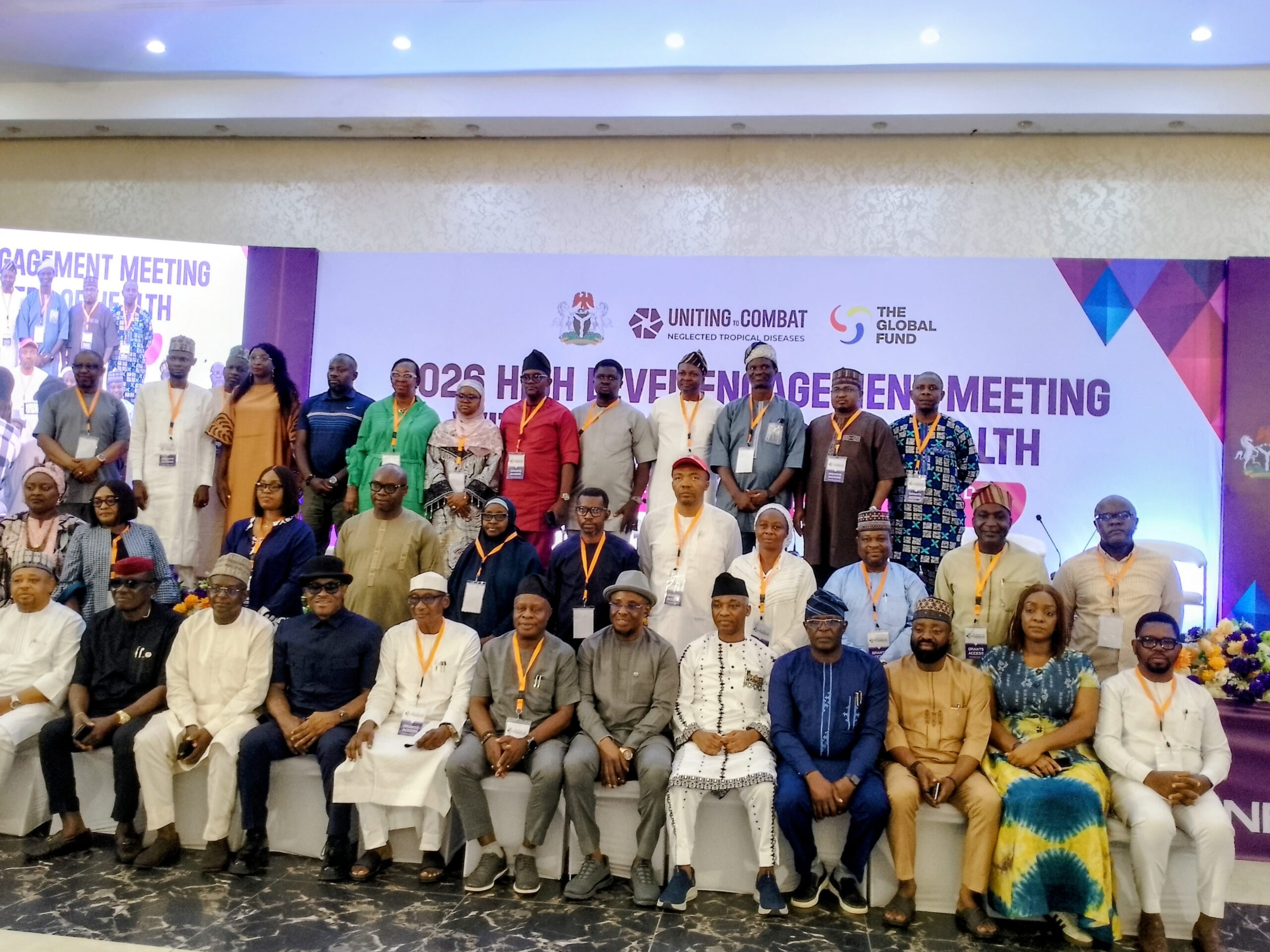
The warning came during the closing on Thursday of the high-level advocacy meeting organised by the Federal Ministry of Health and Social Welfare, which brought together commissioners and directors of public health from the 36 states and the Federal Capital Territory to review progress and strengthen subnational commitment to NTD control and elimination.
The meeting reviewed the implementation of resolutions from previous engagements and called on state governments to move beyond promises by providing adequate funding, strengthening local health systems and integrating NTD interventions into their annual budgets and operational plans.
The Director of Public Health at the Federal Ministry of Health and Social Welfare, Dr Charles Nzelu, said the Federal Government could not achieve the elimination target alone, stressing that state and local governments must take greater responsibility for interventions within their jurisdictions.
Nzelu said effective implementation depended on state ownership, sustained financing and collaboration across all levels of government, adding that federal policies and programmes would have limited impact without corresponding action at the subnational level.
He urged state governments to translate their commitments into concrete activities, including funding community-level interventions, improving access to treatment and strengthening disease surveillance.
Neglected tropical diseases are a group of infectious and other conditions that disproportionately affect poor and underserved communities, particularly people living in rural areas with limited access to healthcare, safe water, sanitation and hygiene services.
They include diseases such as leprosy, lymphatic filariasis and other conditions that can cause disability, long-term illness, social exclusion and economic hardship when prevention and treatment are inadequate.
The Benue State Commissioner for Health and Human Services, Dr Paul Ejeh Ogwoche, said NTDs continued to place a heavy burden on vulnerable communities, particularly those with limited access to essential health services.
He identified leprosy, lymphatic filariasis and snakebite among the conditions requiring sustained attention, noting that Benue was among the states facing a significant snakebite burden.
Ogwoche said declining donor support had increased the pressure on governments to provide domestic funding to sustain essential health interventions.
He stressed that the reduction in external financing should not lead to interruptions in prevention, treatment and other services for affected communities.
According to him, governments must strengthen domestic resource mobilisation and ensure that vulnerable populations do not lose access to critical interventions because of funding gaps.
The Anambra State Commissioner for Health, Dr Obidike Afam, also identified inadequate funding at the subnational level as a major obstacle to effective NTD control.
Afam called for greater integration of NTD interventions with existing programmes for tuberculosis, HIV and malaria, arguing that a coordinated approach could help governments make better use of limited resources.
He also emphasised the importance of health insurance and stronger state ownership of public health programmes, saying that sustainable funding arrangements were necessary to maintain services and improve access to treatment.
In Yobe State, the Permanent Secretary of the Ministry of Health and Human Services, Hadiza Sabo, said the state planned to incorporate NTD interventions into its annual operational plan and budget.
Sabo said the state would also engage local government chairmen to encourage greater participation and ownership of disease control activities at the grassroots.
She stressed the need to coordinate health interventions with water resources, sanitation, education and community structures, noting that eliminating NTDs required more than medical treatment alone.
According to her, improved access to safe water, better sanitation, public awareness and active community participation are essential to reducing transmission and preventing the recurrence of diseases.
Sabo also highlighted the need to strengthen community-based health structures to respond to the wider consequences of vulnerability and poor access to services.
The meeting further raised concerns about the availability of medicines needed for preventive treatment and disease management, with stakeholders warning that supply challenges could undermine progress towards the 2030 target.
Pharmacist Abgor Damian, Head of Supply Chain for NTDs, said the country remained heavily dependent on multinational suppliers for preventive treatment commodities, despite investments by Nigerian manufacturers in production facilities and quality assurance.
He expressed concern that local manufacturers were receiving limited patronage, even as the country sought to strengthen domestic production and reduce dependence on external suppliers.
Damian also raised concerns about regulatory changes affecting donated medicines and their distribution, saying the measures had reportedly restricted access to some donated products and threatened the continuity of mass drug administration and other treatment cycles.
He warned that any disruption in medicine supplies could affect the delivery of interventions to communities that depend on regular preventive treatment.
Damian said stakeholders needed to balance regulatory compliance with uninterrupted access to essential medicines, particularly while local manufacturers were being supported to increase production capacity.
He called for a transition period that would allow domestic production to become stronger without creating shortages or disrupting ongoing treatment programmes.
The discussions highlighted the need for clearer coordination among regulators, government agencies, development partners and pharmaceutical manufacturers to ensure that quality medicines remain available and accessible.
Stakeholders said strengthening local production could improve supply security in the long term, but stressed that the transition must be carefully managed to protect patients and sustain disease control activities.
The meeting also reviewed the implementation of resolutions reached during previous advocacy engagements, with the Head of NTD Monitoring and Evaluation, Mr Gambo Yakubu, presenting findings that pointed to uneven progress across several commitments.
The review indicated that implementation remained low in critical areas, including domestic production and local sourcing of medicines, data management, awareness creation, case finding and the management of disease-related disabilities.
Figures presented during the review suggested that progress varied across commitments. Implementation was reported at about 30 per cent for customs waivers, 26 per cent for awareness and digital systems, 22 per cent for case finding and morbidity management, 32 per cent for health insurance inclusion, 35 per cent for youth and women’s participation, and 23 per cent for private-sector engagement.
The review also indicated that data ownership and management had recorded only about five per cent implementation, while domestic production and local sourcing had yet to record completed implementation.
The figures underscored the gap between commitments made during advocacy meetings and actions taken to implement them.
Stakeholders said the shortfalls could weaken disease surveillance, limit access to treatment and delay progress towards the national elimination target if state governments and other partners failed to act.
They called for stronger monitoring mechanisms to ensure that resolutions were assigned to responsible institutions, supported with resources and implemented within agreed timelines.
The meeting also examined lessons from national HIV, sexually transmitted infections and viral hepatitis control programmes, particularly in the areas of sustainability, integration and the transition from donor-supported interventions to domestic financing.
A presentation by Chioma highlighted the importance of maintaining testing services, improving data management and ensuring the effective use of medicines and other health commodities as funding arrangements change.
Participants were encouraged to draw lessons from existing disease control programmes to strengthen coordination, reduce duplication and make more effective use of available resources.
The discussions reinforced the need to integrate disease-specific interventions into broader health systems rather than rely exclusively on stand-alone programmes.
For NTDs, stakeholders said this approach could improve access to diagnosis and treatment, strengthen reporting and surveillance, and ensure that people affected by the diseases are not left behind.
They also emphasised the need to involve women, young people, community leaders, local governments and the private sector in prevention and control efforts.
Public health experts have repeatedly identified poverty, inadequate sanitation, limited access to safe water and weak healthcare services as factors that allow many NTDs to persist in underserved communities.
Consequently, participants stressed that medical interventions must be supported by improvements in water, sanitation and hygiene, community education and access to primary healthcare.
As Nigeria works towards its 2030 elimination ambitions, the meeting placed renewed responsibility on state governments to demonstrate measurable progress through budgetary allocations, reliable medicine supplies, improved surveillance and stronger community engagement.
The Federal Government urged states to improve their performance on previous commitments, warning that the country’s national target would remain difficult to achieve without sustained action at every level of government.
Opposition Figures Ask INEC to Probe Alleged Attempt to Alter PDP Membership Register
Stakeholders said the coming years would be critical in determining whether Nigeria could accelerate progress against NTDs, particularly as donor support declines and governments face increasing pressure to finance essential public health programmes from domestic resources.
They maintained that stronger political commitment, adequate funding, reliable access to medicines and accountability for agreed actions would be necessary to protect vulnerable communities and move the country closer to its 2030 goal.
About The Author