The Nigerian French Language Village (NFLV), Badagry, Lagos State, has urged parents and educational institutions to desist from sending students to neighbouring countries for French language studies, warning of serious academic, financial and emotional consequences.
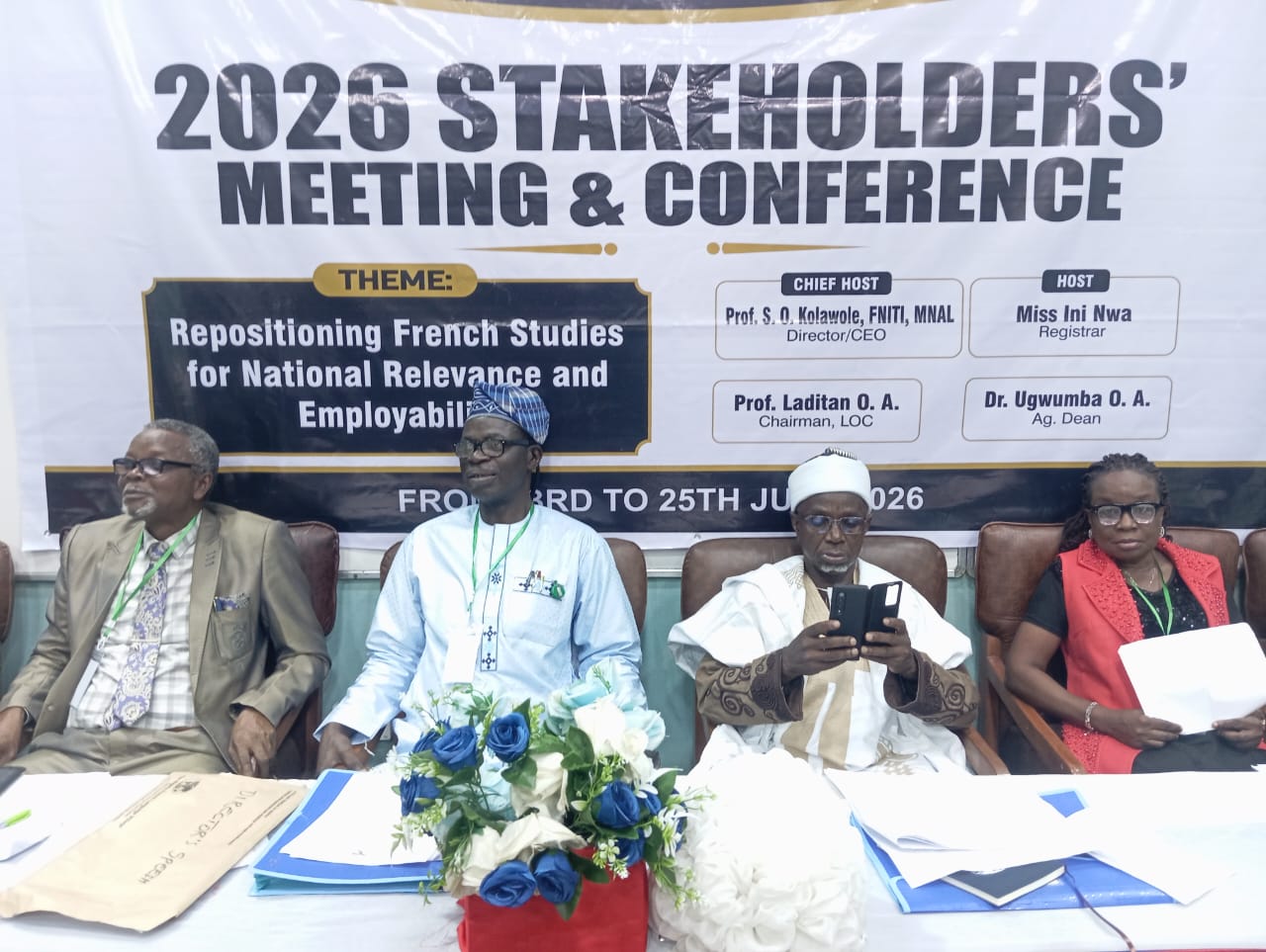
Director of the institution, Prof. Samuel Kolawole, gave the caution on Friday during an interview with journalists at the NFLV 2026 Stakeholders’ Meeting and Conference themed “Repositioning French Studies for National Relevance and Employability.”
Kolawole stressed that the Federal Government had mandated all Nigerian university students studying French to undergo a compulsory two-semester immersion programme at the NFLV before graduation, describing the directive as critical to producing globally competitive graduates.
“Our dream as a nation is to produce world-class French graduates who can represent Nigeria in diplomacy, education, trade and culture,” he said.
He warned that the increasing trend of sending students to unaccredited institutions in neighbouring countries such as Benin Republic, Cameroon and Niger posed a significant threat to that goal.
“It may look like an opportunity now, but the negative consequences are real and long-lasting, because such institutions do not meet international academic standards,” Kolawole added.
According to him, students who attend unrecognised institutions often return with certificates that are not approved by the National Universities Commission (NUC), rendering their academic efforts futile.
He also highlighted the financial burden on families, noting that many parents incur heavy costs in foreign currency for tuition, accommodation and feeding, only for the qualifications obtained to hold no value in Nigeria.
“Many families go into debt for a qualification that has no value back home. Students return with disappointment, and in some cases, emotional distress,” he said.
Kolawole further raised concerns about poor learning conditions in such institutions, citing lack of qualified lecturers, absence of language laboratories, inadequate accommodation and limited access to healthcare.
“They often operate without proper oversight, and when issues arise, there is little or no protection from government or embassies, leaving students vulnerable,” he said.
He reiterated that the NFLV was established to bridge the gap between theoretical classroom learning and real-life communication skills in French, offering a structured immersion environment for students, teachers and professionals.
Kolawole emphasized the strategic importance of French in West Africa, noting that stronger ties with Francophone countries under regional bodies such as ECOWAS and the African Union require a workforce proficient in the language.
“We cannot continue to import interpreters while our own graduates are left behind. With proper training, Nigeria can become truly bilingual and competitive in the sub-region,” he said.
He assured stakeholders of improved service delivery at the NFLV, including transparent reporting of student performance, faster processing of results and enhanced academic support.
Kolawole also disclosed that the institution had begun benefiting from interventions by the Tertiary Education Trust Fund (TETFund), which has helped upgrade infrastructure, support faculty development and boost research capacity.
However, he identified rising operational costs, particularly electricity, diesel and facility maintenance, as a major challenge facing the institution.
In his remarks, Chairman of the NFLV Governing Council, Alhaji Labiru Kafur, said proficiency in French opens doors to opportunities in diplomacy, security agencies, international trade and academia.
“French is an international language, and our graduates are needed across embassies, military formations and global institutions,” he said.
Also speaking, Chairman of the Local Organising Committee, Prof. Omolegbe Laditan, reaffirmed the institution’s capacity to deliver quality language training, citing upgraded facilities, expanded hostel capacity and the introduction of an e-learning portal to support blended learning.
He urged stakeholders to patronise the NFLV immersion programme to ensure students obtain credible certification and practical language proficiency.
The stakeholders’ meeting brought together educators, policymakers and language experts to chart a path for strengthening French studies in Nigeria and aligning it with national development priorities.
About The Author