Special Report
…… Deepening erosion gulps homes, displaces families as Senate seeks environmental disaster declaration for affected communities
By Fatima Saka
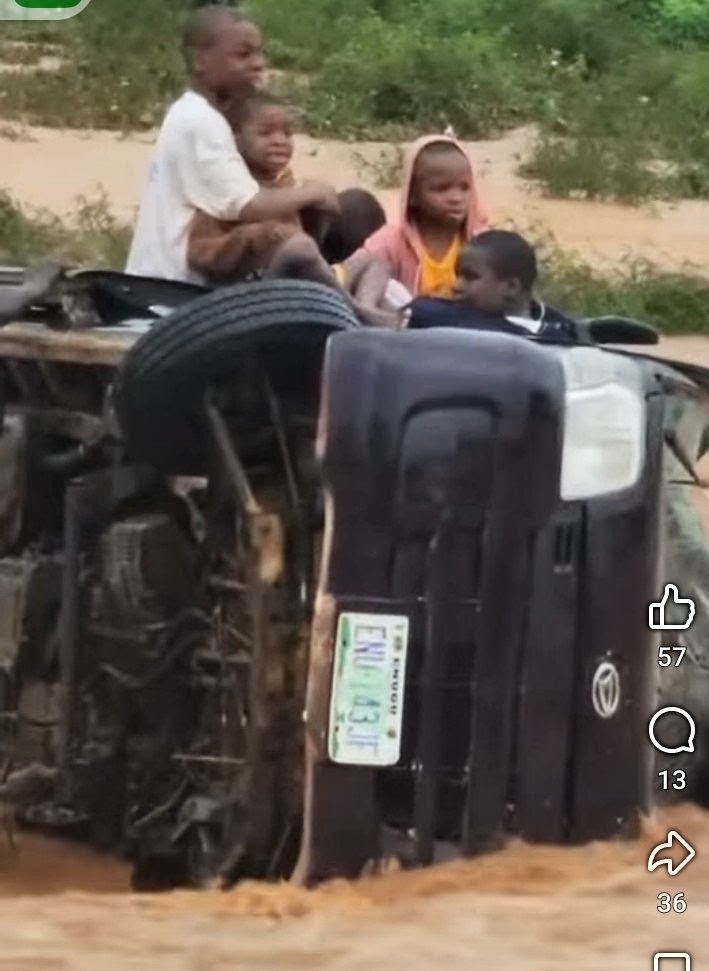
The mother of six-year-old Master Success Ezenwafor is mourning the loss of her son, while another family in Anambra State is grieving a pregnant woman who drowned alongside her unborn baby as devastating floods and erosion continue to claim lives, destroy homes and displace residents across the state.
Success, a pupil of Nnamdi Azikiwe University Primary School, Awka, was swept away by floodwaters in late September. His body was recovered the following day, leaving his mother, a PhD holder and university lecturer, devastated by the loss.
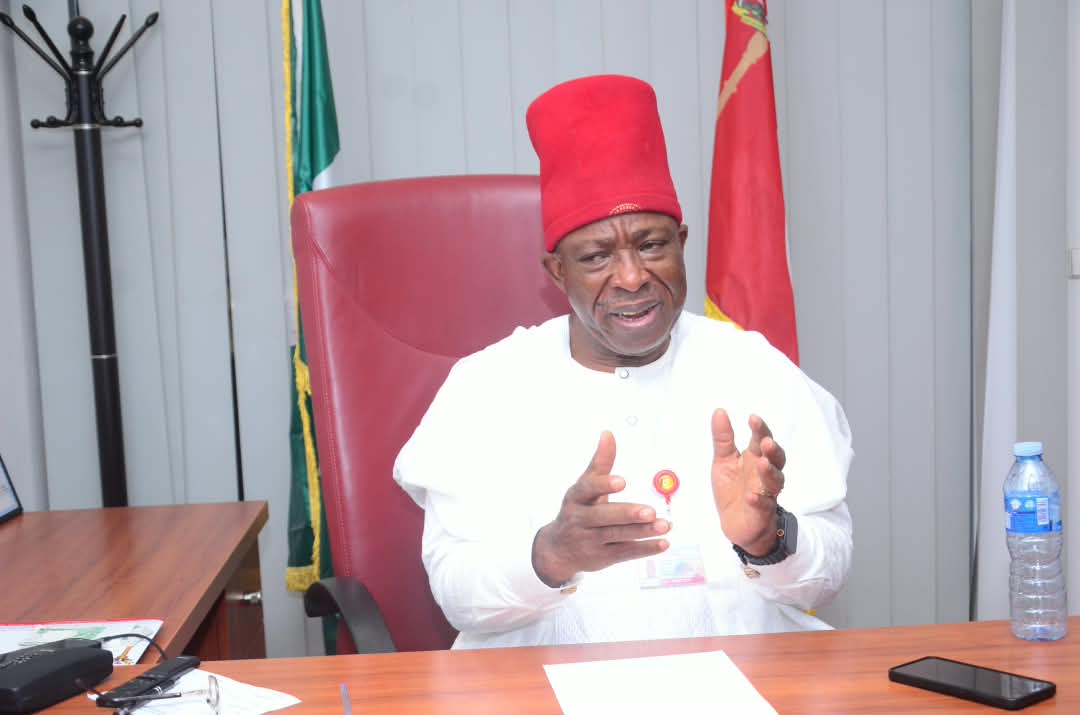
For Senator Victor Umeh, who represents Anambra Central Senatorial District, interfacing with journalist after the plenary session on Wednesday, underscores the human cost of the environmental crisis confronting communities across the state.
Umeh, who visited the bereaved family to offer his condolences, said the mother’s grief was overwhelming, describing the death of the young boy as one of the most painful consequences of the flooding.
The boy and the pregnant woman were among at least four people reportedly killed by flooding and erosion in the affected communities, according to a motion Umeh presented to the Senate.
The deaths are part of a wider humanitarian crisis in Ogidi, Obosi and Awka, where heavy rainfall has triggered destructive flooding, accelerated gully erosion and forced families to abandon their homes.
Houses have collapsed into expanding gullies, roads have become impassable, farmlands and economic trees have been destroyed, while floodwaters have invaded residential buildings and the palace of a traditional ruler.
Faced with the scale of the destruction, the Senate has called for urgent Federal Government intervention, including emergency relief, the rehabilitation of damaged infrastructure and sustainable measures to control flooding and erosion.
Families Lose Homes, Abandon Ancestral Lands
For residents of the affected communities, the danger does not end when floodwaters recede. Expanding gullies continue to consume buildings and threaten entire neighbourhoods, leaving families uncertain about the safety of their homes.
Umeh said the situation became particularly severe between late July and September, when persistent rainfall triggered devastating flooding and erosion across parts of Anambra Central.
In Awka, the state capital, buildings have reportedly collapsed into deep gullies, forcing families to flee. Obosi has also suffered extensive erosion, with landslides threatening homes and other structures.
One of the most alarming sites is in Ugamuma community, Obosi, where a gully reportedly exceeding 60 metres in depth is extending towards the Onitsha-Owerri Expressway axis.
The Senate’s motion identified Abor and Ire villages in Ogidi, alongside several communities in Obosi and Awka, as areas where residents are increasingly abandoning their homes and ancestral lands in search of safety.
The displacement has left affected families facing the prospect of losing not only their houses but also their livelihoods, community ties and inherited properties.
Umeh warned that the erosion would continue to spread unless authorities intervened to control stormwater and stabilise the affected areas.
Floodwaters Turn Ogidi Road Section Into a Lake
The crisis has also disrupted transportation along the Onitsha-Ogidi-Awka federal road, where floodwater has rendered part of the route difficult to use.
Umeh said a section of the road in Ogidi had become so heavily flooded that standing water had formed a lake-like expanse, forcing motorists to divert around the affected area.
He attributed the problem partly to inadequate drainage, which allows stormwater to accumulate and spill into neighbouring buildings and communities.
The senator said floodwaters had also surged into the palace of the traditional ruler of Ogidi, His Royal Majesty, Igwe (Pharm.) Alex Uzo Onyido, submerging some vehicles within the premises.
The destruction of roads and access routes has compounded residents’ difficulties, restricting movement and economic activities while making some areas harder to reach.
The Senate also expressed concern that deteriorating infrastructure and poor accessibility could expose residents to increased security risks, including armed robbery.
Schoolchildren have equally been affected, as impassable roads and unsafe routes disrupt access to education.
Meanwhile, the destruction of farmlands, economic trees and cash crops worth millions of naira has deepened concerns about food security and the loss of income among residents.
Decades of Erosion Demand Lasting Solutions
Umeh said the environmental crisis in the South-East had persisted for decades, with erosion-prone communities continuing to face the threat of collapsing buildings and disappearing land.
He cited the long-standing erosion problems in Anambra, including the widely known Agulu erosion site, as well as the growing threats in Obosi and Awka.
According to him, effective stormwater management is central to addressing the problem.
He advocated the construction of concrete drainage channels to collect rainwater and direct it to safe discharge points, rather than allowing it to flow uncontrolled through residential areas.
Uncontrolled stormwater can wash away soil, deepen existing gullies and weaken the foundations of nearby buildings, increasing the risk of landslides and structural collapse.
The senator also recommended tree planting as part of a broader environmental management strategy, explaining that vegetation can intercept rainfall and help reduce the force of water hitting the ground.
He said the combination of proper drainage, vegetation and appropriate engineering interventions could help control erosion and reduce further damage.
However, he stressed that the scale of the crisis required coordinated action by federal, state and local authorities rather than isolated interventions.
Senate Seeks Relief, Declares Need for Disaster-Zone Status
In response to the crisis, the Senate has urged the Federal Government to treat the flooding and erosion in Ogidi, Obosi and Awka as an emergency requiring immediate national intervention.
In the motion sponsored by Umeh, the Senate called on the Federal Government, through the Office of the Secretary to the Government of the Federation and the Ecological Fund Office, to coordinate assistance to the affected communities.
It also urged the National Emergency Management Agency to provide food, potable water, temporary shelter, medical supplies and other essential relief materials to displaced residents.
The Federal Ministry of Works was asked to assess and rehabilitate damaged roads, provide adequate drainage along affected federal roads and restore access to communities disrupted by flooding.
The Senate further called on the Federal Ministry of Environment and relevant agencies to conduct a comprehensive technical assessment of the affected erosion and flood sites and implement sustainable control measures.
The Ecological Project Office and other federal intervention agencies were also urged to prioritise the affected communities, particularly the deep gully threatening Ugamuma and the Onitsha-Owerri Expressway axis.
To ensure accountability and prompt action, the Senate mandated its Committees on Environment; Works; and Ecology and Climate Change, alongside other relevant committees and agencies, to conduct an on-the-spot assessment and submit their findings and recommendations within two weeks.
It also urged the Federal Government to declare Idemili North and Awka South Local Government Areas of Anambra State an environmental disaster zone.
Umeh: State Government Must Not Abandon Responsibility
Although he called for federal intervention, Umeh warned that the Anambra State Government must not leave the responsibility entirely to the federal government.
He urged the state government to construct drainage channels across affected urban areas and ensure that stormwater was properly directed to safe discharge points.
According to him, local drainage infrastructure could help reduce the immediate danger while the federal government pursued major ecological and engineering projects.
Umeh disclosed that he had written to the Secretary to the Government of the Federation, forwarding photographs and videos documenting the destruction in his senatorial district.
He said he planned to meet the official personally to discuss possible solutions, stressing that the presentation of a motion should not mark the end of efforts to address the crisis.
The senator also called on the South-East Drainage Commission to play a more active role in tackling environmental challenges across the region.
He said relevant authorities must follow through on legislative resolutions to ensure that communities receive the interventions they urgently need.
Beyond Emergency Relief
For families who have lost loved ones, the consequences of the flooding cannot be reversed. For those who have lost their homes and livelihoods, rebuilding will require more than temporary assistance.
The provision of food, shelter and medical supplies may ease the immediate hardship facing displaced residents, but preventing further tragedies will depend on sustained investment in drainage infrastructure, erosion control and environmental management.
The expanding gullies in Ogidi, Obosi and Awka pose a continuing threat to homes, roads and public safety, particularly as further rainfall could worsen existing damage.
The Senate’s call for urgent intervention therefore places pressure on relevant authorities to move beyond assessments and promises towards practical measures that protect lives and restore affected communities.
READ ALSO: BHCPF: FG Authorizes N40.7bn for Primary Healthcare, Extends Coverage to 5,212 Facility in Nigeria
Senate Raises Alarm Over 60-Metre Erosion Gullies Threatening Anambra State
For the mother mourning six-year-old Success and the family grieving a pregnant woman and her unborn child, the price of the environmental crisis has already been devastating.
The urgent question now is whether government intervention will come in time to prevent other families from suffering similar losses.
About The Author