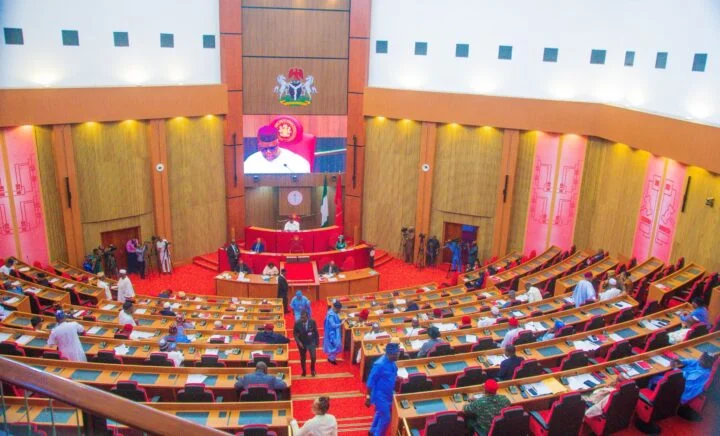
The Federal Government has launched the Nigeria Alcohol Policy and its Multisectoral Implementation Plan (2026–2030), with a focus on reducing alcohol-related harm, combating illicit trade and promoting responsible growth of the alcohol industry.
The Coordinating Minister of Health and Social Welfare, Prof. Muhammad Ali Pate, said the policy provides a unified national framework that balances public health protection with industrial development, job creation and economic growth.
Speaking at the official launch in Abuja on Thursday, Pate said alcohol policy must be viewed beyond regulation and treated as a national development issue involving public health, economic development, social wellbeing and good governance.
The minister, who was represented by the Permanent Secretary of the Federal Ministry of Health and Social Welfare, Daju Kachollom S. mni, said while alcohol contributes to manufacturing, employment, agriculture and domestic value chains, harmful consumption also fuels disease, injuries, violence, mental health challenges, financial hardship and productivity losses.
He disclosed that the latest available World Health Organisation data put Nigeria’s total alcohol consumption at 3.2 litres of pure alcohol per person aged 15 years and above in 2024.
Pate also linked harmful alcohol use to road safety concerns, noting that the Federal Road Safety Corps recorded 9,570 road traffic crashes and 5,421 deaths nationwide in 2024, with driving under the influence recognised as a contributing factor.
> “These are not merely numbers. They represent lives lost, families affected, livelihoods disrupted and productive years taken away,” he said.
The policy, according to the minister, is built around four key pillars: harm reduction and health promotion; industrial and economic development; multisectoral coordination and governance; as well as monitoring, evaluation, accountability, research and learning.
“At the heart of the Policy is harm reduction and health promotion. We have a responsibility to prevent avoidable harm,” Pate said.
He stressed that the Federal Government was not seeking to undermine legitimate businesses but to promote responsible industry practices guided by clear standards for safety, quality and traceability.
The minister also raised concern over illicit alcohol, citing industry estimates that about 40 per cent of spirits and wines consumed in the country are illicit or unrecorded, resulting in an estimated annual government revenue loss of more than ₦428 billion.
Pate said tackling illicit trade would protect public health, boost government revenue and safeguard legitimate businesses operating within the law.
He emphasised the need for a whole-of-government approach, noting that alcohol-related challenges cut across health, industry, finance, trade, regulation, transport and communities.
“Alcohol cuts across health, industry, finance, trade, regulation, transport, communities and other areas of national life,” he said.
Pate added that the policy aligns with President Bola Ahmed Tinubu’s Renewed Hope Agenda, the Nigeria Health Sector Renewal Investment Initiative, African Union Agenda 2063, the Sustainable Development Goals and relevant World Health Organisation frameworks.
He said the success of the policy would ultimately depend on effective implementation rather than its launch.
“Our objective, therefore, is not simply to have a national alcohol policy on paper by 2030. It is to have a policy that has translated into healthier people, safer communities, more responsible industry practices and stronger institutions,” he said.
The Permanent Secretary, Kachollom, represented by the Director of Food and Drugs Services, Dr Olufowubi-Yusuf Adeola, described the policy launch as a significant milestone in Nigeria’s efforts to promote health, strengthen governance and advance sustainable national development through evidence-based alcohol regulation.
She called on stakeholders, including traditional and religious leaders, civil society organisations and the media, to support the implementation of the policy.
Also speaking, the Director-General of the National Agency for Food and Drug Administration and Control, Prof. Mojisola Adeyeye, reaffirmed the agency’s commitment to science-based regulation, effective monitoring and surveillance.
READ ALSO: 2027: PBAT CEOs Mobilise Support for Tinubu’s Re-election, Say Performance Will Drive Campaign
ICM 2026: Adesina, Nwosu, Others to Lead Conversations on Transformation, Business Growth
Adeyeye said NAFDAC had recently reached an agreement with manufacturers that sachet alcohol would no longer be produced.
Representatives of the Ministries of Industry, Trade and Investment, Finance, Environment, Education and Youth Development, as well as the Nigeria Police Force, Manufacturers Association of Nigeria, International Society of Substance Use Professionals and the National Drug Law Enforcement Agency, attended the event and presented goodwill messages.
About The Author