By Fatima Saka
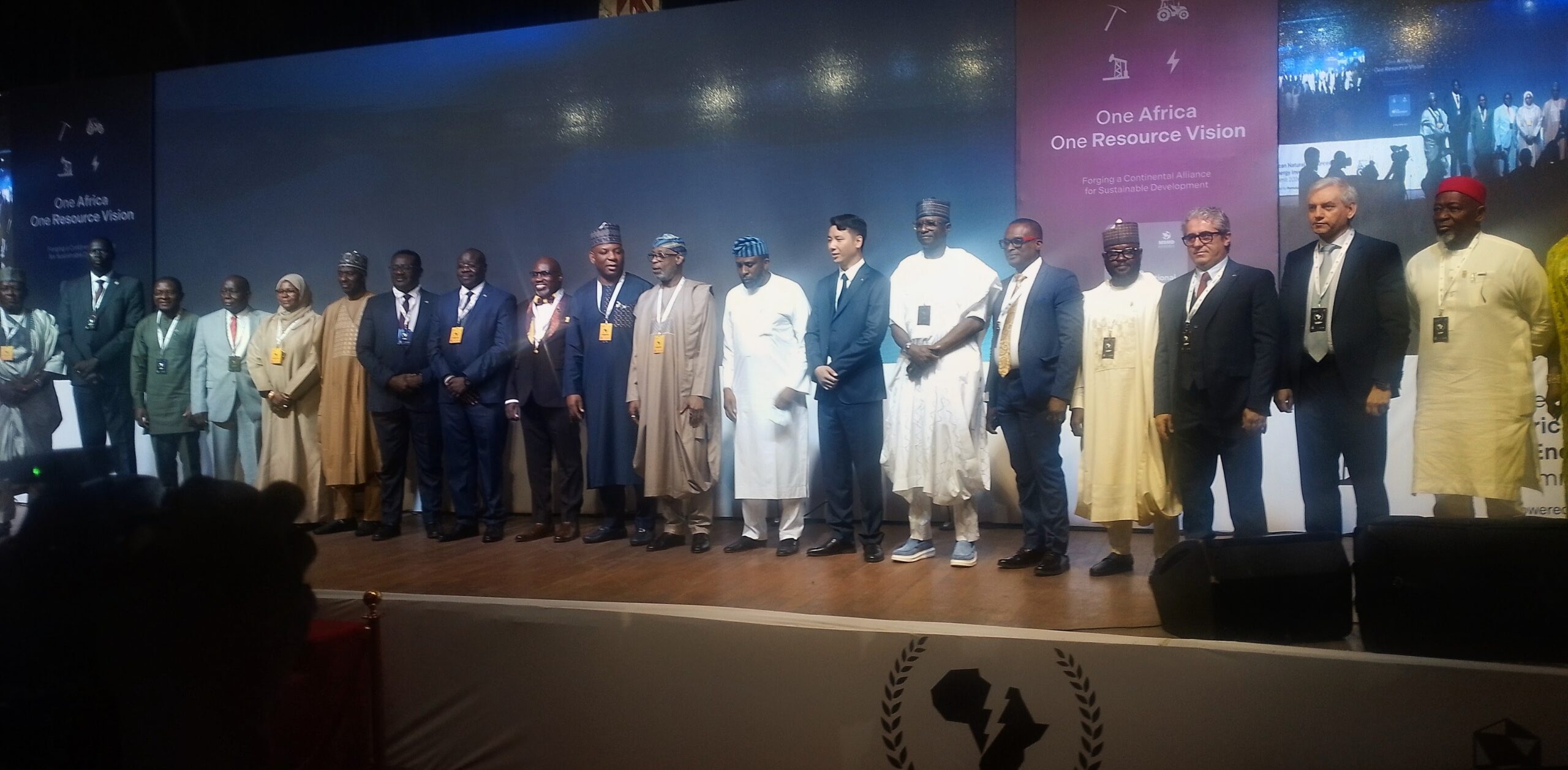
Abuja, Nigeria — African leaders, policymakers, and industry stakeholders have called for stronger interconnection of the continent’s vast natural resources as a pathway to sustainable development and shared prosperity at the ongoing 5th African Natural Resources and Energy Investment Summit (AFNIS) 2026 in Abuja.
The three-day summit, themed “One Africa, One Resource Vision,” is driving a unified continental agenda focused on collaboration, value addition, and industrialisation across Africa’s mineral and energy sectors.
Speaking on Wednesday, Nigeria’s Minister of Solid Minerals Development, Dr. Dele Alake, emphasised that Africa’s resource future depends on integration rather than fragmentation. He stressed that mineral extraction, processing, and industrial development must be interconnected across borders to maximise value and economic impact.
According to Alake, Africa must move beyond exporting raw materials and embrace a coordinated strategy that links mining operations in one country to processing facilities and industrial hubs in others. He noted that the current global demand for critical minerals presents a unique opportunity for the continent to reposition itself within the global value chain.
He praised President Bola Ahmed Tinubu’s Renewed Hope Agenda, describing it as a driving force behind Nigeria’s push for economic diversification through the solid minerals sector. The minister highlighted ongoing reforms aimed at strengthening regulation, improving transparency, and attracting credible investments.
Alake disclosed that Nigeria has revoked over 3,000 dormant mining licences to restore discipline in the sector and ensure that only serious investors retain access to mineral assets. He added that the government now requires mining lease applicants to present concrete value addition plans, signalling a shift away from the export of raw minerals.
He further revealed significant investments in local mineral processing, including an $800 million lithium processing project, a $600 million lithium factory in Nasarawa State, and a $200 million lithium facility near Abuja awaiting commissioning. Additional projects include a $50 million lithium refinery in the Federal Capital Territory and a $1 billion iron ore-to-steel project in Kogi State.
In a major announcement, the minister disclosed the discovery of a world-class polymetallic mineral province in Kaduna State, with high-grade deposits of gold, nickel, copper, lithium, and rare earth elements. He said the discovery positions Nigeria as a key destination for strategic mineral investments.
Alake also noted significant revenue growth in the sector, rising from about ₦6 billion in 2023 to over ₦70 billion by the end of 2025, attributing the increase to ongoing reforms and improved sector governance.
At the continental level, he reaffirmed Nigeria’s commitment to the African Mineral Strategy Group (AMSG), which seeks to harmonise policies and promote a unified African voice on mineral development, value addition, and investment coordination.
Earlier in his welcome remarks, Permanent Secretary of the Ministry of Solid Minerals Development, Engr. Faruk Yusuf Yabo, said the summit reflects a shared belief that Africa’s mineral wealth can drive industrialisation and sustainable growth if properly harnessed. He emphasised that success should not be measured by the volume of extracted resources, but by the continent’s ability to transform them into high-value products through industrial processes and innovation.
Also speaking, Secretary-General of AMSG, Moses Michael Engadu, called for deeper collaboration among African nations, warning that isolated efforts would limit the continent’s ability to fully benefit from its resource wealth. He stressed that integrated value chains, shared infrastructure, and regional cooperation are essential for Africa’s economic transformation.
Engadu noted that the growing global demand for minerals used in energy transition, electric mobility, and digital technologies presents a significant opportunity for Africa, but only a united approach can maximize these benefits.
In his remarks, Executive Director of Mineral Resource Development at Romulus Mining, Tim Tokun, described AFNIS 2026 as a critical platform bringing together key stakeholders to unlock Africa’s vast mineral potential and drive sustainable economic growth across the continent.
Tokun stated that Africa’s mineral wealth goes beyond commercial value, serving as a catalyst for development, job creation, and long-term prosperity. He added that his organisation is committed to responsible mining practices that create value for host communities and contribute meaningfully to Nigeria’s economic transformation.
He further observed that the African mineral resource sector is currently experiencing one of its strongest periods in decades, driven by global shifts in demand for critical minerals and the growing emphasis on energy transition and industrial resilience.
“This continent has not yet fully understood its geological endowment,” he said, urging stakeholders to move beyond discussions and focus on actionable investments and partnerships that will deliver tangible outcomes.
At the summit, Chairman of the Senate Committee on Solid Minerals Development, Senator Ekong Sampson, stressed the need to secure Africa’s mineral assets to ensure that resource wealth translates into real benefits for citizens.
Similarly, Chairman of the House Committee on Solid Minerals, Hon. Jonathan Gaza, called for greater prioritisation of the sector, noting its critical role in boosting Nigeria’s economic fortunes. He also highlighted improved collaboration between the executive and legislative arms in driving mining sector reforms.
Also speaking, South Sudan’s Minister of Mining, Hon. Lasuba L. Wongo, described Africa as standing at a defining moment in history, endowed with vast reserves of critical minerals, yet still grappling with poverty and underdevelopment.
He described the paradox of resource wealth amid economic hardship as one of Africa’s greatest challenges, stressing that the continent must focus on transforming its natural endowment into prosperity, peace, and opportunity for its people.
Wongo noted that despite challenges such as insecurity, infrastructure deficits, and institutional weaknesses, South Sudan remains committed to building a transparent and investment-friendly mining sector.
He outlined key priorities including strengthening geological exploration, improving governance and transparency, promoting responsible mining practices, and attracting long-term investment partnerships.
“Much of Africa’s geological wealth remains untapped. Our challenge is not the absence of resources, but transforming potential into economic reality,” he said.
Other participants, including representatives from Kenya and Liberia, delivered goodwill messages, reinforcing the need for regional cooperation, shared infrastructure, and integrated value chains to unlock Africa’s full economic potential.
READ ALSO: NIDS Seeks Review Of Proposed Public Health Institute Bill Over NCDC Overlap
AFNIS 2026: Africa Must End Raw Resource Export, Says Tinubu
Stakeholders at the summit agreed that AFNIS has evolved into a strategic platform where policy meets investment, enabling governments, investors, and industry players to develop practical solutions for Africa’s resource development challenges.
The summit continues with high-level discussions on financing, infrastructure, and strategies to ensure Africa retains more value from its natural resources.
About The Author