
By Fatima Saka
At six, Master Success Ezenwafor knew what a school morning meant, putting on his uniform, boarding the school shuttle and returning home after lessons.
On Tuesday, September 22, 2026, that routine became his final journey.
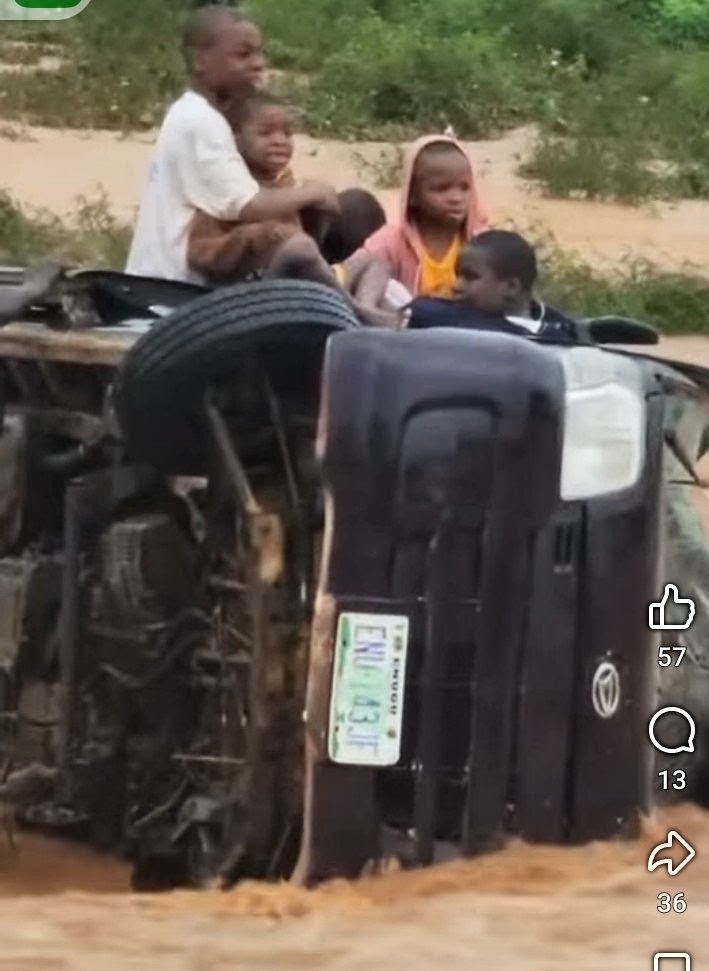
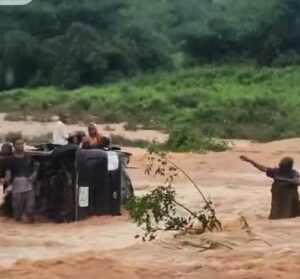
Success, a pupil of Nnamdi Azikiwe University Primary School, Awka, Anambra State, was travelling along the Nibo–Isiagu Road in Awka South Local Government Area when floodwaters trapped the school shuttle.
Seven schoolchildren and two adults were rescued, but Success was swept away. His body was recovered the following morning after a search involving security personnel, emergency responders and community members.
The tragedy raises a question that extends beyond one family and one flooded road: What happens between the moment Nigeria issues a flood warning and the moment people take the action needed to stay out of danger?
Five days before Success was swept away, the Nigeria Hydrological Services Agency (NiHSA) had issued a high flood-risk alert for 15 states, including Anambra, covering September 19 to 25.
The warning was based on forecasts of rising river levels and increased risk of riverine flooding. NiHSA urged authorities, community leaders and residents in vulnerable areas to take precautionary measures.
The warning existed. The rain came. The flood came. And a six-year-old boy died.
The morning that should have been ordinary for Success’s family, September 22 began like any other school day.
A family member told journalists that Success kissed his father before boarding the shuttle. The family also reported that he broke a vehicle window during the incident, helping create an escape route for other occupants.
What Distinct News established is that the vehicle became trapped by floodwaters along the Nibo–Isiagu corridor.
However, the emergency rescue team and community members rescued seven children and two adults. Success remained missing. The search continued until his body was recovered the next morning.

For his family, the flood took a child. For Nigeria, the incident exposed a familiar problem: the gap between knowing that flooding is possible and preventing people from entering its path.
Nigeria Has Known The Problem For Years
Flooding is not a new emergency in Nigeria, a study in 2018 by Giuseppe T. Cirella and Felix O. Iyalomhe, published in Applied Sciences, examined flooding through a sustainability lens and linked Nigeria’s vulnerability to factors including urbanisation, deforestation, population growth, changing precipitation patterns and expanding paved surfaces.
The researchers argued for more proactive and sustainable approaches to flood mitigation, preparedness and public awareness. Eight years later, the challenge remains.
Nigeria has hydrological and meteorological agencies, emergency-management institutions and established systems for issuing flood alerts. Yet the death of Success shows that forecasting alone does not guarantee safety.
The critical issue is what happens after the warning? When a warning is not protection
A flood forecast identifies risk. An alert communicates that risk. Neither, by itself, removes a child from a dangerous road.
For an early-warning system to save lives, information must move through a chain: from forecasting agencies to government authorities, from authorities to communities, and from communities to schools, parents, transport operators and residents.
Each group needs information it can act on. A parent needs to know: Is it safe for my child to travel to school?
A school needs to know: Should movement be suspended?
A driver needs to know: Which roads should be avoided?
A local authority needs to know: Which locations should be closed before people enter them?
That is the difference between an early warning and early action.
The Last Mile Of Disaster Communication
A 2026 systematic review by John Vendaga, Ekaette Ebong Bassey, Desmond Onyemechi Okocha and Audrey Vershima Soho examined disaster communication and institutional responsibility in Nigeria.
The researchers found that flood communication is largely organised around early warnings and public awareness, while differences in institutional capacity and coordination can affect how effectively those warnings translate into action.
They called for disaster communication approaches that better reflect the requirements of different emergencies and stronger institutional coordination.
The finding is significant in the context of the Awka tragedy.
The existence of a flood alert does not establish that Success’s family, school or driver received it, understood it or knew that the particular route was unsafe.
It would therefore be wrong to conclude, without evidence, that the warning was ignored.
The more useful question is whether Nigeria’s warning system can consistently turn a broad forecast into a timely, location-specific instruction that keeps people away from danger.
Who Are The Authorities Responsible?
The National Emergency Management Agency (NEMA) is the principal federal disaster-management agency, coordinating preparedness, response and recovery with state and local structures.
NEMA’s disaster-management framework identifies flooding and heavy rainfall as hazards requiring preparedness, clear communication, evacuation procedures and coordination. As of 2026, NEMA is headed by Mrs. Zubaida Abubakar Umar.
The Nigeria Hydrological Services Agency (NiHSA) provides hydrological monitoring and flood forecasting. Its Director-General/Chief Executive Officer is Umar Ibrahim Mohammed.
The Federal Ministry of Environment, headed by Balarabe Abbas Lawal, is involved in environmental management and flood-risk reduction and is listed among the institutions involved in Nigeria’s national contingency arrangements for environmental hazards.
At state level, State Emergency Management Agencies (SEMAs) coordinate disaster management within their jurisdictions, while local emergency structures provide community-level response.
Other agencies, including the Nigeria Meteorological Agency (NiMet), the National Orientation Agency (NOA), security agencies and health authorities, contribute information, public sensitisation, rescue and response.
In August 2026, NEMA convened an inter-agency meeting involving NiHSA, NiMet, NASRDA, the Nigerian Communications Commission and other partners to strengthen the Early Warnings for All initiative and proactive flood management.
The institutional architecture exists. The challenge is ensuring that it works effectively at the point where a forecast meets a flooded road.
From Forecast To Action
Consider the journey of a flood warning.
NiHSA forecasts a risk. The alert reaches authorities. Authorities must identify vulnerable locations and communicate with communities. Schools and transport operators must assess whether movement is safe. Parents must receive clear information. Where necessary, authorities must restrict access to dangerous routes.
Every link matters.
A weakness at any point can reduce the value of the original warning.
This is particularly important in rapidly growing urban areas, where construction, drainage problems, erosion and changes in land use can increase flood exposure.
Flood management, therefore, cannot rely solely on rescue after water rises. It must also involve identifying dangerous locations and reducing exposure before an emergency occurs.
When The School Journey Becomes A Climate Risk
Flood preparedness is often discussed in relation to homes near rivers and communities in floodplains.
The Awka incident highlights another vulnerability: children travelling through flood-prone environments.
Every school day, children move along roads that may change from safe to dangerous within hours of intense rainfall.
A road covered by apparently shallow water can conceal damaged surfaces, open drains or strong currents. Once a vehicle enters rapidly moving floodwater, escape can become difficult within seconds.
School safety planning in flood-prone communities should therefore extend beyond the classroom to the journey between home and school.
Rescue Is Not Prevention
The rescue of nine people from the shuttle demonstrates the value of community and emergency response.
But rescue begins after people have been exposed to danger.
Prevention begins before exposure.
If a school vehicle does not enter a flooded road, there may be no passengers to rescue. If parents receive a clear warning before children leave home, the journey may not happen. If dangerous routes are identified and closed early, exposure can be reduced. This is why early action matters as much as early warning.
What Should A Flood Warning Say?
For residents, there is a significant difference between a technical alert and an actionable warning.
A technical message may say that a state faces a high flood risk.
An actionable warning tells people what that means for them:
Which communities are affected? Which roads should be avoided? When should people stop travelling? Should schools suspend movement? Where can people seek safety? Which emergency contacts should they use?
Scientific forecasting tells people what may happen.
Effective disaster communication tells them what to do.
Both are necessary.
The media’s role
Journalists can help close the gap between technical forecasts and public action.
Instead of simply reproducing an agency bulletin, coverage can explain where the danger lies, who is affected, which routes should be avoided and what authorities are advising residents to do.
It can also track whether authorities have acted on their own warnings.
That role requires accuracy and restraint. Flood reporting should inform without creating unnecessary panic or exaggerating risk.
The goal is not to frighten communities, but to give them information early enough to make safer decisions.
What changes after Success?
Success’s death leaves questions that cannot be answered by another press statement.
Will flood alerts reach parents before children leave home?
Will schools have clear protocols for suspending movement during dangerous weather?
Will school transport operators have reliable information about flood-prone routes?
Will local authorities identify and restrict dangerous roads before vehicles enter them?
Will communities have functioning local warning networks?
Will emergency agencies have the equipment and personnel required for rapid response?
And will agencies communicate quickly enough to give residents one clear, practical message?
These are not abstract policy questions.
They can determine whether a child gets home safely.
Warning Must End In Action
On September 22, Success left home for school. The following day, his family was mourning him. Between those two moments was a flood, but also a chain of forecasts, warnings, decisions, infrastructure and institutional responsibilities.
Examining that chain should not be about assigning blame without evidence. It should be about identifying where Nigeria’s flood-warning system can become more effective.
Success’s death cannot be reversed.
But the country can learn from it.
Flood forecasting must be matched by localised alerts, clear instructions, school safety protocols, safer transport decisions, effective emergency coordination and long-term flood-risk reduction.
The ultimate test of an early-warning system is not whether an alert was issued.
It is whether the people at risk received it, understood it and had enough time and support to act.
READ ALSO: MURIC Demands Probe Into Hijab Ban, Forced CRK in Ekiti Schools
NASFA Students Tackle Canal Pollution, Clear Debris Ahead of New Academic Session
Success Ezenwafor was six.
He should have been thinking about school, play and going home.
Instead, his death has become a painful reminder of the distance between knowing that danger is coming and taking action before it arrives.
A flood warning should not end with an alert. It should end with action.
About The Author