By Fatima Saka
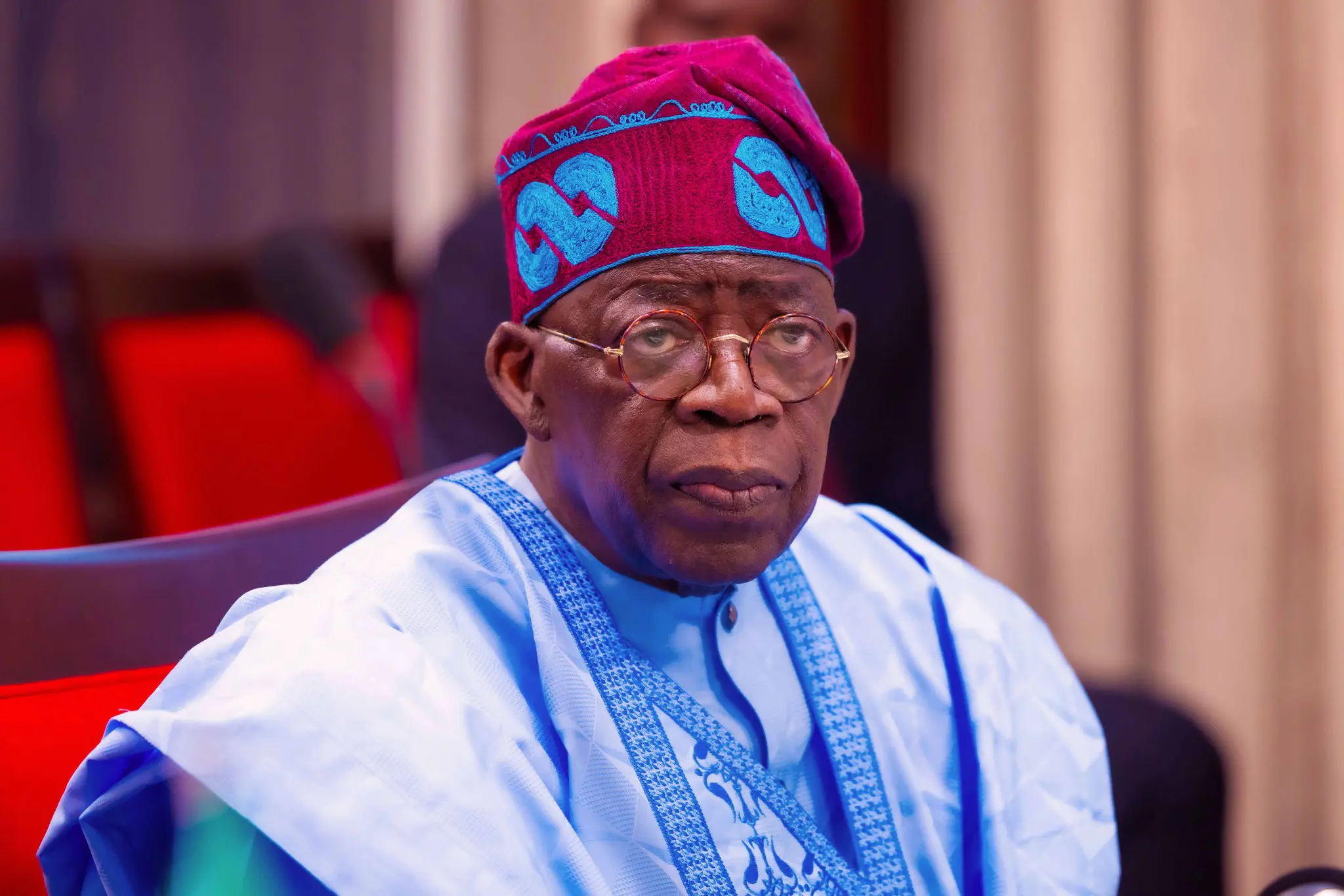
President Bola Ahmed Tinubu on Wednesday declared that Africa must end the era of exporting raw resources while importing poverty, urging the continent to embrace value addition and industrialisation as a pathway to sustainable prosperity.
The President made this known in Abuja at the 5th African Natural Resources and Energy Investment Summit (AFNIS 2026), where he was represented by the Minister of Solid Minerals Development, Dr. Henry Dele Alake. The summit, themed “One Africa, One Resource Vision,” brought together policymakers, investors, and industry leaders across the continent.
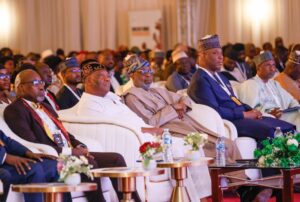
Declaring the summit open, Tinubu emphasised that Africa’s vast natural resources, ranging from gold, oil, and gas to lithium, cobalt, and other critical minerals, must be harnessed to drive economic transformation rather than perpetuate dependency. He stressed that the continent must move beyond fragmented approaches and adopt a unified strategy to maximise its resource potential.
He stated that Africa’s resources are central to the global energy transition and industrial future, noting that no secure supply of critical minerals or equitable global economic order can exist without the continent’s active participation and value creation.
“Africa must no longer export the future in raw form and import poverty in finished form,” Tinubu declared, calling for increased investment in refining, processing, manufacturing, and human capital development across the continent.
The President aligned the vision with Nigeria’s Renewed Hope Agenda, which focuses on economic diversification, industrial growth, infrastructure expansion, and job creation. He noted that Nigeria’s progress is tied to Africa’s broader prosperity, urging stronger regional collaboration in trade, energy, and infrastructure.
Tinubu also called on investors to engage in partnerships that promote local capacity, job creation, technology transfer, and environmental sustainability, stressing that Africa welcomes investments that build rather than exploit.
He further urged African governments to harmonise policies, strengthen intra-African trade, and ensure transparency and accountability in resource management, noting that no single country can achieve the desired transformation alone.
On energy, the President highlighted the need for a balanced and just transition that supports both climate goals and development needs, pointing out that millions of Africans still lack access to reliable electricity.
READ ALSO: Nigeria’s High Commissioner to Australia Presents Credentials, Seeks Stronger Trade, Education Ties
He further urged the stakeholders to translate summit discussions into actionable projects that will drive industrialisation, create jobs, and foster long-term economic growth across the continent.
Tinubu expressed confidence in Africa’s readiness to transition from resource dependence to value-driven economies, calling for collective action to build a unified, prosperous, and self-reliant continent.
About The Author