
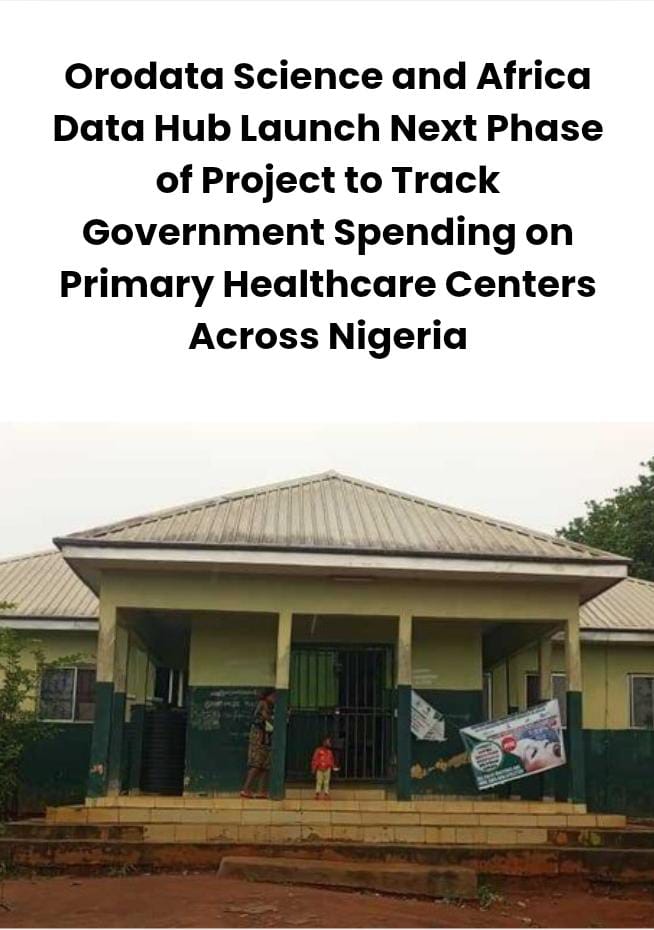
Orodata Science, in partnership with the Africa Data Hub (ADH), has commenced field tracking of government spending on 300 Primary Healthcare Centres (PHCs) across Nigeria to determine whether public funds allocated for their revitalisation are translating into functional healthcare facilities.
The initiative will go beyond government budget allocations and official records by comparing spending and procurement documents with the actual conditions of PHCs on the ground.
Orodata said the exercise would combine field verification, community engagement, investigative journalism and public data reporting to establish whether the revitalised and upgraded facilities exist, have the required infrastructure and equipment, and are providing services to the communities they were designed to serve.
The organisation said the project is being undertaken under a Federal Government mandate following claims of PHC revitalisation and upgrades through relevant government health agencies.
Between August and October 2026, trained community data collectors and investigative journalists are expected to visit more than 300 PHCs across the country.
The teams will collect geo-referenced data, assess physical infrastructure, verify equipment availability and establish the presence of healthcare workers, while also engaging community members and local leaders on their experiences accessing services at the facilities.
Orodata Programme Manager, Uche Oti, said the initiative was designed to establish what was happening beyond government figures and official documents.
> “We are moving beyond figures on paper to look at the reality on the ground,” Oti said.
He added that comparing government budgets and tender documents with conditions at PHCs would provide citizens, journalists and policymakers with evidence to demand improved healthcare delivery.
The latest exercise builds on Orodata’s previous work on primary healthcare data and accountability. In 2023, the organisation conducted a multi-state data collection exercise covering PHCs in Anambra, Benue, Cross River, Osun, Sokoto and Taraba states.
The exercise produced the MyPHC Report 2024, which assessed 345 PHCs and documented gaps in infrastructure, equipment and service delivery.
Orodata and ADH subsequently expanded the programme in December 2024 to 10 additional states and the Federal Capital Territory, targeting more than 1,000 additional PHCs.
The organisations also developed CheckMyPHC, an open-access platform providing citizens, journalists, researchers, health professionals and policymakers with data on PHCs.
Orodata said the raw data from the current field exercise would be cleaned and validated before publication on the Africa Data Hub portal and integration into the CheckMyPHC platform.
Investigative journalists will also use the findings to produce reports supported by field evidence, data analysis and interactive dashboards.
READ ALSO: Presidency: Tinubu Not Facing Criminal Case in US Over FOIA Records
Plastic Ban: Reps Warn Abrupt Phase-Out Could Cost Jobs, Push Prices Up
The organisation said the findings would form the basis of a public town hall meeting scheduled for October, bringing together government officials, community leaders, health experts and citizens to discuss accountability and possible solutions.
Orodata said the exercise was necessary because PHCs remain central to healthcare delivery, particularly in rural and underserved communities, making it important to establish whether continued public spending on their upgrade is resulting in functional facilities and improved healthcare services.
About The Author




1 thought on “Orodata, ADH Begin Tracking Government Spending on 300 PHCs Across Nigeria”