
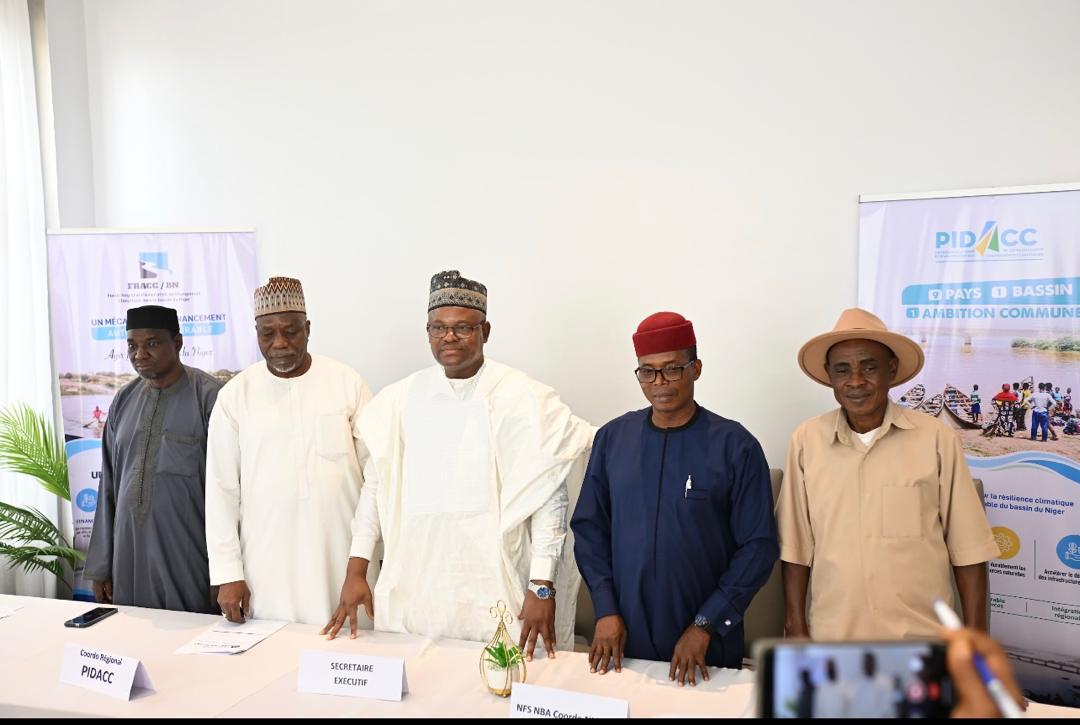
The Federal Government and the Niger Basin Authority (NBA) have called for accelerated implementation of water infrastructure projects, warning that sustainable financing and stronger regional cooperation are essential to improving the livelihoods of more than 200 million people across the Niger Basin.
The call followed a series of regional meetings organised by the NBA in Abuja from September 28 to October 9, 2026, involving representatives of its nine member countries, natural resource users, technical and financial partners, and other stakeholders.
The Director of Information and Public Relations, Mrs. Funmi Imuetinyan, disclosed this in a statement on Friday, October 9, following the conclusion of the ten-day engagements, which focused on strengthening cooperation and accelerating sustainable development across the basin.
Speaking at a press conference marking the conclusion of the meetings, the Executive Secretary of the NBA, Mr. Kocou Armand Houanye, stressed the need to fast-track ongoing projects, complete multipurpose water infrastructure and strengthen institutional governance.
Houanye identified hydrodiplomacy, climate change adaptation, youth and women’s participation, and the development of transboundary water infrastructure as critical to achieving sustainable development and regional stability.
He noted that more than 80 per cent of jobs in the Niger Basin region were connected to water resources, stressing the need for investments that would expand economic opportunities, reduce youth vulnerability and strengthen community resilience.
The NBA chief particularly urged member countries to accelerate the implementation of outstanding projects under the Programme for Integrated Development and Adaptation to Climate Change in the Niger Basin (PIDACC/NB), release counterpart funds and improve the processing of project requests.
He also called on the countries concerned to sign the Framework Agreement on the Common Basket Fund by November 15, 2026, and expedite the documentation required to access available Global Environment Facility resources from November.
Providing an update on the programme, Houanye disclosed that its physical implementation rate increased from 37 per cent at the end of June 2025 to nearly 50 per cent by the end of June 2026.
He added that the programme’s commitment rate also rose from 49 per cent to nearly 60 per cent within the same period, attributing the progress to institutional reforms and improved programme management.
Despite the progress, he stressed the need for stronger implementation efforts, noting that the 2027 work plans must prioritise the completion of outstanding projects, adequate maintenance arrangements and the consolidation of achievements ahead of the programme’s closure.
Houanye further highlighted institutional reforms undertaken by the NBA, including the adoption of its Strategic Plan and Operational Plan for 2026–2030, revised administrative, financial and procurement procedures, and measures to improve staffing and operational efficiency.
He said the Authority was also modernising and digitalising its water and environmental information systems while working towards operationalising the Regional Climate Change Adaptation Fund for the Niger Basin in early 2027.
According to him, the fund is expected to provide a more sustainable financing mechanism to support the Authority’s activities.
The Executive Secretary reaffirmed the NBA’s commitment to strengthening partnerships with the African Development Bank Group, the European Union, the World Bank Group, climate finance institutions, the private sector and research organisations.
He also underscored the importance of deeper cooperation with the Lake Chad Basin Commission in addressing shared environmental and water management challenges.
Earlier, Mr. Umezulike Robert A., speaking on behalf of the Minister of Water Resources and Sanitation, Engr. Prof. Joseph Terlumun Utsev, commended the NBA leadership, member countries and development partners for their contributions to the success of the meetings.
He said the engagements provided an opportunity for stakeholders to exchange experiences, identify implementation challenges and develop practical solutions to improve the delivery of PIDACC/NB sub-projects and infrastructure across member countries.
Umezulike expressed confidence that the knowledge gained and recommendations adopted during the workshops would translate into improved project implementation, stronger institutional performance and better outcomes for communities across the basin.
READ ALSO: Solar Power Nigeria Applauds FG’s Shift on Solar Panel Import Ban
NBTI Seeks Global Investment to Turn 298 Nigerian Innovations into Businesses
He urged participants to apply the lessons learnt in their respective countries, emphasising that sustained regional cooperation, effective project delivery and the maintenance of completed infrastructure were necessary to achieve the NBA’s shared development objectives.
The meetings addressed issues including hydrodiplomacy, gender inclusion, water security, climate adaptation, infrastructure development and programme implementation, reaffirming member states’ commitment to sustainable development, peace and prosperity across the Niger Basin.
About The Author


1 thought on “FG, Niger Basin Authority Seek Faster Delivery of Water Projects”