By Fatima Saka
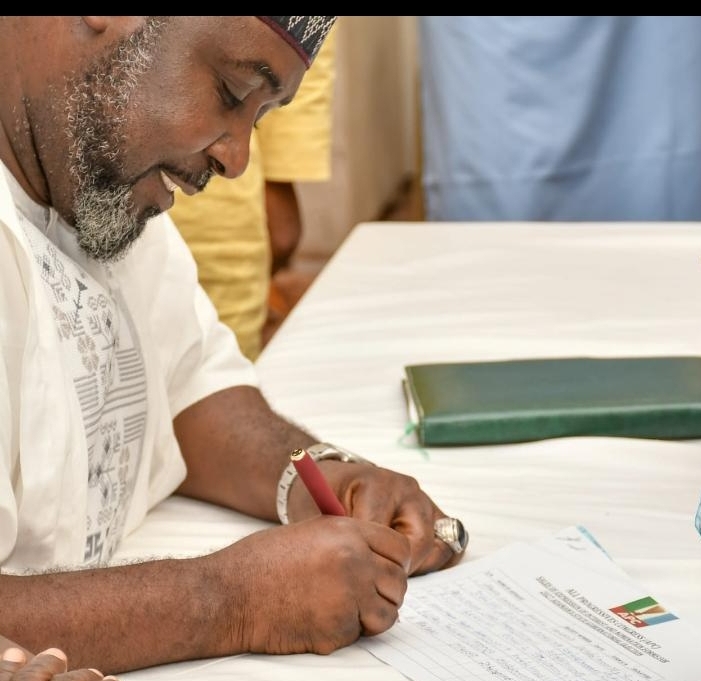
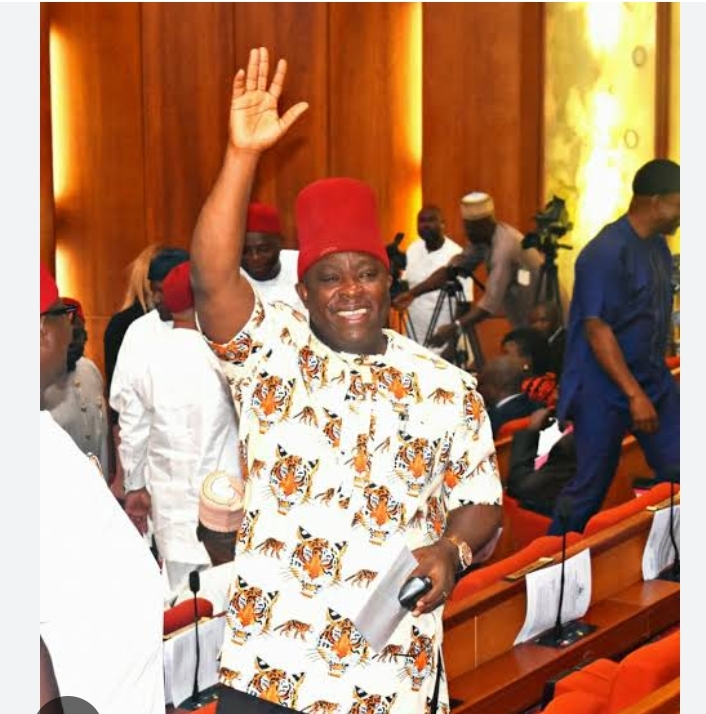
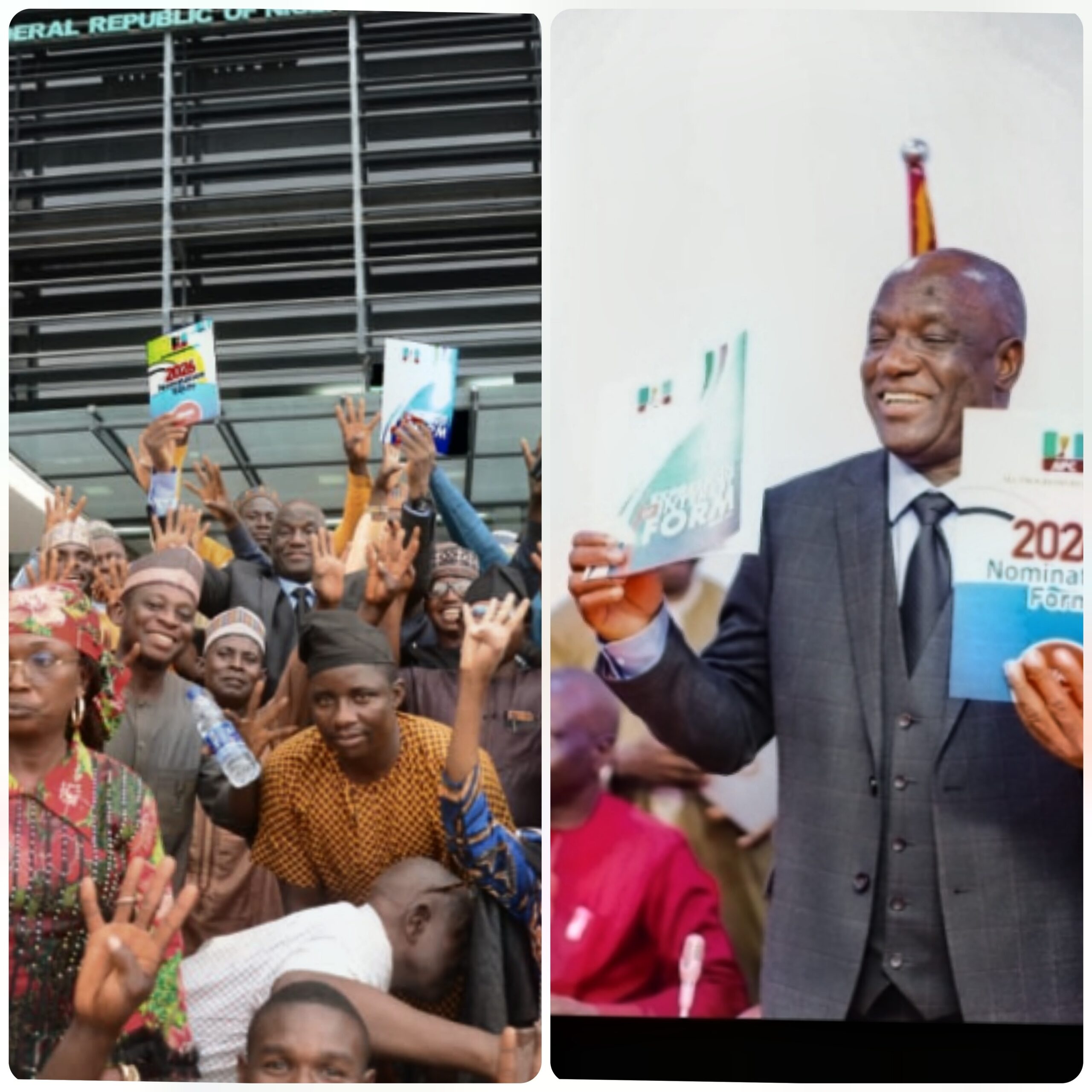
As the 2027 general elections draw closer, Senator Diket Satso Plang is already consolidating his political base, having secured his party’s nomination form to contest for a return to the 11th Senate. With visible support from his Plateau Central constituency and growing alignment among political elites, Plang appears poised to navigate the contest within his party and against potential opponents across party lines.
Born on December 12, 1972, in Pankshin, Plang’s political journey reflects a steady climb through the ranks of public service. Armed with a Bachelor of Technology degree from Abubakar Tafawa Balewa University, where he built a foundation for leadership early on as a secondary school head boy, he has since cultivated a reputation as a grassroots mobilizer with a focus on development-driven governance.
Before his election to the Senate in 2023 under the All Progressives Congress (APC), Plang held multiple strategic roles, including Councillor, Local Government Chairman, Member of the State House of Assembly, Commissioner, Special Adviser, and board member of Plateau State University. These roles provided him with administrative experience and a deep connection to community needs.
In the 10th National Assembly, Plang serves as Chairman of the Senate Committee on Labour, Employment and Productivity and Vice Chairman of the Committee on Federal Character. His legislative footprint is marked by a series of bills and motions targeting infrastructure, healthcare, education, and economic reform.
Among his key legislative efforts is the Nigeria Social Security Trust Fund Bill (2025), designed to strengthen the country’s social protection framework. He has also sponsored bills seeking the establishment of critical institutions, including a Federal University of Mining and Geosciences in Jos, a Federal Medical Centre in Kanke, a National Eye Centre in Pushit-Mangu, and a National Centre for Artificial Intelligence and Digital Innovation in Jos.
Plang’s advocacy extends beyond legislative chambers. He has been vocal on national and regional security challenges, particularly in Plateau State and the North Central region, where his motions have contributed to increased security attention. His push for the dualization of the Akwanga–Jos–Bauchi–Gombe road underscores his focus on infrastructure as a driver of economic growth.
At the constituency level, his interventions have centered on empowerment and human capital development. Through a ₦1 billion empowerment initiative, Plang has supported youth and women with tools for small businesses, including grinding machines, POS systems, and barbing kits. His agricultural support programmes—distribution of thousands of fertilizer bags and irrigation equipment—have bolstered farming communities, while ICT projects and scholarships in emerging fields like Artificial Intelligence highlight his emphasis on future-ready education.
READ ALSO: Women Deliver 2026 Must Honour First Nations Justice, Land, and Life
Ugbor Honoured with 2025 Industry Enabler Award for Boosting Recycling Sector
Plang’s personal life has also shaped his public image. He was married to the late Professor Janet Punyit Plang, and he continues to maintain strong engagement with his constituency through welfare, education, and infrastructure initiatives.
As political activities intensify ahead of 2027, observers note that Plang’s blend of legislative activity, constituency outreach, and elite backing positions him as a formidable contender. However, the evolving dynamics within the APC and the broader political landscape in Plateau State suggest that the road to the 11th Senate will remain competitive.
About The Author