
By Fatima Saka
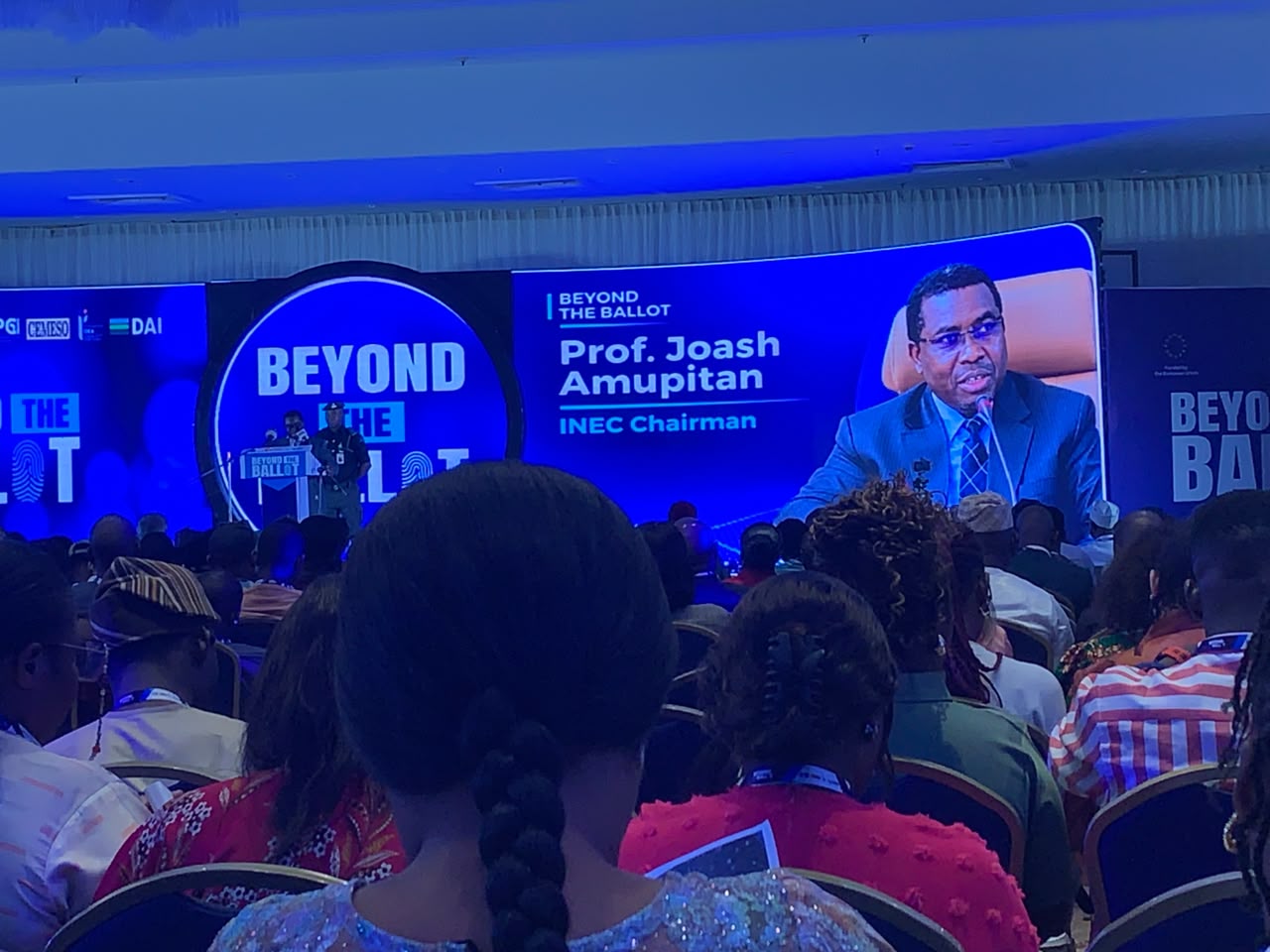
The growing accessibility of artificial intelligence tools capable of producing fabricated audio recordings, realistic videos and coordinated online misinformation poses a growing threat to Nigeria’s electoral integrity ahead of the 2027 general elections, the Chairman of the Independent National Electoral Commission (INEC), Professor Joash Ojo Amupitan (SAN), has warned.
Amupitan said emerging technologies could make it increasingly difficult for citizens to distinguish authentic electoral information from fabricated announcements designed to influence political opinions and disrupt the voting process.
He spoke on Monday in Abuja at the ongoing two-day National Summit on Electoral Information Integrity, themed “Beyond the Ballot: AI, FIMI and the Integrity of Nigeria’s 2027 Elections.”
The summit brought together representatives of electoral institutions, security agencies, regulatory bodies, political parties, civil society organisations, media executives and international partners to examine threats to Nigeria’s electoral process.
The INEC chairman emphasised the urgency of protecting Nigeria’s information space and ensuring transparency as the country approaches the January 2027 general elections.
He noted that although digital technologies and artificial intelligence could improve electoral administration, their misuse had significantly lowered the barriers to sophisticated information manipulation.
According to him, machine learning could support activities such as eliminating duplicate entries in voter registers, improving logistics planning, analysing electoral data and enhancing administrative efficiency.
However, he warned that the same technological advancements could be exploited to produce highly realistic fabricated videos of electoral officials making false announcements, clone voices and coordinate misleading narratives across social media platforms.
Amupitan observed that such operations could be deployed at relatively low costs, making them a growing concern for electoral authorities and other democratic institutions.
He stressed the need for stronger cooperation among electoral authorities, fact-checkers, media organisations, technology platforms and security agencies to identify and respond to manipulated information.
The INEC chairman also highlighted the limitations of relying solely on online news platforms and existing fact-checking mechanisms to counter coordinated and targeted information operations.
He called for stronger institutional capacity, improved access to verified information and effective systems for responding to emerging threats.
NCDC: ₦10bn Ebola Intervention Fund Covers Lassa Fever, Cholera, Other Disease Threats
The summit further examined the need to protect electoral and judicial integrity while ensuring that efforts to counter misinformation do not undermine freedom of expression, political participation and independent journalism.
Participants advocated a coordinated approach involving relevant institutions and stakeholders to strengthen public confidence in the electoral process ahead of the 2027 general elections.
About The Author