……Strategy, Survival, and People-Centred Leadership
By Fatima Saka
From the quiet town of Aguluzigbo in Anambra State to the complex theatre of Nigeria’s national politics, Senator Victor Umeh’s trajectory is not merely a story of personal success, it is a study in endurance, political engineering, and the constant negotiation of relevance in a volatile democratic space.
Discipline, Intellect, and Early Direction
Born on July 19, 1962, Umeh’s early life was shaped by structure and ambition. His academic excellence at Bubendorff Memorial Grammar School foreshadowed a future grounded in discipline. At the University of Nigeria, where he earned a degree in Estate Management in 1984, Umeh developed not just professional competence but also the analytical mindset that would later define his political strategies.
His career as an estate surveyor and valuer exposed him to issues of land, ownership, and economic power, critical themes in Nigerian politics. This background quietly influenced his later advocacy for fairness, resource control, and structured governance.
Entering Politics, Building from the Margins
Umeh’s political journey began in 1998, a period when Nigeria was transitioning from military rule to democracy. Starting as a State Treasurer in Anambra, he operated at the grassroots of party administration, an experience that gave him deep insight into political structures often ignored by more prominent actors.
His pivotal role came in 2002 with the formation of the All Progressives Grand Alliance (APGA). At a time when Nigeria’s political landscape was dominated by larger national parties, APGA represented both a regional assertion and a protest against political marginalisation. Umeh was not just a founding member; he became one of its most consistent architects.
The APGA Years: Strategy, Crisis Management and Institutional Survival
As National Chairman, Umeh’s leadership coincided with some of the most turbulent periods in the party’s history. His role in securing the governorship mandate for Peter Obi after the disputed 2003 elections demonstrated not only legal persistence but also an understanding of how judicial processes could shape political outcomes in Nigeria.
What stood out was not just the victory, but the method, prolonged litigation, political negotiation, and strategic patience. The eventual outcome redefined how electoral disputes could be pursued within constitutional frameworks.
Umeh repeated this strategic coordination in 2010 with Obi’s re-election, reinforcing APGA’s credibility in Anambra. Beyond the state, he expanded the party’s reach, leading to the emergence of Rochas Okorocha in Imo State in 2011, a rare breakthrough for a regional party in a different political environment.
His orchestration of Willie Obiano’s emergence in 2013 and subsequent re-election in 2017 further cemented APGA’s dominance in Anambra, turning the state into the party’s political stronghold.
Ideological Anchoring and the Ojukwu Influence
Umeh’s political philosophy was deeply influenced by his alliance with Chukwuemeka Odumegwu Ojukwu. Under Ojukwu’s ideological guidance, APGA evolved beyond a political party into a platform for identity, regional assertion, and calls for equity in Nigeria’s federal arrangement.
This relationship gave Umeh both legitimacy and ideological clarity, positioning him as a bridge between historical political struggles and contemporary democratic engagement.
National Recognition and Constitutional Engagement
Umeh’s participation in the 2014 National Conference marked his transition from regional strategist to national policy advocate. At the conference, he consistently pushed for restructuring, equity, and inclusiveness, issues that remain central to Nigeria’s political discourse.
His conferment with the national honour of OFR by Goodluck Jonathan was not just ceremonial; it was an acknowledgment of his role in sustaining democratic processes during periods of uncertainty.
No serious political career in Nigeria is without conflict, and Umeh’s was no exception. His tenure as APGA chairman was marked by internal crises and legal disputes over party leadership. Yet, what distinguishes him is not the absence of conflict, but his ability to remain politically relevant despite it.
After stepping down in 2015, many expected his influence to wane. Instead, he recalibrated. His victory in the 2018 Anambra Central Senatorial by-election, during the leadership of Senate President Bukola Saraki, signaled his successful transition from party administrator to elected lawmaker.
Losing the seat in 2019 could have marked a decline, but Umeh again demonstrated adaptability. His move to the Labour Party and eventual victory in the 2023 Senate election, where he defeated Uche Ekwunife, reflected a keen understanding of shifting political tides and voter sentiment.
Legislative Role
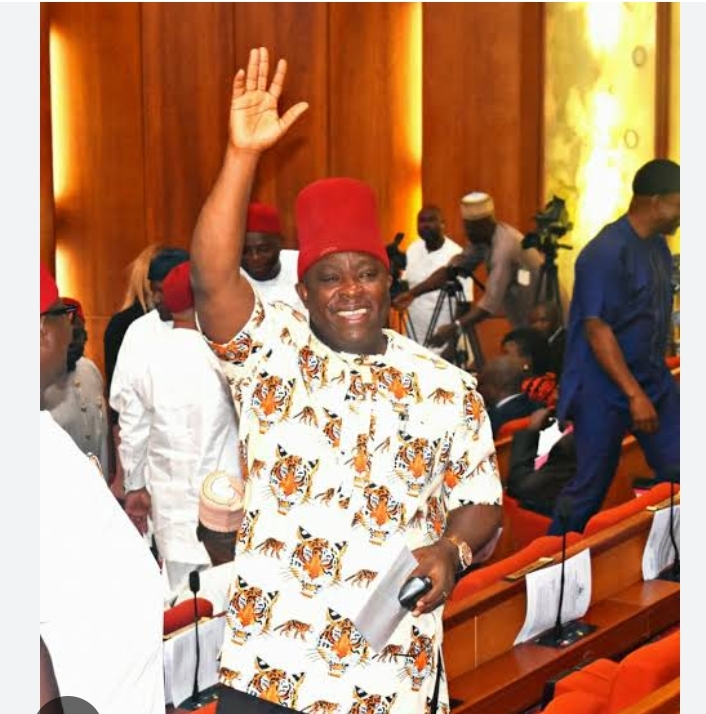
In the Senate, Umeh has carved out a role that aligns with his long-standing advocacy. As Chairman of the Senate Committee on Diaspora Affairs and the Senate Committee on National Identity and National Population, he operates at the intersection of governance, identity, and demographic policy.
These roles are critical in a country where population data, national identity systems, and diaspora engagement directly impact planning, security, and economic development. Umeh’s involvement places him within key national conversations about Nigeria’s future structure and global positioning.
People-Centred Interventions: Beyond Politics
Perhaps the most defining aspect of Umeh’s recent political identity is his emphasis on direct social impact. His disbursement of ₦64 million in scholarships to 326 students goes beyond political symbolism, it addresses a structural gap in access to education amid economic strain.
Through the Victor Umeh Education Foundation, his sponsorship of over 200 students reflects a long-term investment in human capital, suggesting a leadership model that blends politics with social responsibility.
His empowerment of over 520 constituents with modern agricultural equipment further underscores a pragmatic approach to governance, targeting food security, employment, and local economic resilience.
Recognition, Faith, and Moral Authority
Umeh’s numerous honours, including a Papal Knighthood conferred by the Catholic Church, add a moral and humanitarian dimension to his public image. These recognitions reinforce a perception of leadership that extends beyond politics into service and ethical responsibility.
The Politics of Staying Power
Senator Victor Umeh’s career offers a compelling insight into the mechanics of Nigerian politics, where survival often depends on adaptability, alliances, and timing. Yet, beyond strategy, his enduring relevance is rooted in his ability to connect political power with tangible impact.
READ ALSO: Awa Ibraheem Donates ICT Hub: MURIC Urges Wealthy Nigerians to Support Education
COOU’s Leadership Conundrum: When Appointments Undermine Accountability
He is not just a participant in Nigeria’s democratic journey but a shaper of its processes, an institution builder who has navigated crises, redefined party structures, and consistently returned to the centre of political relevance.
In a system where many rise quickly and fade just as fast, Umeh’s story stands as a testament to persistence, reinvention, and the enduring power of people-centred politics.
About The Author