By Fatima Saka
The United Nations Children’s Fund has called for stronger multi-sectoral collaboration to tackle malnutrition, as Enugu State and Benue State scale up efforts to improve nutrition outcomes for women and children.
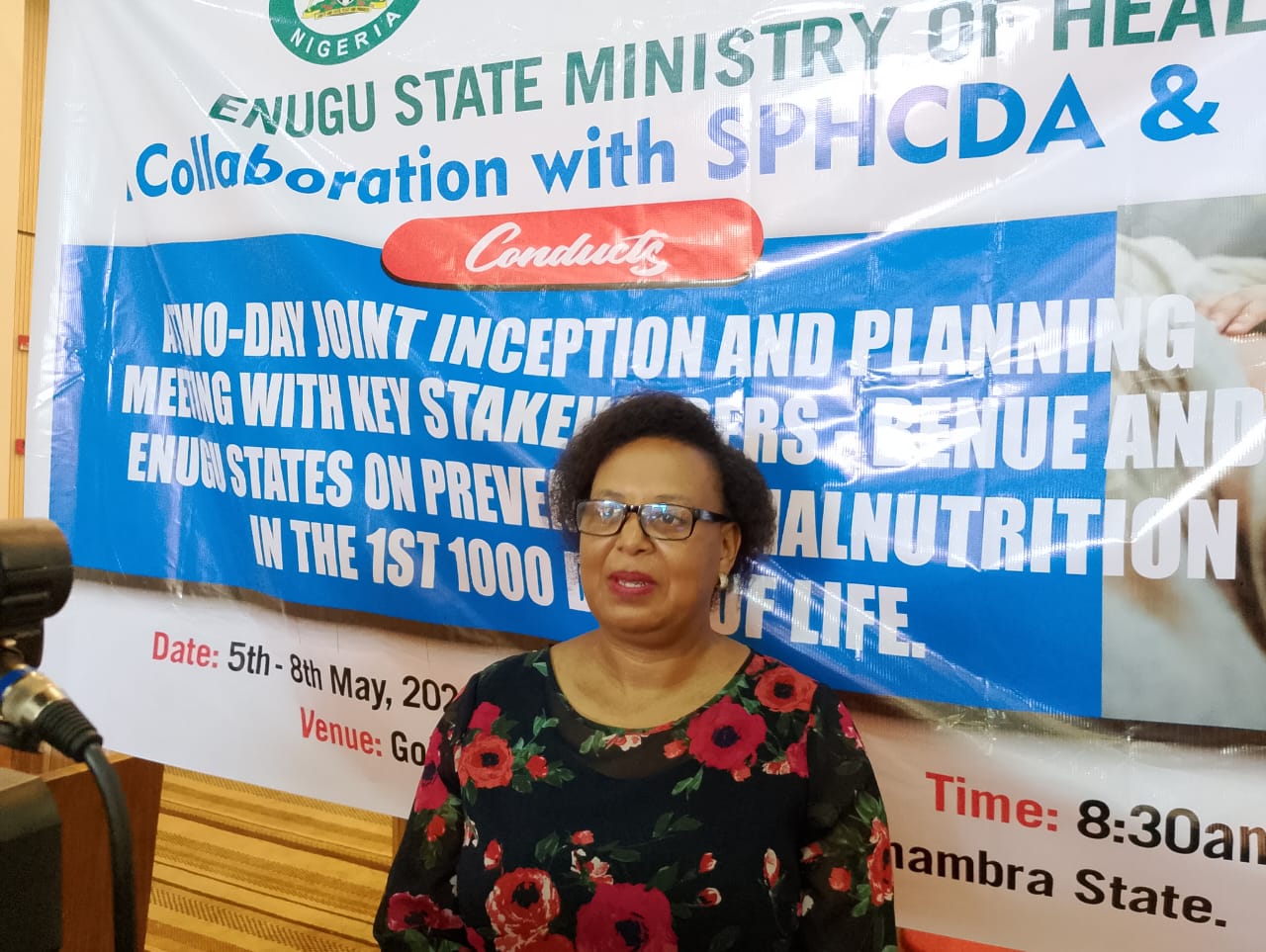
Speaking at a two-day Joint Inception and Planning Meeting on prevention of malnutrition in the first 1,000 days, held in Awka, the Chief of UNICEF Field Office in Enugu, Juliet Chiluwe, described early childhood nutrition as critical to lifelong health and development.
Chiluwe commended both state governments for their commitment, noting that the meeting—organised by UNICEF in collaboration with the states and supported by the United States Government—provided a platform to align priorities, clarify roles and promote evidence-based interventions.
She emphasised that sustainable nutrition outcomes require coordinated efforts across key sectors, including health, agriculture, education, water, sanitation and social protection.
In Enugu, the Executive Secretary of the State Primary Health Care Development Agency, Ifeyinwa Ani-Osheku, disclosed that the state invested N439.2 million in nutrition and related health interventions in 2025.
She said N160 million was allocated to the Child Nutrition Fund for procurement of essential commodities such as lipid-based nutrient supplements and ready-to-use therapeutic foods, while N178 million was spent on procuring two million doses of Albendazole for deworming.
Ani-Osheku added that N61.33 million funded two rounds of the 2025 Maternal, Newborn and Child Health Week, alongside other targeted investments aimed at strengthening nutrition programmes and improving public health outcomes. She also acknowledged UNICEF’s additional support, including commodities and N75.38 million for health week activities.
Providing insight into nutrition indicators, the Enugu State Nutrition Officer, Loveth Onwuzulike, said the state recorded mixed progress, with stunting at 15.2 per cent and wasting at 3.9 per cent in 2024.
She noted a slight decline in exclusive breastfeeding to 54.1 per cent, while only 38 per cent of pregnant women attended at least four antenatal visits. According to her, 52 per cent of women were anaemic, 41 per cent received micronutrient supplements, and just 16 per cent of children aged six to 23 months met minimum acceptable diet standards.
In Benue, the State Nutrition Officer, Faustina Shar, painted a more alarming picture, revealing that 342,919 children—representing 25 per cent of those under two years—were stunted, while 699,554 (51 per cent) were anaemic.
Shar described the situation as a major public health concern, linking malnutrition to poor health outcomes, weak immunity and reduced economic productivity. She identified key drivers as poverty, inadequate access to nutritious food, poor sanitation, harmful cultural practices, insecurity and weak healthcare systems.
She added that while 49.1 per cent of pregnant women attended at least four antenatal visits, 33.2 per cent had none, and only 16 per cent of children aged six to 23 months received minimum dietary diversity.
Also speaking, the Benue State Commissioner for Health and Human Services, Paul Ogwuche, described the high malnutrition rate as unfortunate but reaffirmed the government’s commitment to reversing the trend.
READ ALSO: Senate Confirms Tegbe, Enikanolaiye, Signals for Power Reforms, Citizen-Centred Diplomacy
FRSC Targets Drunk Driving, Road Safety Violations with Free Breath Tests in Anambra
Ogwuche pledged that the state would implement strategies discussed at the meeting to improve the nutritional wellbeing of women and children, while commending UNICEF and the United States Government for their continued support.
The meeting underscored the urgency of coordinated action, particularly within the first 1,000 days of life, widely recognised as a critical window for preventing malnutrition and ensuring optimal growth and development.
About The Author