
By Fatima Saka
The Nigeria Hydrological Services Agency (NIHSA) has called for stronger collaboration with environmental journalists to ensure timely flood warnings and other critical hydrological information reach vulnerable communities across the country.
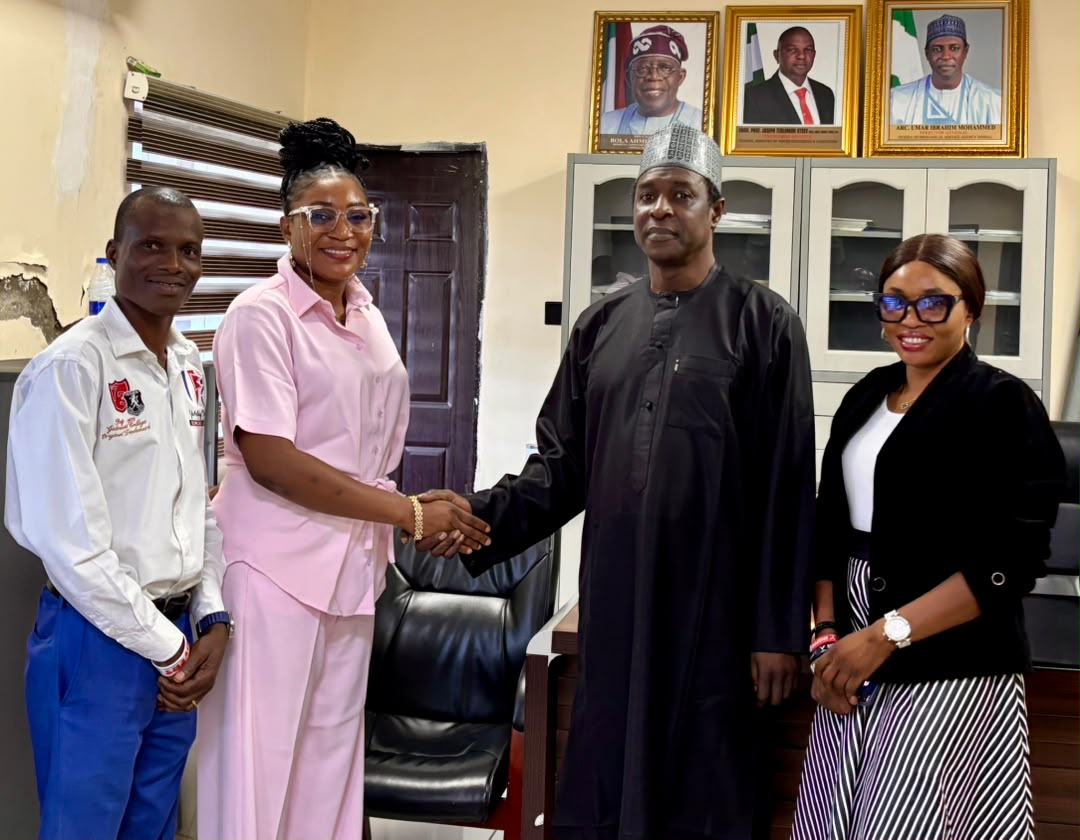
The Director-General of NIHSA, Architect Umar Muhammed, made the call when the Executive Council of the Environmental Media Correspondents Association of Nigeria (EMCAN), led by its newly elected Chairman, Joycelyn Ellakeche Adah, recently paid a courtesy visit to the agency’s management in Abuja.
Muhammed said effective dissemination of early warning information was essential to reducing the impact of flooding and other water-related risks, stressing that the media remained a critical link between the agency and communities that needed timely and accurate information.
He also warned that poor environmental management and contamination of water sources could worsen water scarcity and increase the risk of water-related diseases.
“If you do not have good environment and manage water resources, one day you wake up and you’d be shocked with what you see. Either you totally run out of water or you have no clean water,” he said.
The NIHSA boss said human activities were contributing significantly to the pollution of streams and other water bodies, making public awareness and responsible water management increasingly important.
He urged EMCAN to work closely with the agency in taking quality information on flood forecasts, early warning systems and water resources management to the public.
“We will need an organisation like yours to interface with the public and disseminate quality information for public use,” Muhammed said.
Also speaking, NIHSA Technical Adviser to the Director-General, Stephen Jabo, called for increased media coverage of the agency’s programmes, particularly its Annual Flood Outlook.
Jabo said NIHSA’s work on water and land management directly affects Nigerians but remains insufficiently understood by the public due to inadequate publicity.
He urged environmental reporters to liaise with the agency’s press unit, participate in its programmes and help disseminate flood-related information to communities across the country.
Meanwhile, EMCAN appealed to NIHSA to support the association’s planned coverage of the 31st Conference of the Parties (COP31), scheduled to take place in Türkiye.
Adah said the association was seeking sponsorship for two to three members to participate in the global climate conference, while noting that EMCAN had also commenced efforts to raise funds for the participation of its members.
Responding, Muhammed said NIHSA was making preparations to participate in COP31 and was exploring collaboration with international development partners, national agencies and other stakeholders.
He, however, said the agency operated within a statutory funding framework and could not give an immediate commitment on sponsorship.
“If we are able to secure quite a number of slots, why not? Definitely, it’s something that we could consider,” he said.
The agency’s Special Assistant on Media, Yakub Aliyu, also advocated specialised training for environmental journalists, saying improved understanding of hydrological issues would strengthen reporting and public enlightenment.
Aliyu said Nigeria faced both water scarcity and excess water challenges, including flooding, while contamination of water sources remained a major concern.
He said NIHSA was interested in partnering with EMCAN on capacity-building programmes that would equip journalists with the technical knowledge needed to accurately report issues relating to water resources, flooding and environmental risks.
Earlier, Adah said EMCAN regarded NIHSA’s work in hydrology, flood forecasting, early warning systems and water resources management as critical to the safety and wellbeing of Nigerians.
She said the association’s new leadership was prioritising capacity building and stronger relationships with relevant environmental agencies to improve the quality of environmental journalism.
“As environmental journalists, we have been following and reporting the activities of NIHSA, but we want to do more,” Adah said.
She added that journalists would be better positioned to accurately explain the agency’s work to the public if they had opportunities to understand its operations and technical processes firsthand.
The association also proposed a structured partnership with NIHSA, covering public enlightenment, professional development, early warning dissemination and improved reporting of Nigeria’s water and environmental challenges.
READ ALSO: Flood: SAR Teams Extend Search Downstream, One Person Still Missing in FCT
NEMA Deploys Technical Team to Ondo, Air Force Aircraft Crashes Near Igbokoda
Both organisations expressed optimism that the engagement would strengthen collaboration and improve the flow of hydrological information to Nigerians, particularly communities vulnerable to flooding and other water-related risks.
The courtesy visit formed part of activities by the new EMCAN leadership to familiarise itself with relevant government agencies and strengthen partnerships aimed at projecting issues of public interest.
About The Author


1 thought on “NIHSA, Environmental Journalists Partner on Flood Alerts, Water Management in Nigeria”