
…….FG Targets 25,000 Free Cataract Surgeries by 2027, Expands Eye Care Access
By Fatima Saka
The Nigeria Government has revealed to co-host the first-ever Global Summit for Eye Health, scheduled for November 2, 2026, in St. John’s, Antigua and Barbuda, as part of efforts to strengthen global action against avoidable blindness and vision impairment.
The Minister of State for Health and Social Welfare, Dr Iziaq Adekunle Salako, disclosed this in his address at the 2026 World Sight Day commemoration, represented by Dr Doris Afam, Director, eHealth Division, Hospital Services Department, Federal Ministry of Health and Social Welfare.
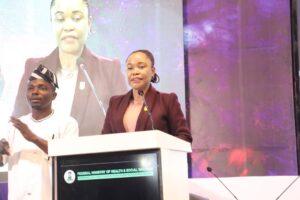
Salako said Nigeria’s role in the summit demonstrated the country’s growing leadership in eye health, noting that the country had moved beyond participating in global discussions to contributing to the development of continental and international strategies.
He said the summit would provide an opportunity to advance the integration of eye health into universal health coverage and broader health-system planning.
According to him, the Federal Government considers avoidable blindness and vision impairment not only a public health concern but also a development challenge capable of affecting education, productivity, independence and quality of life.
The minister said the government was therefore pursuing measures to make eye care more accessible, affordable and sustainable, particularly for people who face geographical and financial barriers to essential services.
He disclosed that more than 3,000 healthcare workers across 16 states had been trained, while over 1,400 primary healthcare centres had been activated to provide essential primary eye care services.
Salako added that more than 1.5 million pairs of reading spectacles had been distributed across the 16 states through the Spectacle Corporate Initiative Nigeria (ESCIN), known as Jigi-Bola 2.0.
He said preparations were also at an advanced stage to extend the programme to 10 additional states, further expanding access to basic vision correction services.
The minister further disclosed that more than 1.5 million school-age children had been screened for visual problems through the school eye health programme and linked to appropriate care where necessary.
He said four additional vision centres were being established in Enugu, Edo, Sokoto and Nasarawa states, within secondary healthcare facilities, to strengthen eye-care services and referral pathways.
Salako also announced the Federal Government’s plan to conduct 25,000 free cataract surgeries nationwide by the end of 2027 under the Renewed Hope Health Connect initiative.
He described cataract as the leading cause of avoidable blindness in Nigeria, stressing that restoring sight through timely intervention would also help restore independence, productivity and quality of life.
Earlier, the Permanent Secretary, Federal Ministry of Health and Social Welfare, Daju Kachollom, mni, represented by the National Coordinator, National Eye, Ear and Sensory Functions Health Programme (NESHP), Dr Oteri Okolo, urged Nigerians to prioritise regular eye examinations.
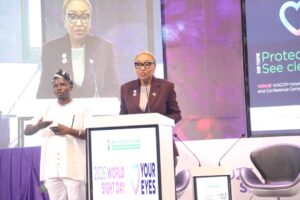
Kachollom said many eye conditions could develop gradually without obvious symptoms, making routine examinations, early detection and prompt treatment critical to preventing avoidable sight loss.
She also linked good eye health to education, productivity, human development and the achievement of universal health coverage and the Sustainable Development Goals.
The Executive Secretary, National Commission for Persons with Disabilities (NCPWD), Chief Ayuba Burki, called for greater emphasis on preventive eye care, stressing that people with disabilities must also have access to services that protect and preserve their sight.
Country Director, Sightsavers Nigeria, Prof. Joy Shauibu, said nearly five million Nigerians were living with visual impairment, with less than five per cent accessing quality eye care.
She said about 83 per cent of blindness was avoidable through timely information, appropriate services and access to treatment, urging government, the private sector and development partners to strengthen collaboration.
Representing the Country Director of the Clinton Health Access Initiative (CHAI), Dr Olumkonke Fasanmi, Damilola Oyedele said the organisation, in partnership with the National Eye Health Programme, had reached more than one million Nigerians with reading glasses through the primary healthcare system.
Oyedele said an estimated 24 million Nigerians were living with uncorrected presbyopia, adding that CHAI was expanding its intervention to 11 additional states while training health workers to provide primary eye care and dispense reading glasses.
Representatives of CBM International, OneSight EssilorLuxottica Foundation, Peek Vision, CBM Global Disability Inclusion, VisionSpring and other partners also renewed their commitment to expanding equitable eye-care services, supporting community screening, improving access to spectacles and strengthening inclusive services for vulnerable populations.
They emphasised that good vision was essential for learning, livelihoods, independence and participation in society, while calling for greater investment in sustainable eye-health systems.
The Health and Development Support Programme (HANDS) said it had remained committed for more than three decades to supporting eye-care services, including treatment, screening, provision of glasses, cataract and other eye surgeries, as well as low-vision services.
The National Eye Centre Kaduna, represented by its Medical Director, Dr Amina Hassan Wali, also renewed its commitment to preventing avoidable blindness through quality and affordable eye care, regular examinations, early presentation, research, innovation and expanded services to underserved communities.
Similarly, Tulsi Chandra Foundation said it had restored sight to more than 210,000 people across Nigeria through free surgical interventions, stressing that financial and geographical barriers should not prevent Nigerians from accessing sight-saving services.
The foundation and other stakeholders urged Nigerians to prioritise regular eye checks, adopt healthy eye-care practices and seek professional attention promptly whenever they experience changes in vision.
READ ALSO: Tenebe Clarifies AK-47 Remark, Says It Signified Electoral Resolve
Abejide Unveils N500m Youth Empowerment Plan for 74 Yagba Communities
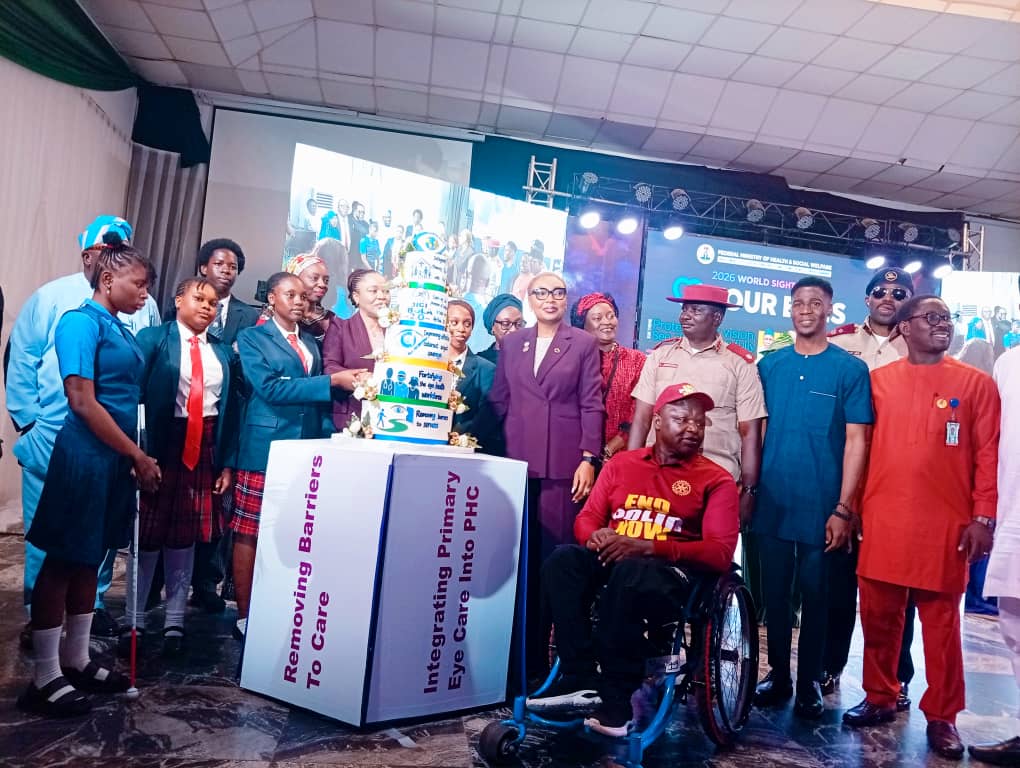
The 2026 World Sight Day was commemorated under the global theme “Love Your Eyes,” while Nigeria adopted the sub-theme “Protect Your Vision, See Clearly, Live Fully.”
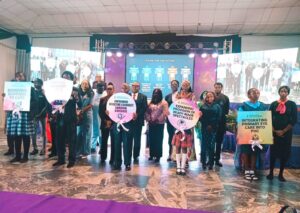
The event featured the presentation of “Nigeria Loves Its Eyes: The State of Eye Health and the Case for Accelerated Action,” by Dr Oteri Okolo. Also, an unveiling procession of schools and corps members, the unveiling of “The Future of Eye Health in Nigeria,” a cake-cutting ceremony and a panel session on “National Dialogue: The Value of Vision, Investing in People, Productivity and Nigeria’s Future.”

The programme was rounded off with musical performances by E-Daniels and Cohhams Asuquo, as stakeholders renewed the call for Nigerians to protect their vision and ensure that no one is left behind in access to eye care.
About The Author



1 thought on “Nigeria to Co-Host First-Ever Global Summit for Eye Health in Antigua, Barbuda to Strengthen Global Action Against Avoidable Blindness”