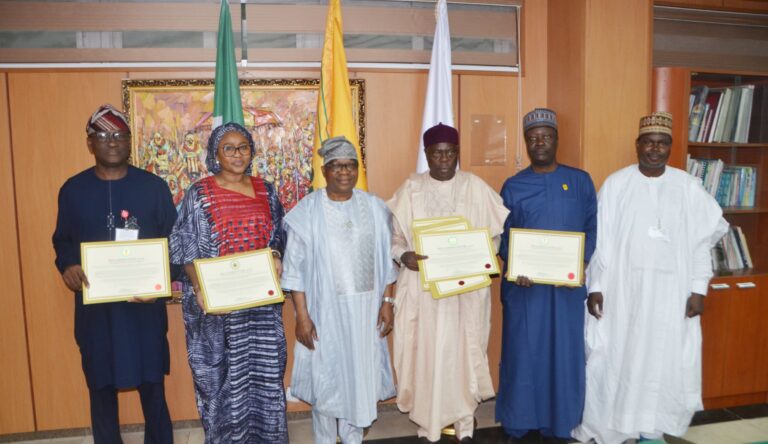

The Federal Government has signalled plans to scale up a new malaria prevention strategy targeted at infants, as part of intensified efforts to reduce the country’s disease burden and under-five mortality.
Minister of State for Health and Social Welfare, Dr. Iziaq Adekunle Salako, made this known at the Perennial Malaria Chemoprevention (PMC) dissemination meeting held in Abuja, where findings from a major implementation research were presented.

Salako said the government is considering nationwide adoption of PMC — a preventive treatment designed for children under 24 months — following promising results from pilot studies conducted under the National Malaria Strategic Plan (2021–2025).
He noted that the initiative, formerly known as Intermittent Preventive Treatment in infants, was introduced to address malaria transmission in regions not eligible for Seasonal Malaria Chemoprevention, particularly in southern Nigeria.
According to him, the intervention aligns with recommendations of the World Health Organization and is expected to complement existing malaria control measures such as vector control, testing, treatment, and surveillance.
The minister revealed that Nigeria has made notable progress in malaria control, with prevalence declining from 42 per cent in 2010 to 15 per cent in 2025, based on the latest Malaria Indicator Survey. However, he stressed that the country still bears a disproportionate global burden, accounting for 24.3 per cent of malaria cases and 30.3 per cent of deaths worldwide.
“While this progress is commendable, much work remains to be done. The urgency of this moment cannot be overstated,” Salako said.
He explained that the PMC strategy could significantly reduce child mortality and promote equity in malaria interventions, especially as seasonal chemoprevention has already saved millions of lives in northern Nigeria.
Salako directed relevant departments, including the Department of Public Health and the National Malaria Elimination Programme, to begin work on policy frameworks that would enable large-scale implementation of PMC across the country.
He also emphasised the need to assess the cost-effectiveness of the intervention to guide sustainable rollout.
The minister reaffirmed the Federal Government’s commitment to eliminating malaria under the forthcoming National Malaria Strategic Plan (2026–2030), stressing that the fight against the disease remains a top public health priority of President Bola Ahmed Tinubu’s administration.
He commended development partners, including the Gates Foundation and Malaria Consortium, as well as health workers and sub-national governments for their contributions to malaria control efforts.
READ ALSO: NEMA, Key Agencies Unite to Strengthen Early Warning System Ahead of Flood Risks
FGBMFI Urges Christians to Break Barriers Through Faith, Purpose
Salako urged stakeholders to translate research findings into actionable policies that would accelerate progress toward a malaria-free Nigeria.
“Together, with commitment and partnership, we will change the story and decisively reduce the burden of malaria in our country,” he said.
About The Author