The National Emergency Management Agency (NEMA) has convened a high-level inter-agency meeting aimed at strengthening early warning systems and promoting proactive flood management across Nigeria, ahead of the national launch of the Early Warnings for All (EW4All) Initiative.
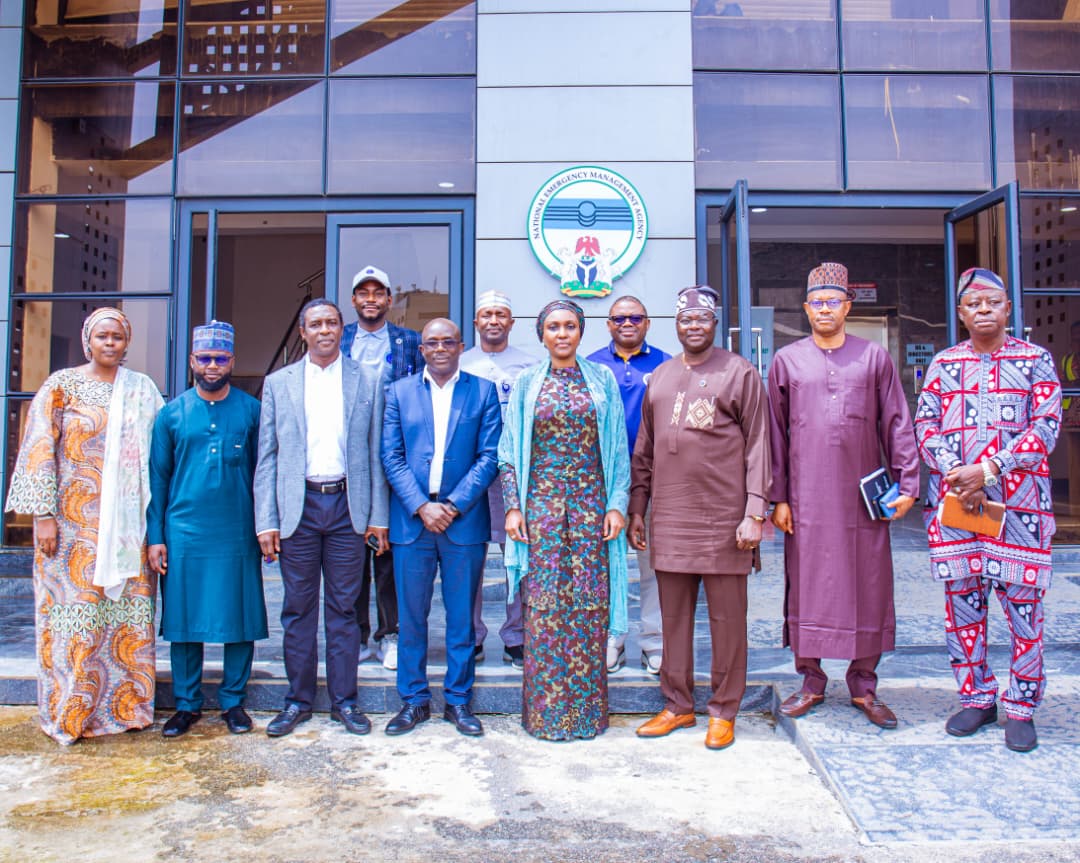
The meeting brought together heads of critical agencies, including the Director General of NEMA, Mrs. Zubaida Umar; Executive Vice Chairman/CEO of the Nigerian Communications Commission (NCC), Dr. Aminu Maida; Director General of the Nigeria Hydrological Services Agency (NIHSA), Alhaji Ahmed Ibrahim Mohammed; Director General of the National Space Research and Development Agency (NASRDA), Dr. Matthew Adepoju; and Director General of the Nigerian Meteorological Agency (NiMet), Prof. Charles Anosike. Also in attendance was a representative of the United Nations Office for Disaster Risk Reduction (UNDRR), Mr. Muliro Mashauri.
The engagement focused on enhancing coordination among institutions, clarifying roles and responsibilities, and outlining practical steps for the effective rollout of the EW4All Initiative in Nigeria.
Speaking at the meeting, Mrs. Umar described the gathering as a significant milestone in strengthening Nigeria’s disaster risk management framework through improved collaboration. She emphasized that early warning systems are critical to safeguarding lives and mitigating the impact of climate-induced disasters, particularly flooding.
She noted that the initiative aligns with Nigeria’s commitments under the Sendai Framework for Disaster Risk Reduction, the Sustainable Development Goals, and the Paris Agreement, as well as the Renewed Hope Agenda of President Bola Ahmed Tinubu.
Dr. Maida highlighted the importance of communication in disaster preparedness, stressing that timely dissemination of early warning information is key to protecting vulnerable communities. He reaffirmed NCC’s commitment to supporting the initiative through effective communication infrastructure.
Similarly, Dr. Adepoju underscored the role of space science and technology in disaster risk management, assuring stakeholders of NASRDA’s readiness to provide data and technical expertise to enhance early warning capabilities.
Alhaji Mohammed of NIHSA emphasized that accurate hydrological data and forecasts are vital for reducing disaster risks, while Prof. Anosike of NiMet reiterated the agency’s commitment to delivering timely and reliable weather and climate information.
Representing UNDRR, Mr. Mashauri commended Nigeria’s efforts, describing the meeting as a strong example of inter-agency collaboration in disaster risk reduction within the West African region.
The meeting concluded with a renewed commitment by all stakeholders to build an inclusive, people-centered early warning system that supports anticipatory action, strengthens preparedness, and reduces the impact of floods and other climate-related hazards nationwide.
About The Author