
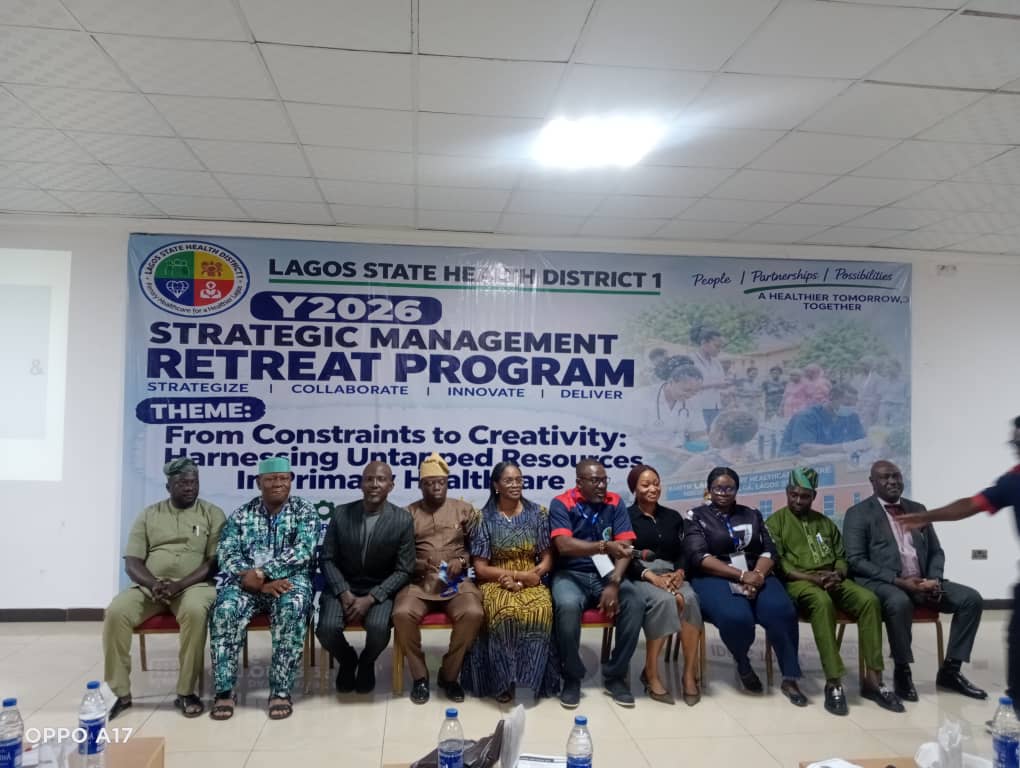
The Lagos State Government is seeking stronger partnerships with communities, corporate organisations and faith-based groups to address funding gaps and improve service delivery at Primary Health Centres (PHCs) across the state.
Dr Kemi Ogunyemi, Special Adviser to the Lagos State Governor, made the call at the ongoing three-day 2026 Strategic Management Retreat organised by Lagos State Health District One (LSHD1) in Lagos.
The retreat, which commenced on Thursday, has the theme, “From Constraints to Creativity: Harnessing Untapped Resources at Primary Health Centres.”
Ogunyemi said involving traditional rulers, faith-based organisations, market women and other community stakeholders in healthcare decisions would help providers identify local needs and mobilise support to address challenges facing PHCs.
She explained that community engagement would create opportunities for healthcare providers and residents to share concerns, understand one another’s challenges and develop solutions collectively.
“Community engagement is key if we truly want to harness the untapped resources at the various PHCs to enhance healthcare delivery at the grassroots.
“When we engage the community, they tell us what they want, and we can also tell them some of our challenges, which they can also help address,” she said.
She described PHCs as the foundation of the healthcare system and urged administrators to explore innovative approaches to improve the quality and accessibility of services.
The Special Adviser also stressed the need to recognise healthcare workers, noting that every member of staff, from doctors and drivers to security personnel, contributed to patients’ experiences.
She commended the Permanent Secretary of LSHD1, Dr Sola Pitan, and his team for organising the retreat, adding that government alone could not address all the challenges confronting healthcare delivery.
Earlier, Pitan said the district was exploring alternative resources and technology-driven solutions to overcome funding limitations affecting primary healthcare facilities.
He noted that conventional funding sources, including government allocations and support from local and international organisations, were insufficient to meet the growing needs of PHCs.
According to him, recent global developments have also affected donor funding, reinforcing the need to identify other sources of support.
Pitan identified traditional rulers, community members, faith-based organisations and corporate bodies as potential partners in strengthening primary healthcare services.
He said the district was also considering the adoption of telemedicine and electronic medical systems to improve service delivery despite limited resources.
The permanent secretary explained that the retreat would enable healthcare workers to contribute ideas towards developing a roadmap for achieving the district’s strategic objectives for 2027.
On maternal and neonatal health, he said LSHD1 would strengthen collaboration between primary and secondary healthcare facilities under its Target Zero initiative, which seeks to achieve zero maternal and neonatal deaths.
He disclosed that the district had organised training and capacity-building programmes for healthcare professionals to improve coordination and patient outcomes.
He added that additional communication channels were being planned to enhance patient follow-up between healthcare facilities.
READ ALSO: MURIC Opposes Alleged Hijab Ban Ahead of Law School Final Examination
UPTH Dismisses Viral Video Allegations, Defends Emergency Services
Pitan also urged residents to enrol in the Lagos State Health Insurance Scheme, Ilera Eko, to reduce out-of-pocket expenditure and improve access to healthcare.
Meanwhile, outstanding workers from various PHC departments under the district received cash incentives in recognition of their contributions to service delivery.
About The Author



1 thought on “Lagos PHCs Turn to Communities, Technology for Healthcare Funding Alternatives”