
By Fatima Saka
The Federal Government has called for increased investment in health promotion, stronger community participation and regular medical screening, urging Nigerians to take responsibility for their health to reduce preventable illnesses and deaths.
The government said improving the country’s health outcomes required a shift from treating diseases to preventing them through informed decisions, early diagnosis, healthier lifestyles and sustained public awareness campaigns.
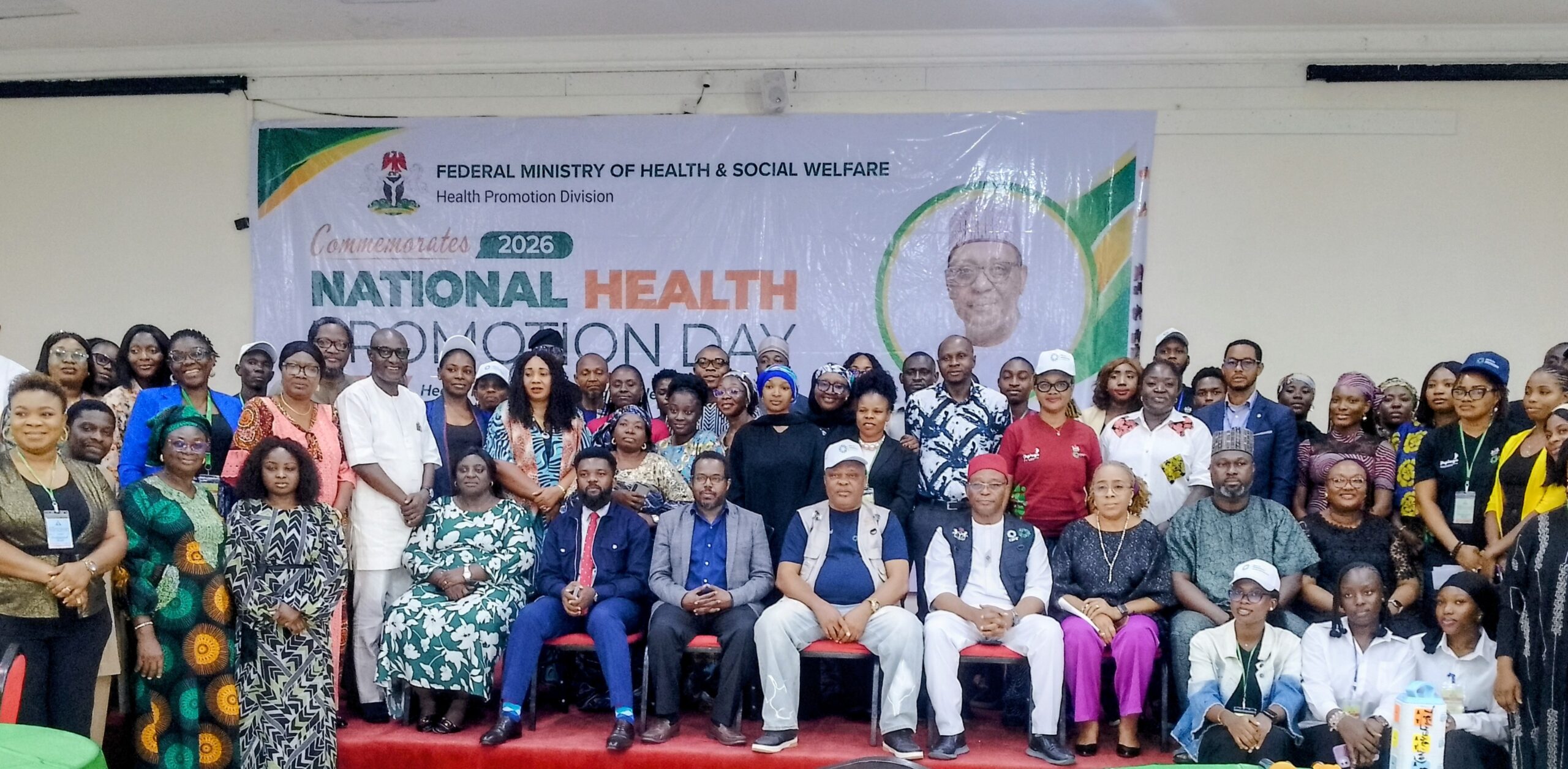
The call was made during the 2026 National Health Promotion Day technical session in Abuja, organised by the Federal Ministry of Health and Social Welfare under the theme, “Health Promotion: Owning My Health,” with the slogan, “Take Charge, Live Well.”
Speaking at the event, Mr John Uruakpa, Director of the Health Promotion Division, stressed the need for Nigerians to know their health status through regular checks, particularly for conditions such as high blood pressure, elevated blood sugar and high cholesterol, which may remain undetected until serious complications develop.
Uruakpa warned that people should not wait until they become seriously ill before seeking medical attention, stressing that early detection and timely intervention could help prevent avoidable deaths.
He expressed hope that basic medical screening services would become more accessible across communities, enabling Nigerians to check important health indicators without unnecessary difficulty.
He also urged health promotion advocates to practise what they preach by making informed health decisions and encouraging their families and communities to do the same.
The director said the commemoration’s second day marked a transition from reviewing previous achievements to taking practical steps towards improving public health.
In a related presentation, Kingsley Igwebuike, Technical Officer for Health Promotion and Infodemic Management Focal Point at the World Health Organization (WHO) Nigeria office, called for a coordinated approach to health promotion, emphasising that providing information alone was insufficient to change health outcomes.
In his keynote address, titled “From Information to Action: Empowering People to Take Charge of Their Health,” Igwebuike said effective health promotion required sustained investment, community engagement, reliable information and interventions that addressed the behavioural and social factors influencing health decisions.
He highlighted Nigeria’s public health challenges, including the burden of malaria, childhood mortality, vaccine-preventable diseases and non-communicable diseases, stressing the need to strengthen preventive healthcare.
The WHO official cited figures presented during the session indicating that Nigeria accounted for about 27 per cent of global malaria cases and 31 per cent of malaria deaths.
He also highlighted the challenge of zero-dose children who had not received any routine vaccine, noting that reaching underserved communities remained essential to closing immunisation gaps.
Igwebuike said health promotion should be treated as a strategic investment rather than merely a communication activity, adding that sustainable financing was necessary to achieve lasting improvements in health outcomes.
He outlined key priorities for the next phase of health promotion, including institutionalising functional health promotion systems, securing domestic funding, empowering communities, integrating interventions across programmes and measuring results.
He further called for a unified national framework to guide government agencies and development partners, warning that fragmented interventions could undermine sustainability.
According to him, development partners should align their programmes with government-led plans, while investments should strengthen health systems and local capacity rather than focus solely on equipment and infrastructure.
Igwebuike also emphasised the importance of involving community leaders and health workers in behaviour-change initiatives, noting that trust, language diversity, health literacy, affordability and social norms influenced how people responded to health messages.
He said behaviour change required sustained engagement rather than one-off awareness campaigns, urging health authorities and partners to build relationships with communities and provide information that people could understand and trust.
The WHO official encouraged Nigerians to ask questions, seek verified health information and make informed decisions using credible sources, including the Federal Ministry of Health and Social Welfare, the National Primary Health Care Development Agency and the Nigeria Centre for Disease Control and Prevention.
He also stressed the importance of monitoring and evaluating health promotion programmes through measurable indicators to determine their effectiveness and guide future interventions.
The session recalled that Nigeria became the first country to observe a National Health Promotion Day in 2024, following the initiative’s proposal during the 64th National Council on Health. A second edition was held in 2025, with the 2026 commemoration seeking to strengthen the country’s commitment to preventive healthcare.
READ ALSO: Somalia’s Anti-Terrorism Campaign Shifts Towards Bilateral Military Partnerships
Activists Urge Lagos Assembly to Suspend GMO Approvals, Promote Agroecology
Participants emphasised that effective health promotion required collaboration across government institutions, development partners, health professionals, the media and communities.
They called for sustained action to ensure that health information translates into practical behaviour changes, improved access to preventive services and fewer avoidable deaths.
About The Author


1 thought on “FG Seeks Unified Health Framework, Urges Nigerians to Take Charge of Their Health”