By Fatima Saka
Abuja, Nigeria — The Federal Government has reaffirmed its commitment to strengthening Nigeria’s global influence through digital diplomacy and enhanced cybersecurity frameworks, as part of efforts to address emerging technological challenges and opportunities.
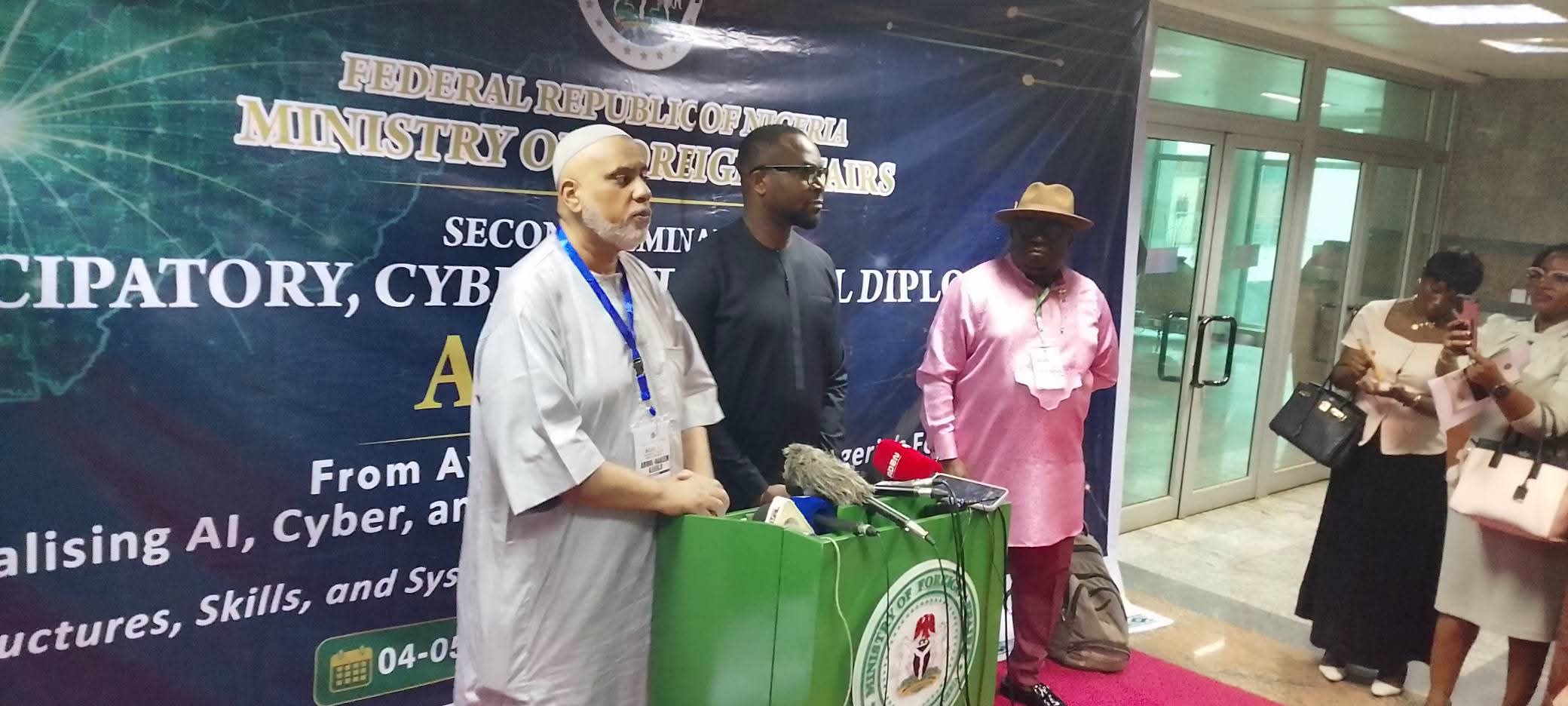
The Minister of Communications and Digital Economy, Dr. Bosun Tijani, made this known during a press briefing in Abuja, where he highlighted the growing importance of digital power in shaping modern diplomacy and national development.
Tijani described the initiative as timely, noting that diplomacy is increasingly shifting from traditional indicators such as economic size and military strength to digital capability and influence. He commended the Ministry of Foreign Affairs and partners for convening the seminar, stressing that nations must now prepare for a rapidly evolving digital future.
He emphasized Nigeria’s strategic advantage in the digital space, stating that the country is the only one in West Africa with its own communication satellites and also hosts the highest number of subsea cables in the region, which carry nearly all internet traffic.
According to him, Nigeria is emerging as a major data hub in West Africa, with global technology companies routing data through the country, a development that reinforces its growing digital dominance and regional importance.
The minister said this position makes it imperative for Nigeria to prioritise digital diplomacy and strengthen its cybersecurity systems to safeguard national interests and support regional connectivity.
On efforts to tackle cybercrime, Tijani disclosed that the government is establishing a ministerial advisory council on cybersecurity to foster collaboration between the public and private sectors. He explained that the council would enhance intelligence sharing, especially as private organisations are often the first targets of cyberattacks.
He added that the government is also adopting a resilience-based approach to protect critical digital infrastructure such as subsea cables, fibre networks, and satellites, while improving the country’s ability to detect and respond to cyber threats.
Tijani further revealed that Nigeria is playing a leading role internationally, currently chairing an advisory council at the International Telecommunication Union, describing it as a significant milestone in the country’s digital leadership.
Earlier, the Chairman of the African Union Cybersecurity Experts Group and lead facilitator of the seminar, Mr. Abdul-Hakeem Ajijola, explained that the forum focused on anticipatory cyber and digital diplomacy.
He said anticipatory diplomacy involves preparing for emerging technologies such as artificial intelligence, quantum computing, and drones, noting that these innovations are already shaping global systems and require proactive national strategies.
Ajijola added that cyber diplomacy focuses on managing relationships between nations in cyberspace, where conflicts often begin before escalating physically, while digital diplomacy enables countries to project their interests and narratives globally through online platforms.
READ ALSO: Saudi Dairy Products: Qafila Trading Limited Promotes NAFDAC-Approved, Muscle, Nutritional Benefits – MD Highlights
LAWMA Launches 2026 Summer School to Raise Young Eco-Heroes in Lagos
He noted that the current phase of the initiative builds on earlier awareness efforts and is now focused on practical implementation to strengthen Nigeria’s cyber resilience and global digital engagement.
The briefing underscored Nigeria’s growing resolve to leverage digital technologies as a tool for national security, economic growth, and international influence in an increasingly interconnected world.
About The Author