

By Fatima Saka
Stakeholders in Nigeria’s health sector, including the Nigeria Centre for Disease Control and Prevention, World Health Organization, and the United States Centers for Disease Control and Prevention, have called for urgent and sustained action on hand hygiene to reduce infections, improve patient safety, and combat antimicrobial resistance.
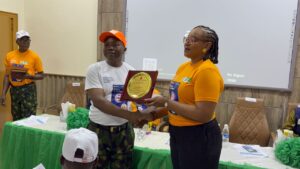
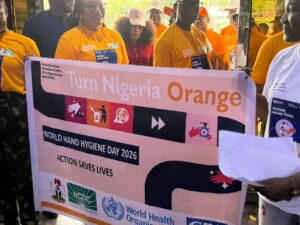
The call was made on Tuesday in Abuja during the 2026 World Hand Hygiene Day, themed “Action Saves Lives,” where experts stressed that consistent practice—not just awareness—is critical in healthcare delivery.

Dr Tochi Okwor, Head of Disease Prevention and Control at NCDC, said Nigeria has institutionalised hand hygiene as a national priority through its Infection Prevention and Control (IPC) framework anchored on the “One Nation, One Plan” strategy.
She highlighted initiatives such as “Turn Nigeria Orange for Ownership” and the “Orange Network,” designed to strengthen accountability and compliance across health facilities.
According to Okwor, the major challenge is no longer lack of awareness but inconsistency in practice.
“The issue is not whether we know what to do, but whether we do it every time, for every patient,” she said, citing cases of hospital-acquired infections, including a neonatal fungal outbreak linked to poor hygiene practices.
She warned that healthcare workers remain at risk of infectious diseases such as Lassa fever when protocols are not strictly followed.
Also speaking, Dr Muhammad Jalloh of WHO emphasised that while handwashing is widely practised culturally, incorrect methods—such as shared water or incomplete hand coverage—undermine its effectiveness.
“Hand hygiene, when done correctly, significantly reduces infections, but it requires the right infrastructure, including functional handwashing stations and availability of soap,” he said.
Dr Adeyemi Adelabu, representing the USCDC, underscored the life-saving importance of hand hygiene, noting that compliance in many health facilities remains below 50 per cent.
He urged stakeholders to aim for 70 to 80 per cent compliance, referencing the pioneering work of Ignaz Semmelweis, who demonstrated that proper handwashing drastically reduced maternal deaths in the 19th century.
In a related development, the Nigeria Army Officers’ Wives Association Specialist Hospital described hand hygiene as a frontline defence against antimicrobial resistance (AMR).
Lt. Col. Majebi Adeiza, the hospital’s IPC focal person, said preventing infections through proper hygiene reduces the need for antibiotics and helps curb drug resistance.
“The goal of antimicrobial resistance reduction is to reduce the need for antibiotics by preventing infections from occurring. That is the essence of hand hygiene,” he said.
Adeiza noted that misuse and overuse of antibiotics continue to drive AMR, warning that indiscriminate use could render treatments ineffective over time.
He stressed that proper hand hygiene includes washing with soap and running water or using alcohol-based hand rubs, while cautioning against common errors such as rushed washing and missing critical areas like fingertips and thumbs.
The Chief Medical Director of the NAOWA Specialist Hospital, Brig.-Gen. Abraham Sunday Ayeni, said the focus must shift from awareness to execution.
“Consistent hand hygiene is where safer care begins,” he said, adding that clean hands remain one of the simplest yet most effective safeguards in healthcare and everyday life.
READ ALSO: FG Inaugurates Climate Transparency Committee to Strengthen Emissions Data Reporting in Nigeria
World Press Freedom Day: Experts to Discuss Role of Independent Media in Peace Building
Stakeholders at the event called for stronger infrastructure, monitoring systems, and sustained commitment from policymakers, healthcare workers, and development partners to institutionalise infection prevention practices.
They also urged health workers to act as ambassadors of hand hygiene, noting that consistent adherence would build trust in the healthcare system and significantly reduce the burden of infections.
About The Author