By Fatima Saka
Harare, Zimbabwe — Feminist advocates across Africa are calling for urgent reforms in the extractive sector as the global rush for critical minerals accelerates, warning that women in mineral-rich communities remain largely excluded from decision-making while bearing the brunt of environmental and social impacts.
At the centre of the growing outcry is the demand for a “just transition” that prioritises equity, land rights, and women’s participation in the governance of natural resources critical to clean energy technologies.
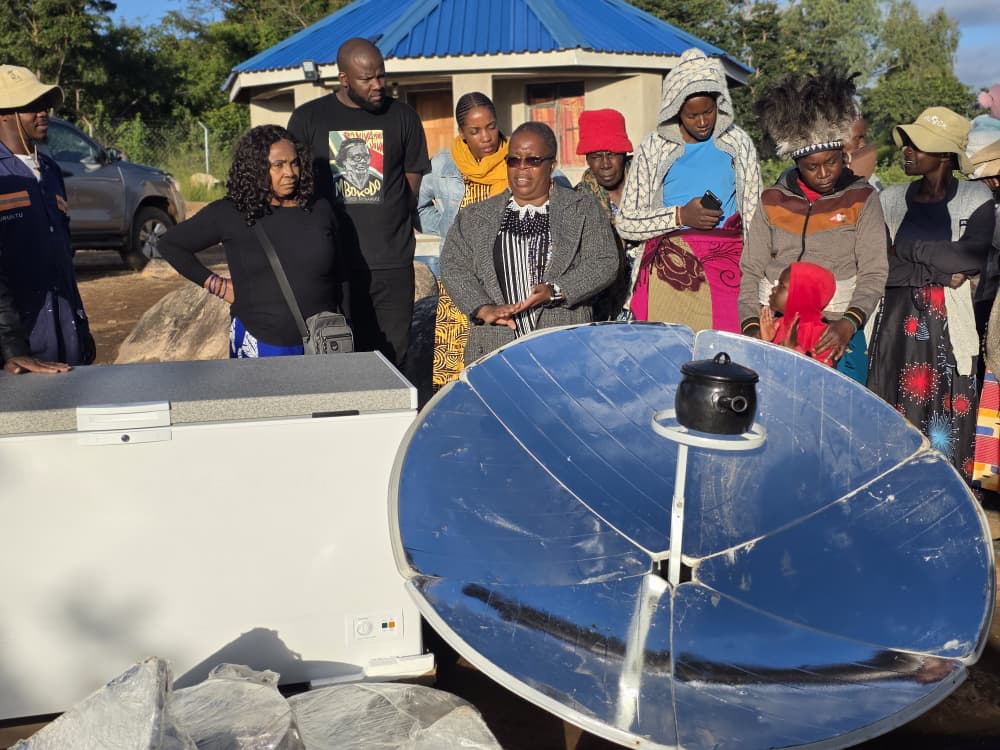
Speaking from Hanyanya village in Bikita, Zimbabwe, Gamuchirai Munesi, Acting Village Head of the Vatombe community, described lithium mining as a growing threat to livelihoods and heritage.
“Lithium mining has become a curse. It threatens our mountains, our water sources, and the land that has sustained the Vatombe people for generations,” she said, warning of increasing dispossession linked to extractive activities.
Munesi spoke during a community “story circle” convened by SHINE Collab and its partners, where grassroots women, eco-feminists, and climate justice advocates shared lived experiences. The dialogue platform is gaining traction as an inclusive tool to amplify voices often excluded from formal policy spaces.
Dr Mela Chiponda, Executive Director of SHINE Collab, said the global transition to clean energy risks replicating historical inequalities if structural imbalances are not addressed.
“The transition to clean energy cannot be built on the same extractive logic that has historically marginalised women,” she said. “We must rethink who holds power, who benefits, and how grassroots women can shape these systems.”
According to Chiponda, current extraction models mirror colonial patterns, where resources are exploited for global markets while local communities—particularly women—face displacement, environmental degradation, and increased exposure to gender-based violence.
Findings from a recent United Nations report on critical minerals also highlight the environmental and health risks associated with the extraction of lithium, cobalt, and other resources essential for renewable technologies. The report warns that without safeguards, the clean energy transition could shift environmental burdens onto vulnerable populations.
Across the Southern African Development Community (SADC) and the Great Lakes region, women continue to face limited access to compensation, exclusion from ownership structures, and loss of livelihoods despite their central role in managing natural resources.
Advocates are now pushing for gender-responsive policies, community ownership frameworks, and increased investment in women-led enterprises to ensure equitable benefits from the mineral boom.
“There is growing recognition that sustainability cannot be achieved without justice,” Chiponda added. “Women are not just victims—they are leaders and innovators whose knowledge must be recognised and resourced.”
As global demand for minerals powering electric vehicles, solar panels, and battery storage intensifies, pressure is mounting on governments, development institutions, and private sector actors to adopt inclusive, transparent, and accountable approaches.
READ ALSO:
Police Redeployment Targets Efficiency, Community Trust — Expert
Outrage: Nurses Demand Justice Over Brutal Assault on Woman, Child in Lagos
For many campaigners, the message is clear: Africa’s green transition must not only reduce carbon emissions but also dismantle long-standing inequalities.
“A truly just transition is one where African women are at the centre—shaping the future, not merely surviving its consequences,” Chiponda said.
About The Author