A delegation of European Team has commended NutriK’s expansion efforts in Kano, highlighting the company’s move toward local sourcing of raw materials as a critical step in strengthening Nigeria’s nutrition supply chain and reducing dependence on imports.
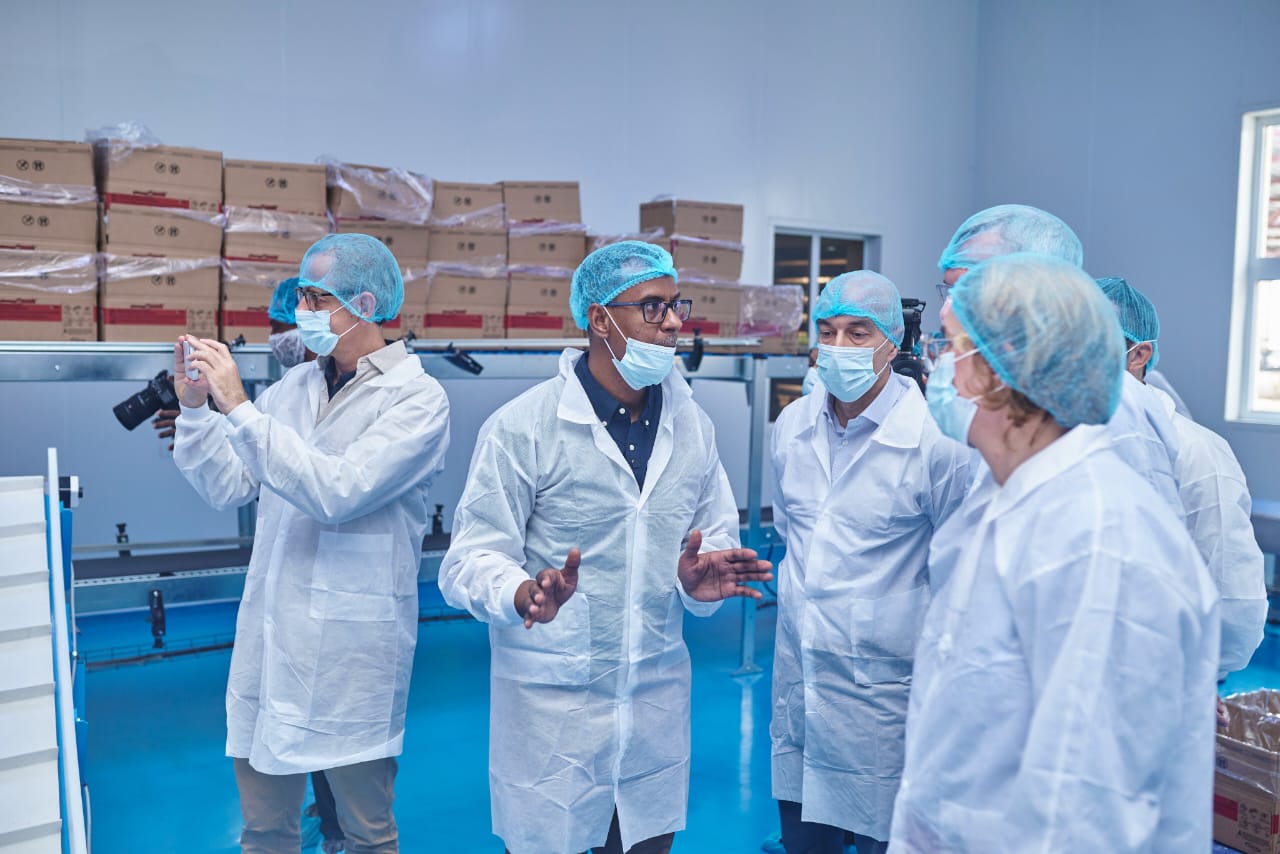
The delegation, led by the European Union Ambassador to Nigeria and ECOWAS, Gautier Mignot, visited NutriK’s production facility in the Kano Free Trade Zone. The visit, which included representatives from EU Member States and UNICEF, formed part of a broader mission to assess initiatives supporting nutrition, health, sustainable livelihoods and economic development in northern Nigeria.
NutriK’s, a French-Nigerian subsidiary of the Nutriset Group, produces Ready-to-Use Therapeutic Food (RUTF), a specialised product used in treating severe acute malnutrition among children. However, the company currently depends on imported groundnuts due to challenges with meeting quality standards in locally processed supplies.
Managing Director, Abdoulkader Yonli, said the company is investing in improving local processing capacity and expects to begin using Nigerian-sourced groundnuts and soya in the coming months. According to him, this shift will reduce costs, expand production, and strengthen the agricultural value chain.
“Using locally grown inputs will allow us to scale production and create impact across farming, processing, distribution and employment,” Yonli said, noting that demand for RUTF in Nigeria still far exceeds current production capacity.
NutriK’s recent relocation to the Kano Free Trade Zone was financed by Proparco, the private-sector arm of the French Development Agency Group. The investment is aimed at boosting local manufacturing and building resilient nutrition supply systems. The company currently employs about 180 people directly, with many more benefiting indirectly through its supply and agricultural networks.
Speaking during the visit, Ambassador Mignot emphasised that the facility demonstrates how strategic investment and innovation can drive both human development and economic growth.
NEMA, KSrelief Deepen Partnership to Deliver Food Aid to Vulnerable Nigerians
“The products manufactured here are helping vulnerable children while showing how business-friendly policies and partnerships can deliver real impact,” he said, adding that the delegation’s visit was to explore deeper collaboration between Kano authorities, the EU, UNICEF and private sector actors.
According to UNICEF estimates, about two million children in Nigeria suffer from severe acute malnutrition, underscoring the urgency of expanding local production capacity for life-saving nutrition products.
About The Author