By Fatima Saka
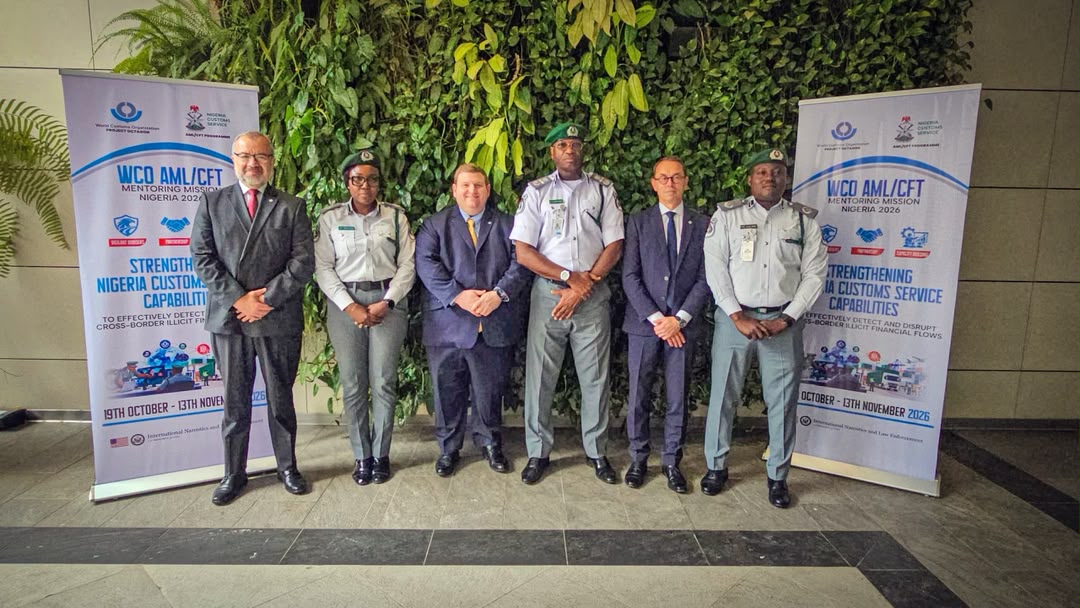
The Nigeria Customs Service (NCS) has strengthened its capacity to tackle cross-border financial crimes, with 120 officers and personnel from key security and financial intelligence agencies completing a specialised training on anti-money laundering and countering the financing of terrorism.
The capacity-building exercise, organised in collaboration with the World Customs Organisation (WCO), was designed to equip participants with practical skills to identify suspicious financial activities, detect illicit movements of funds and respond more effectively to emerging threats across Nigeria’s borders.
The Acting Deputy Comptroller-General of Customs in charge of Strategic Research and Policy, Nafiu Isiaku, who spoke on behalf of the Comptroller-General of Customs and the Service’s management at the Abuja session, emphasised the need for stronger inter-agency cooperation in addressing financial crimes.
He said such crimes transcend national borders and the specialised responsibilities of individual agencies, requiring robust systems, skilled personnel, timely intelligence sharing and sustained collaboration.
The mentoring mission commenced on November 2, 2026, at Johnwood Hotel, Wuse 2, Abuja, and concluded on November 12 in Lagos, with 60 participants each attending the sessions in the two locations.
Participants were drawn from various Customs formations and partner institutions, including the Nigeria Immigration Service, Economic and Financial Crimes Commission, National Drug Law Enforcement Agency, Nigeria Police Force and Nigeria Financial Intelligence Unit.
The assessment component of the mission examined existing mechanisms for identifying financial crime risks, detecting suspicious movements, exchanging intelligence and referring cases for further investigation.
Particular attention was given to suspicious cash movements, unusual trade transactions, questionable invoices and the movement of valuable commodities, including gold and gemstones, as possible indicators of wider financial crimes.
The subsequent training covered cross-border anti-money laundering and counter-terrorism financing modules, including financial intelligence, risk indicators, investigation techniques and information management.
WCO resource persons at the exercise included Felicia Ntusa, Ladassin Kitson, Mohammed Jiya, Claude Chaillou, Eduardo Escobar, Jorge Thibout and Laurent Szymkowiak, who shared technical knowledge and practical approaches to addressing emerging financial crime trends.
The WCO team acknowledged the hospitality and support of the NCS throughout the engagement, stressing the importance of mutual trust, experience-sharing and effective communication among relevant agencies.
The mission also provided an opportunity for participants to identify operational gaps and develop practical measures to improve the detection, investigation and handling of cross-border financial crimes.
At the closing ceremony, the Deputy Comptroller-General of Customs in charge of Human Resource Development, Dow Gaura, commended participants for their commitment and active participation throughout the exercise.
He urged them to translate the knowledge acquired into improved operational performance, stressing that the effectiveness of the training would depend on its practical application.
READ ALSO: Atani Monarch Honours OHUABUNWA Patriarch, Sons for Community Service
Gaura also appreciated the WCO for its technical expertise and support, while acknowledging the United States Department of State, through its Bureau of International Narcotics and Law Enforcement Affairs, for funding the mentoring mission.
The closing ceremony featured the presentation of certificates to participants by the DCG HRD, formally marking the completion of the capacity-building phase of the WCO AML/CFT Mentoring Mission in Nigeria.
About The Author