By Fatima Saka | Abuja
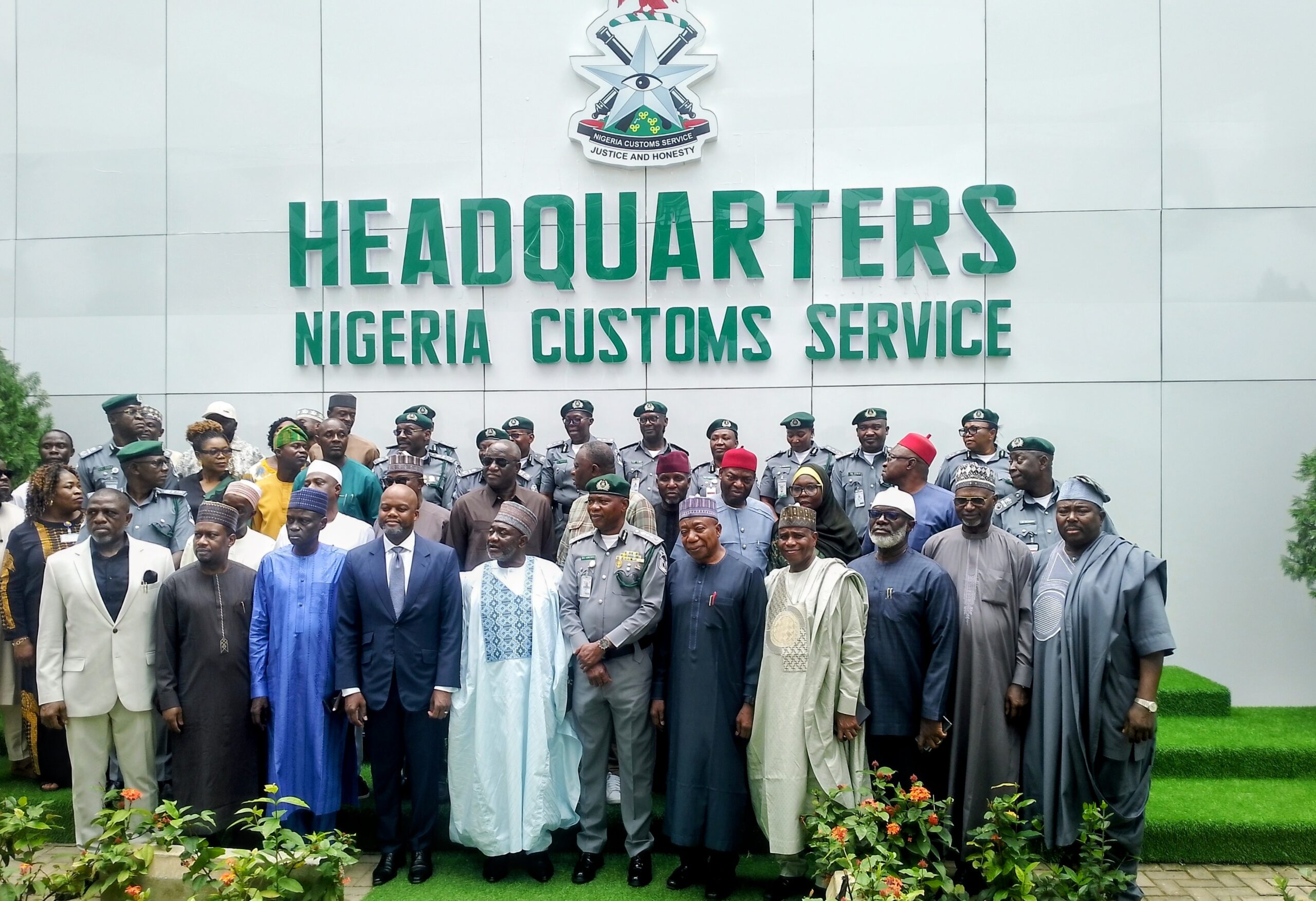
The Senate Committee on Customs on Wednesday and Thursday participated in a two-day retreat organised by the Nigeria Customs Service (NCS), with a strong focus on digital transformation, modernization, and improved service delivery, culminating in a detailed inspection of key ICT and operational facilities at the Customs Headquarters in Abuja.
The retreat provided lawmakers with an in-depth understanding of ongoing reforms within the Service, particularly the deployment of advanced technology to enhance revenue generation, strengthen border security, and facilitate trade.
Day One: Strategic Deliberations and Policy Direction
The retreat commenced on Wednesday with extensive engagements between the Senate Committee and the management of the NCS, where discussions centred on policy frameworks, institutional reforms, and the 20-year Customs Modernisation Project.
The Comptroller-General of Customs (CGC), Bashir Adewale Adeniyi, reiterated the Service’s commitment to sustained innovation, noting that maintenance and sustainability have been embedded within the concession agreement to ensure long-term efficiency.
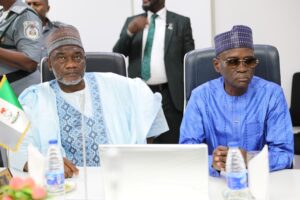
Lawmakers stressed the need for sustained oversight, funding, and inter-agency collaboration to consolidate the gains of the reforms.
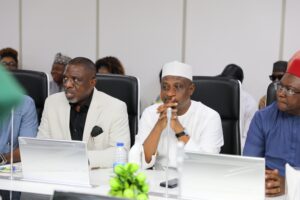
Day Two: ICT Showcase and Facility Tour at Customs Headquarters
On Thursday, the focus shifted to ICT components of the reform programme, with the CGC welcoming lawmakers to a guided tour of the Service’s modernization facilities.
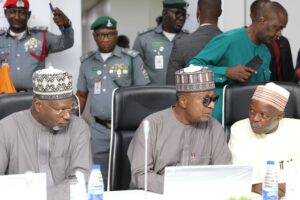
Adeniyi highlighted the significance of technology in driving Customs operations, noting that the headquarters’ ICT infrastructure symbolises similar deployments across commands nationwide.
He also commended the contributions of women in driving ICT innovations within the Service, describing their role as instrumental in the design, deployment, and operation of key systems.
Command and Control Centre: Real-Time Monitoring
A major highlight of the visit was the Command and Control Centre, a centralized digital hub that enables real-time monitoring of cargo movements across various ports.
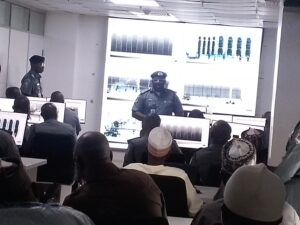
Officials demonstrated how live images from Apapa Port are transmitted to the headquarters, where analysts detect anomalies and provide immediate feedback to officers in the field.
The system currently supports a 100 per cent cargo scanning regime at Apapa, with scanners capable of processing up to 200 containers per hour.
Management Information System: Driving Efficiency
The Committee was also introduced to the Management Information System (MIS), described as a “single source of truth” integrating data across departments including administration, personnel, welfare, and operations.
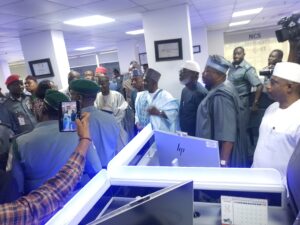
The system automates key processes such as leave management, training, and performance tracking, significantly reducing manual intervention and improving efficiency.
Cargo Scanning Technology and Revenue Protection
Through practical demonstrations, officials showed how advanced scanning technology detects concealed goods, discrepancies in declarations, and irregular cargo patterns.
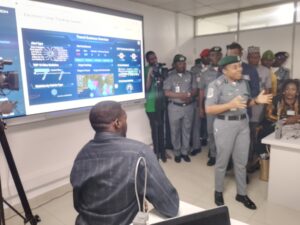
The system’s ability to analyse images using colour coding and material classification has enhanced Customs’ capacity to block revenue leakages and strengthen compliance.
Integration and Expansion of Technology
The NCS also highlighted the integration of scanning systems with documentation, ensuring transparency and eliminating manipulation.
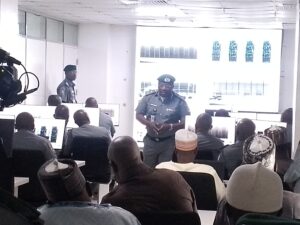
Six scanners have already been deployed nationwide, with plans to install an additional 22 before the end of the year.
The Service aims to transition to a risk-based inspection model, targeting increased scanning and reduced physical examination.
E-Currency Declaration and Trade Facilitation
Officials further demonstrated the Electronic Currency Declaration System, which allows travellers to declare funds exceeding $10,000 online prior to arrival or departure.
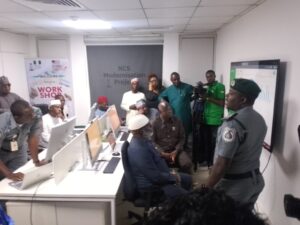
The initiative is expected to improve compliance, reduce delays, and enhance inter-agency coordination at border points.
Post-Retreat Media Interaction: Senators, CGC Speak on Outcomes
At the end of the two-day retreat, members of the Senate Committee and the Comptroller-General addressed journalists, highlighting key outcomes and future directions.
Chairman of the Senate Committee on Customs, Excise and Tariff, Senator Jibrin Isah, described the retreat as an eye-opener.
“This retreat is an eye-opener. So many things that many of us did not know, within this two-day period, we have known. I can confidently say that all senators who participated are now ambassadors of the Nigeria Customs Service,” he said.
He noted that the Service has undergone significant transformation, particularly in the area of information technology, which has helped block leakages and improve revenue generation and trade facilitation.
According to him, “The Nigeria Customs Service we used to know is not what it is today. A lot of transformation has taken place. IT is now the order of the day.”
He also attributed the improved performance of the Service to the support of President Bola Ahmed Tinubu, particularly in funding and policy backing.
Technology Key to Future Operations
Responding to questions from journalists, CGC Bashir Adewale Adeniyi emphasized that the Service would continue to expand the deployment of technology across all aspects of its operations.
“Technology helps us to do our work faster and more efficiently. We started with administrative processes and are now extending it to enforcement and intelligence,” he said.
He revealed that the Service is deploying geospatial intelligence to enhance border patrol operations and has introduced virtual shooting range technology to modernize enforcement training.
Adeniyi added that the modernization drive is backed by legal provisions within the Nigeria Customs Act, which mandates the adoption of technology in operations.
READ ALSO: Gbajabiamila to Lead Nigeria’s High-Power Delegation to Diaspora Investment Conference in Canada
NiDCOM Hails First Indigenous Female Neurosurgeon’s U.S. Medical Director Appointment, Flags Brain Drain Concerns
“Our motivation is simple—the law requires us to modernize. With the support of government, we will continue to deploy technology to address complex challenges and improve service delivery,” he stated.
Conclusion: Strengthened Collaboration for Reform
The retreat ended with renewed commitment from both the Senate Committee and the Nigeria Customs Service to deepen collaboration in driving reforms.
Stakeholders expressed confidence that sustained investment in technology and institutional support would position the Service as a modern, efficient, and globally competitive agency.
About The Author