By Fatima Saka
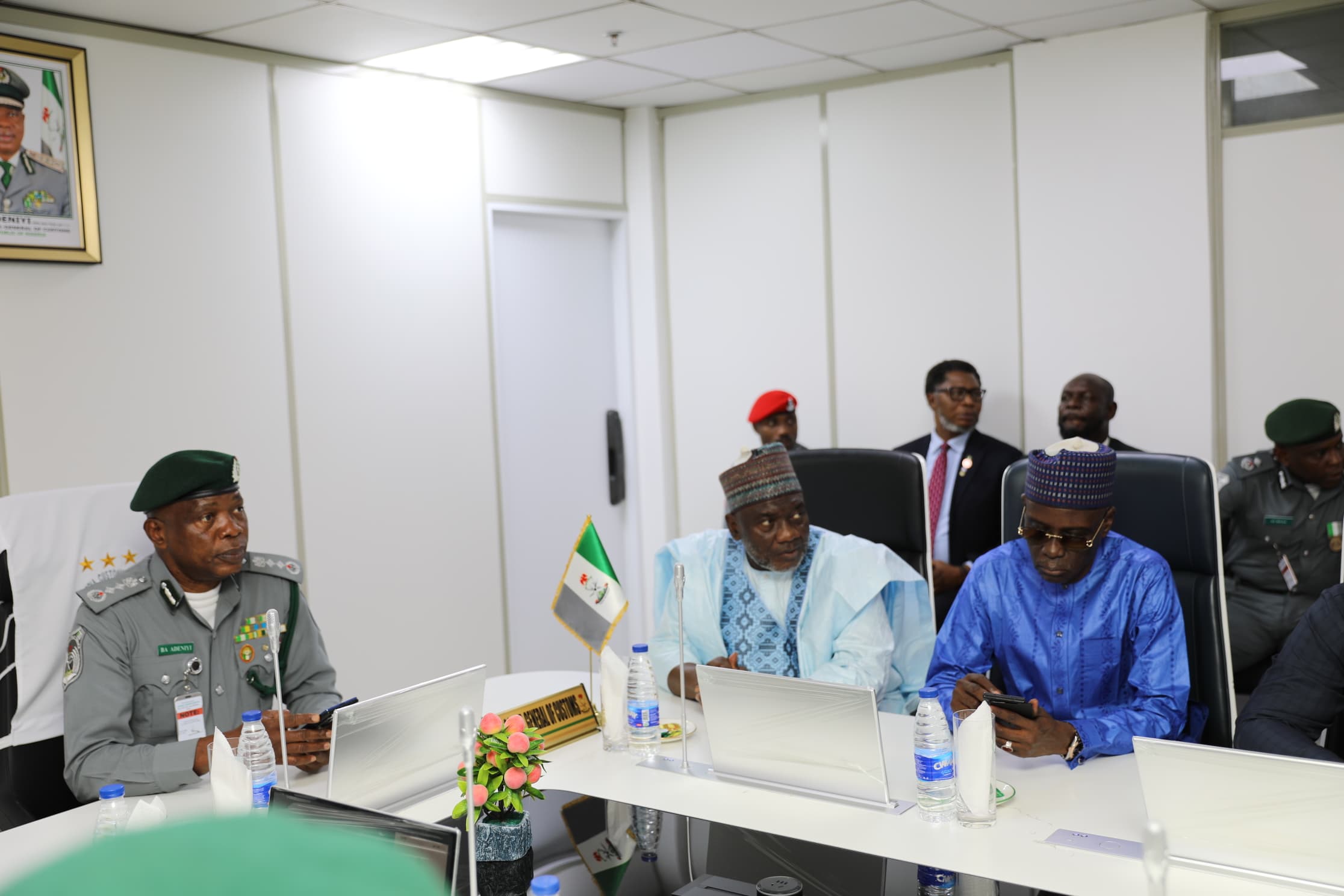
The Senate Committee on Customs has described its two-day retreat with the Nigeria Customs Service (NCS) in Abuja as an eye-opener, highlighting significant progress in digital transformation, revenue generation, and border security operations.
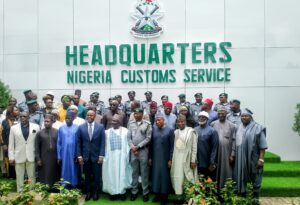
Chairman of the Nigerian Senate Committee on Customs, Excise, and Tariff, Senator Jibrin Isah (also known as Senator Isah Echocho), representing Kogi East, said the engagement exposed lawmakers to modern operational strategies of the Service, particularly the deployment of technology to block revenue leakages and enhance trade facilitation.
The retreat, which started on Wednesday and ended with guided tours of ICT facilities, provided lawmakers with firsthand exposure to the Service’s modern systems and operations. “This retreat is an eye-opener. So many things that many of us did not know, within this two-day period, we have now known,” he said. “I can conveniently tell you that all senators who participated are now ambassadors of the Nigeria Customs Service.”
He noted that the NCS has undergone remarkable transformation compared to previous years, stressing that Information Technology now drives its core operations. According to him, the integration of digital systems has significantly improved efficiency in revenue collection and trade facilitation—key mandates of the Service.
“The Nigeria Customs Service that we used to know is not the one we see today. A lot of transformation has taken place. IT is the order of the day, and this has helped to block leakages and improve performance greatly,” he added.
The Committee Chairman also emphasized that the retreat provided firsthand insights into operational procedures, including border protection and enforcement strategies, which lawmakers previously only understood from a distance.
“We have seen the demonstration programmes and we are better enlightened on how the job is being done. Before now, we knew they were doing well, but we didn’t understand how. Now we do,” he said.
Vice Chairman of the Committee, Senator Sharafadeen Alli, representing Oyo South, also commended the Service after touring various departments, noting that the level of technological integration was impressive. He said the retreat combined both theoretical and practical exposure to Customs operations.
“We had a retreat yesterday with extensive lectures on modernization of the Customs Service, and today we went around different offices to see things for ourselves. One is quite impressed,” he said. “What we have seen is something that can be emulated by other countries, and it is enhancing trade facilitation across Africa. This is an investment that is truly worthwhile.”
Similarly, the Senate Chief Whip, Senator Mohammed Tahir Monguno, said the level of digitalisation within the Service has significantly improved performance, particularly in revenue generation and operational efficiency.
“My reaction to what I saw today is that the Customs Service has really gone digital. They have digitalised all their operations in real-time, and this has greatly enhanced not only trade facilitation but also revenue generation,” he said. “To the extent that Customs is now exceeding its revenue targets, this is clearly a result of digitalisation. They deserve a pat on the back for this achievement.”
The lawmakers attributed the improved performance of the Service to the support of President Bola Ahmed Tinubu under the Renewed Hope Agenda, particularly in terms of funding and policy backing.
“If the President had not provided the necessary support, these achievements would not have been possible. We appreciate him for giving attention to the Nigeria Customs Service,” the Chairman added.
The Committee also commended the Comptroller-General of Customs and the management team for their leadership and commitment to reform, noting that the retreat has strengthened legislative confidence in approving budgetary requests.
“When the Service comes to us for capital expenditure approvals, we now understand that the funds are being judiciously utilised,” he said.
On the next phase of reforms, the Comptroller-General highlighted plans to deepen the deployment of technology across all aspects of Customs operations. He explained that digital tools are already being applied in administration, personnel management, and enforcement.
“Technology helps us to work faster and more efficiently. We will continue to explore how much more of it we can deploy to solve complex operational challenges,” he said.
He disclosed that the Service is leveraging geospatial intelligence to improve patrol mapping and checkpoint deployment nationwide, alongside introducing virtual shooting range systems to modernize enforcement capacity.
According to him, the modernization drive is backed by provisions in the Nigeria Customs Act, which mandates the adoption of tools such as Authorised Economic Operator (AEO) programmes, advanced rulings, time-release studies, and scanning technologies.
READ ALSO: FG, Lagos Deepen Alliance on Flood Control
Special Report: NCS Engages Senate Committee on ICT-Driven Reforms
“The law is clear on modernization, and with the political support we are receiving, we will not rest until technology is fully integrated into all our operations,” he stated.
The retreat forms part of ongoing efforts by the Nigeria Customs Service to strengthen collaboration with the National Assembly and ensure sustained reforms in line with global best practices.
About The Author