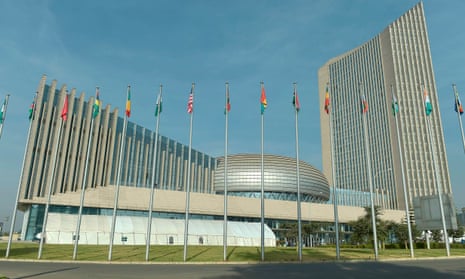
Nigeria has assumed the chairmanship of the African Union Peace and Security Council for the month of May 2026, positioning the country at the forefront of continental peace and security deliberations.
The announcement was made by the Ministry of Foreign Affairs in a statement signed by its spokesperson, Kimiebi Imomotimi Ebienfa, on Friday in Abuja.
Nigeria last chaired the Council in December 2022 and remains the only member state of the African Union to have served continuously on the Council since its establishment in 2004. This longstanding presence, the ministry noted, provides Nigeria with significant institutional memory to guide its leadership during the period.
During its one-month tenure, Nigeria will steer discussions on a range of critical thematic and country-specific issues affecting the continent, particularly within the West African and Sahel regions. Top on the agenda is the growing impact of climate change on conflict dynamics in the Lake Chad Basin and the Sahel, where environmental pressures have been linked to insecurity and displacement.
The Council will also deliberate on strategies to combat transnational organised crime across Africa, as well as review the draft five-year AU Continental Counter-Terrorism Strategic Plan of Action.
Other priority areas include the operationalisation of the African Standby Force, aimed at strengthening rapid response to conflicts, and the activation of a Combined Maritime Task Force to address rising piracy in the Gulf of Guinea.
The 15-member Council, which is responsible for promoting peace, security, and stability across Africa, comprises countries elected by the AU Executive Council and endorsed by the Assembly, with representation based on regional balance.
READ ALSO: MURIC Accused FG for Religious Bias Over Airport Chapel, Relief Funds
NEMA DG Targets Early Safety Culture, Takes Disaster Risk Awareness to Abuja Schoolchildren
Current members include Nigeria, Benin, Gabon, Algeria, Lesotho, Morocco, Somalia, South Africa, Côte d’Ivoire, the Democratic Republic of Congo, Sierra Leone, Uganda, Ethiopia, Cameroon, and Eswatini.
Nigeria’s leadership of the Council is expected to reinforce its longstanding role in advancing peacekeeping, conflict resolution, and regional stability across the African continent.
About The Author