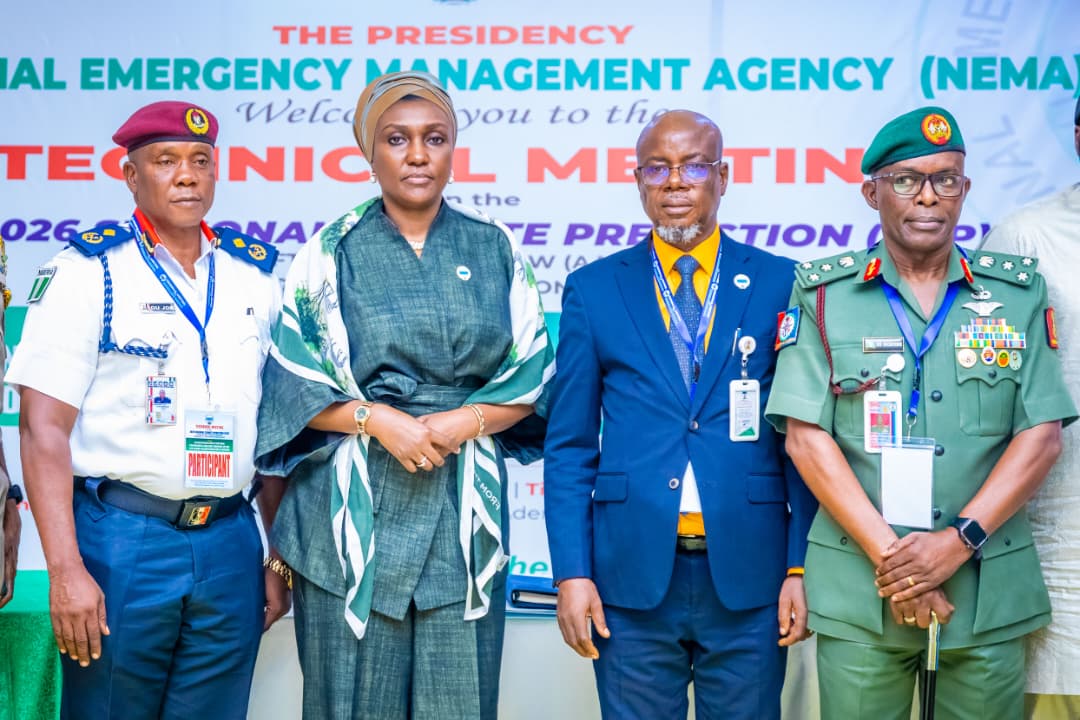
Abuja — The National Emergency Management Agency (NEMA) has convened a high-level technical meeting to analyse the 2026 Seasonal Climate Prediction (SCP), with a strong focus on strengthening early warning systems and preventing recurring flood disasters across Nigeria.
The meeting, which brought together key actors from federal ministries, security agencies, humanitarian organisations, and development partners, is part of a proactive push to translate climate data into concrete disaster preparedness and response strategies.
Director-General of NEMA, Zubaida Umar, stressed the urgency of adopting coordinated and evidence-based approaches to mitigate the growing risks posed by climate variability.
She described the Seasonal Climate Prediction as a vital decision-making tool that must guide early action at all levels of government, warning that delayed responses have historically worsened the impact of disasters, particularly flooding.
“The theme of this engagement underscores the need for timely, coordinated responses to emerging risks,” Umar said, noting that repeated flood incidents in recent years have exposed significant gaps in preparedness and inter-agency collaboration.
She urged stakeholders to move beyond discussions and translate climate projections into actionable plans, emphasizing that disaster management in Nigeria must shift from a reactive to a proactive model, backed by clear roles, timely planning, and effective coordination.
Also speaking, NEMA’s Director of Planning, Research and Forecasting, Godwin Tepikor, said the inclusion of the 2025 After Action Review (AAR) in the meeting was intentional, aimed at learning from past emergency responses to improve future interventions.
Representatives from the Nigerian Meteorological Agency (NiMet) and the Nigeria Hydrological Services Agency (NIHSA) highlighted ongoing advancements in weather and flood forecasting, adding that the upcoming 2026 Annual Flood Outlook will further enhance national preparedness.
Other stakeholders, including the Nigerian Red Cross Society, Defence Headquarters, and the Nigerian Security and Civil Defence Corps (NSCDC), reaffirmed their commitment to improved early warning dissemination and coordinated emergency response.
READ ALSO: Plateau Killings: “We Must Act Decisively Now,” Speaker Abbas Urges Federal Government
Senate Orders INEC to Restore Benue Constituencies Before 2027 Elections
The meeting also featured a detailed presentation of the 2025 After Action Review, identifying critical gaps and recommending measures to strengthen Nigeria’s disaster risk management framework.
The engagement ultimately reinforced the need for a multisectoral approach, with strong emphasis on early warning systems, preparedness, and collaboration to safeguard lives and livelihoods ahead of the 2026 rainy season.
About The Author