
SPECIAL REPORT
By Fatima Saka
The Federal Government’s proposed increase of the Basic Health Care Provision Fund (BHCPF) from one to two per cent has brought renewed attention to the financial responsibilities of state governments, gaps in healthcare coverage and accountability challenges affecting access to essential healthcare services for poor and vulnerable Nigerians.
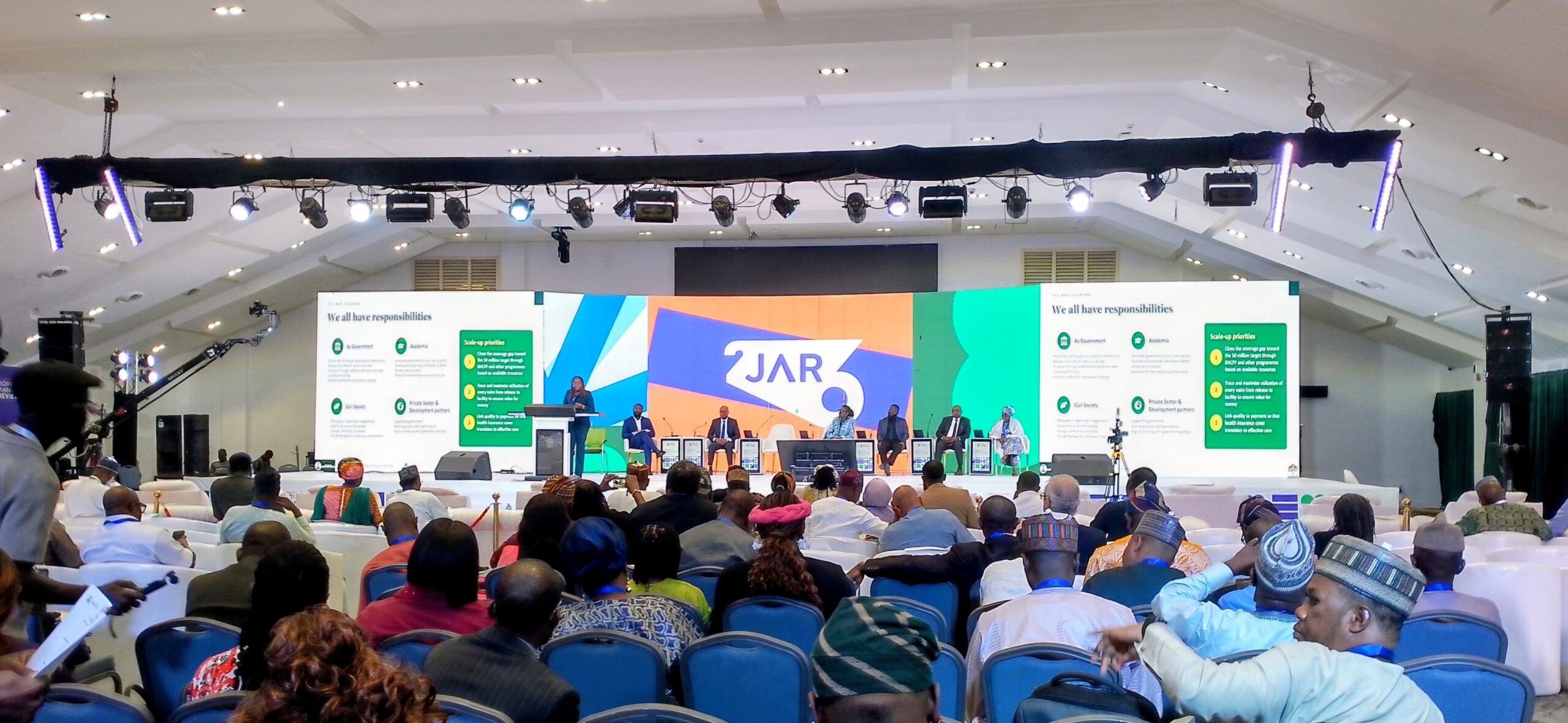
At the 2026 Nigeria Health Sector Joint Annual Review (JAR) in Abuja, stakeholders raised concerns over inadequate funding, delayed disbursement, weak state contributions, limited healthcare coverage and operational challenges, warning that increased funding must translate into improved services for beneficiaries.
The concerns emerged during a session themed:“Learnings from Nigeria’s Pro-Poor Programme as a Means of Advancing Universal Health Coverage,” which examined the delivery of the BHCPF’s pro-poor interventions through health insurance, direct facility financing for primary healthcare, emergency medical treatment and outbreak response.
The session, moderated by Stanley Ezenwa, Senior Health Finance and Public Financial Management Specialist, featured presentations and discussions involving officials responsible for the fund’s implementation gateways.
Speaking on the proposed increase, Dr. Uzoma Nwankwo, Secretary to the Ministerial Oversight Committee (MOC) on BHCPF, said the existing one per cent allocation was inadequate to meet the growing demands of Nigeria’s healthcare system.
He explained that although the law provides for at least one per cent of the Consolidated Revenue Fund, actual budgetary provisions and releases sometimes fall short of the expected allocation.
According to him, the proposal before the National Assembly seeks to increase the allocation from one to two per cent, without changing other provisions of the law.
Nwankwo said the various implementation gateways required additional resources to sustain service delivery, particularly at the primary healthcare level.
However, he stressed that state governments must also fulfil their financial obligations under the scheme, noting that counterpart funding is a requirement for states to access the resources.
He disclosed that some states had started responding to the Federal Government’s call, citing Katsina State as having released part of its 2025 counterpart funding.
He added that the Minister of Health had written to state governments to remind them of their obligations, while some governors had requested briefings to understand the requirements as they prepared their budgets for the next fiscal year.
The issue of state contributions attracted attention during the session, with participants questioning what the MOC was doing to encourage states to increase their investments in basic healthcare beyond the required counterpart funding.
Stakeholders also raised concerns about the extent to which the programme protects vulnerable Nigerians against catastrophic healthcare expenditure, particularly for expensive conditions such as cancer.
Responding, the Director of the Informal Sector Department, National Health Insurance Authority (NHIA), Dr. Nnennaya Kalu-Umeh, acknowledged that cancer treatment was not covered under the BHCPF benefit package.
She, however, disclosed that the NHIA had established a collaboration with pharmaceutical company Roche to support some cancer patients, with treatment costs shared among the authority, the company and other partners.
According to her, the arrangement had enabled some patients to access subsidised cancer treatment across selected centres of excellence.
Kalu-Umeh also clarified that the Vulnerable Group Fund (VGF) was already being implemented, contrary to concerns that the intervention had yet to commence.
She explained that other interventions, including health insurance levies and special intervention funds, were also supporting vulnerable populations through different funding arrangements.
On expanding health insurance coverage, she said the authority had increased its enrolment targets based on available resources, while working towards maximising the benefits of existing allocations before the proposed additional funding becomes available.
She disclosed that the proportion of funds allocated to primary healthcare capitation had increased from 57 per cent to approximately 71.25 per cent, while the allocation for fee-for-service at secondary healthcare facilities had reduced from 18 per cent to about 11 per cent.
According to her, the adjustment was informed by evidence showing increased utilisation of primary healthcare services, although the allocation could be reviewed if data indicated greater demand at secondary healthcare facilities.
She added that the NHIA was working with the National Primary Health Care Development Agency (NPHCDA) to expand the number of participating primary healthcare facilities from about 8,900 to approximately 17,000 to accommodate the growing number of beneficiaries.
On continuity of health insurance coverage, Kalu-Umeh identified the National Identification Number (NIN) as critical to tracking beneficiaries across different programmes and ensuring continuity of coverage.
She also disclosed that a joint quality-of-care framework developed by the NHIA and NPHCDA was ready for rollout across states to strengthen service standards.
Meanwhile, the Director of Special Duties at the NPHCDA, Dr. Uzoamaka Epundu, identified poor commodity distribution, supply-chain weaknesses and operational bottlenecks as major challenges affecting service delivery at primary healthcare facilities.
She explained that some facilities experienced shortages of essential medicines and medical supplies, while others had excess stock, pointing to imbalances in the distribution and management of commodities.
According to her, some challenges were linked to the inability of facilities to independently determine their commodity requirements, while delayed retirement of previously disbursed funds also affected the release of additional resources.
Epundu said the agency was addressing the situation through the Primary Healthcare Financial Management System, an end-to-end platform designed to improve facility planning, budget approval, procurement and financial accountability.
She added that pooled procurement arrangements through MediPool were being strengthened to ensure facilities obtained essential commodities of appropriate quality at competitive prices.
She stressed that improving healthcare delivery required more than increasing financial allocations, noting the importance of accountability and ensuring that funds from different gateways translated into essential medicines and quality services.
The discussion also examined the relationship between funding from the primary healthcare and health insurance gateways, particularly where facilities received resources for commodities through different channels.
Participants questioned why some facilities continued to experience stock-outs despite receiving funds, as well as the oversight mechanisms available to ensure that resources were properly utilised.
**Emergency ambulance services, reimbursement challenges raised**
The effectiveness of emergency medical services also attracted significant attention, with stakeholders questioning ambulance availability, reimbursement of service providers and the reliability of the national emergency response system.
Responding to the concerns, the National Programme Manager of the National Emergency Medical Service and Ambulance System (NEMSAS), Dr. Doubra Emuren, addressed questions surrounding ambulance operations and claims management.
Participants had sought clarification on the relationship between the number of available ambulances, patient transportation to Comprehensive Emergency Obstetric and Newborn Care (CEmONC) facilities and other referral centres, and the claims submitted by ambulance operators.
They also raised complaints about delayed reimbursement for emergency transportation services already rendered, urging the programme to strengthen its verification and payment processes.
The effectiveness of the 112 emergency call centre also came under scrutiny following concerns about an incident reported the previous evening.
In his response, Emuren acknowledged the concerns surrounding the emergency medical service system and the efforts being made by the different stakeholders to ensure that the programme works effectively.
He explained that stakeholders, including community-level representatives, were involved in supporting the verification of claims across different regions.
He stressed that the objective was to make the emergency medical service system work for Nigerians rather than apportion blame to the Emergency Coordination Centre (ECC) or other implementing partners.
Emuren acknowledged the work being done by the ECC and noted that the programme had the attention of the highest level of government, with the Vice-President at the centre of efforts to ensure its effectiveness.
The discussions highlighted the importance of adequate ambulance coverage, transparent claims verification, prompt reimbursement and a reliable emergency response mechanism in improving access to life-saving services.
Participants also sought clarification on whether medical oxygen was covered under the emergency medical service component and how healthcare facilities were being encouraged to improve its uptake during emergencies.
**NCDC clarifies presentation mix-up**
The Deputy Director and Head of the Subnational Readiness Strengthening Division of the Nigeria Centre for Disease Control (NCDC), Dr. Everistus Chijioke Aniaku, also addressed an observation concerning information displayed in one of his presentation slides.
Aniaku acknowledged that there had been a mix-up while preparing and sharing the presentation, explaining that information relating to a confirmed case had inadvertently been replaced with a different set of information.
He clarified that the slide did not accurately reflect the presentation he had intended to deliver, adding that he deliberately refrained from making comments on the cholera outbreak during his presentation.
He thanked the participant who drew attention to the discrepancy and clarified that the issue resulted from the mix-up in the presentation materials.
The session also examined challenges affecting the timely release of public health response funds, with Nwankwo raising concerns about delays in the retirement of previously disbursed resources through the NCDC gateway.
He explained that some states’ failure to retire funds had affected the release of additional resources, creating challenges for public health response activities.
According to him, the Permanent Secretary and Minister had directed that previously disbursed funds be retired before additional resources could be released, although an exception was made to enable the NCDC to access funds following the Ebola outbreak.
He appealed to state ministries of health, permanent secretaries and state epidemiologists to improve coordination and ensure prompt retirement of funds to facilitate continued access to resources.
As part of the session, participants were also presented with a documentary highlighting the experiences of beneficiaries of the programme, providing an opportunity to hear directly from those receiving services.
The session was designed to assess what the BHCPF’s pro-poor interventions had delivered, examine how beneficiaries were identified and verified, evaluate how resources reached healthcare facilities and draw practical lessons from federal and state implementation.
READ ALSO: Ogoni Mangrove Recovery: HYPREP Seeks Investment in Ecotourism, Climate Finance
JAR 2026: Nigerian Government Targets 90% Functional PHCs Nationwide by 2031
Overall, discussions at the review showed that the proposed increase in BHCPF funding must be accompanied by stronger state participation, timely disbursement, transparent financial management, improved healthcare infrastructure, reliable medical supplies and functional emergency medical services.
For poor and vulnerable Nigerians, the ultimate measure of the programme’s success will be whether it improves access to quality healthcare and reduces the financial burden of seeking medical treatment.
About The Author