


By Fatima Saka
The Federal Government of Nigeria has set a target to make at least 90 per cent of Primary Healthcare Centres (PHCs) across the country functional by 2031, following its reported achievement of all 41 presidential health sector performance commitments.
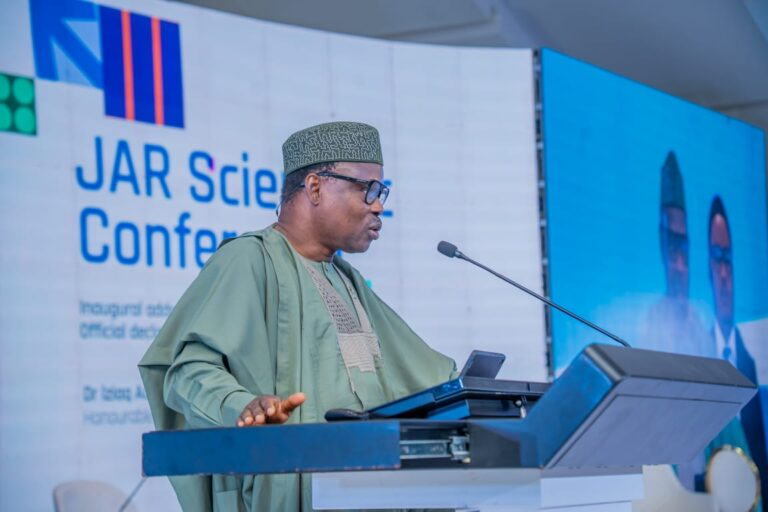
The Coordinating Minister of Health and Social Welfare, Prof. Muhammad Ali Pate, disclosed this at the third Nigeria Health Sector Joint Annual Review (JAR),on Tuesday in Abuja.
Pate said the achievements reflected progress in primary healthcare delivery, maternal and child health, health insurance coverage, local pharmaceutical manufacturing and access to specialist healthcare services.
He said 3,526 PHCs had been revitalised, with work ongoing at another 900 facilities. He added that 19,758 skilled birth attendants had been deployed across 22 states, while 4,747 community health workers had been engaged in 10 states.
According to him, 78,054 frontline health workers had also received training, while admission quotas for health-related training programmes had been doubled to strengthen the country’s health workforce.
The minister said health insurance coverage had increased from about 16 million Nigerians to nearly 24 million.
He disclosed that cumulative releases under the Basic Health Care Provision Fund (BHCPF), since its establishment in 2019, stood at approximately N422.3 billion as of October 2026.
Of the amount, N323.6 billion had been disbursed to the fund’s implementing gateways, including N249.5 billion under the current administration.
Pate said the ministry had also signed a Memorandum of Understanding with the Independent Corrupt Practices and Other Related Offences Commission (ICPC) to strengthen transparency and accountability in the health sector.
On maternal healthcare, he said skilled deliveries in BHCPF-supported facilities had increased from 4.8 million in 2023 to 7.9 million by the second quarter of 2026, while fourth antenatal care visits rose from six million to 8.7 million.
Outpatient attendance also increased from 32.4 million to 43 million within the period.
Under the Maternal and Neonatal Mortality Reduction Innovation Initiative (MAMII), the government had mapped and linked 750,000 pregnant women to essential healthcare services.
He said emergency transportation arrangements were operational in 171 of the 172 participating local government areas, facilitating the transportation of 104,566 women and newborns to health facilities.
The initiative had also supported nearly 100,000 free emergency obstetric care services in two years, comprising 80,906 caesarean sections, about 9,100 newborn services and 6,059 vesicovaginal fistula repairs.
Pate said obstetric emergency deaths had declined by 22 per cent in participating facilities, while maternal case fatality under MAMII had reduced by about 60 per cent between 2024 and 2026.
He further disclosed that Nigeria had vaccinated 100 million children against measles and rubella, while more than 17 million adolescent girls had received the Human Papillomavirus (HPV) vaccine.
On financial protection, the minister said dialysis costs had been reduced by up to 80 per cent for 5,106 patients, while 710 patients had been enrolled for an 80 per cent subsidy on selected cancer medicines through the National Health Insurance Authority (NHIA) and Roche.
He said the free 48-hour emergency healthcare programme, implemented in 507 facilities, had benefited more than 15,000 patients, with hospitals reimbursed N2.7 billion.
Pate stressed that patients requiring lifesaving emergency care, including victims of gunshot injuries, must not be denied treatment while waiting for police reports.
On specialist healthcare, he said three of the six planned cancer treatment centres had been commissioned in Katsina, Benin and Enugu, while cancer centres in Abuja and Maiduguri had been refurbished.
He added that 10 MedServe diagnostic and specialist centres were operational, while more than 500 infrastructure and equipment projects had been completed across 60 federal tertiary hospitals in three years.
The minister also said the Presidential Initiative for Unlocking the Healthcare Value Chain had supported the commissioning of 10 factories and manufacturing lines, including six in 2026.
The facilities cover pharmaceuticals, rapid diagnostic test kits, insecticidal nets and medical oxygen.
He said an Executive Order supporting local manufacturing had facilitated about N24 billion in tax waivers in 2025 and 2026, while 12 technology transfer agreements had been signed, with a prospective investment pipeline exceeding five billion dollars.
Pate said Nigeria had also contained an imported Ebola case and continued to strengthen preparedness against public health threats, including Lassa fever, cholera and meningitis.
On health sector performance indicators, he said 12 of the 13 indicators tracked had improved, although stunting recorded a slight deterioration.
He said findings from the Mini-Demographic and Health Survey, which covered 25,641 households, showed that the proportion of women attending at least four antenatal care visits increased from 52 to 59 per cent, while skilled birth attendance rose from 46 to 50 per cent.
The use of oral rehydration solution for childhood diarrhoea also increased from 47 to 57 per cent.
Pate said the ministry’s People’s Voices assessment showed an improvement in positive health-seeking beliefs from 47 to 57 per cent, while patient satisfaction stood at 71 per cent, compared with 76 per cent in 2024.
Looking ahead, he identified sustainable domestic financing, equitable distribution of health workers, expanded health insurance coverage and modernisation of tertiary hospitals as major priorities for the next phase of reforms.
He said the health sector cooperation agreement with the United States, covering April 2026 to December 2030, was expected to provide nearly two billion dollars in grant support, while Nigeria planned to contribute almost three billion dollars in additional domestic financing.
According to him, the objective is to reduce dependence on external assistance and strengthen the country’s capacity to finance its health system by 2030.
He also called for legislative support to increase BHCPF funding to two per cent of the Consolidated Revenue Fund and explore the earmarking of excise taxes on sugary drinks for health financing.
The Minister of State for Health and Social Welfare, Dr Iziaq Adekunle Salako, said the review provided an opportunity to assess the impact of ongoing reforms through measurable results and identify areas requiring stronger implementation.
Salako said nearly eight million Nigerians had been added to health insurance coverage, including more than three million vulnerable persons, while over 8,000 PHCs had received support.
He said utilisation of primary healthcare services had more than doubled, with over N290 billion delivered for basic healthcare and more than 3,000 PHCs attaining Level Two readiness.
According to him, facility-based maternal deaths had declined by 60 per cent compared with 2024, while neonatal deaths had reduced by 22 per cent and under-five deaths by 25 per cent.
He also said the number of active local pharmaceutical companies had increased by about 10 per cent, while the share of locally produced medicines rose from 30 per cent in 2023 to 50 per cent in 2026.
Salako said the sector’s key performance indicators recorded scores ranging from 60 to 92 per cent, reflecting progress while highlighting the need to address remaining gaps.
He outlined the government’s 2031 targets, which include making at least 90 per cent of PHCs functional and ensuring direct quarterly financing reaches at least 17,600 facilities through the BHCPF.
Other targets include enrolling 40 per cent of Nigerians in health insurance, expanding MAMII to all 774 local government areas and reducing out-of-pocket health expenditure to below 50 per cent.
The Permanent Secretary, Federal Ministry of Health and Social Welfare, Daju Kachollom, said implementation of resolutions reached at the National Council on Health had increased from 60 per cent in 2025 to 75 per cent in 2026.
She said the health compact had been expanded to involve local governments, the private sector, traditional rulers and faith-based institutions to strengthen collective responsibility for healthcare delivery.
Kachollom, however, identified persistent maternal and neonatal mortality, shortages of health workers, gaps in the management of non-communicable diseases and inadequate public health emergency response as challenges requiring sustained attention.
She stressed the need to consolidate existing gains, accelerate evidence-based implementation and close persistent gaps to ensure the delivery of quality, accessible and affordable healthcare to Nigerians.
The National SWAp Coordinator, Dr Muntaqa Umar-Sadiq, said the sector’s performance showed progress in maternal and child health, particularly through the BHCPF and MAMII interventions.
He said maternal case fatality in BHCPF-supported facilities had declined by 60 per cent, exceeding the initial target of 30 per cent.
Umar-Sadiq said 12 of the 13 indicators relating to family planning, maternal and child health had improved, while progress in skilled birth attendance was 11 times faster than the rate recorded in the preceding five years.
He added that emergency transportation services were available in 171 of the 172 MAMII local government areas, with nearly 130,000 transportation cases recorded.
The Senate Committee Chairman on Health, Sen. Ipalibo Harry Banigo, reaffirmed the National Assembly’s commitment to providing legislative support, adequate appropriations and effective oversight to strengthen healthcare delivery.
Banigo said domestic financing had become increasingly important in view of competing national priorities and declining external assistance.
She stressed the need for predictable funding and efficient utilisation of available resources to ensure that health sector reforms translated into improved services for Nigerians.
The Director of Health Planning, Research and Statistics in the ministry, Dr John Ovuoraye, said the 2026 JAR Statistical Book contained 33 chapters, 29 state scorecards, 27 priority initiatives and 265 interventions.
He said the publication provided a basis for assessing progress, identifying performance gaps and strengthening evidence-based planning.
Ovuoraye identified increased domestic financing, workforce capacity development, reliable data systems, outbreak preparedness and mutual accountability as major priorities for 2027.
The World Health Organisation (WHO) Representative in Nigeria, Dr Pavel Ursu, speaking on behalf of the United Nations, development partners and alliances, commended the Federal Government for strengthening national ownership of health sector reforms.
Ursu described the JAR as an important accountability mechanism for measuring progress and ensuring that investments and interventions produced tangible improvements in people’s lives.
He said the Sector-Wide Approach (SWAp) was helping to align development partners’ investments and technical support with Nigeria’s priorities through a common plan, budget, engagement and accountability framework.
He noted that quarterly reviews at federal and state levels provided opportunities to use local data to identify weak performance, address bottlenecks and improve implementation.
Ursu said the United Nations and development partners remained committed to supporting Nigeria’s efforts towards universal health coverage and stronger health security.
The World Bank Country Director, Matthew Vergis, also commended the Federal Government, state governments and institutions involved in the reforms.
Vergis said the whole-of-society approach, including the involvement of traditional and faith-based leaders, was important for improving health outcomes.
He emphasised the need to focus on results rather than inputs, noting that states remained central to the implementation of health sector reforms.
He said although results in the health sector required time, progress was beginning to emerge, adding that the World Bank was proud to support Nigeria’s efforts.
The Chairman of the Nigeria Governors’ Forum and Governor of Kwara, AbdulRahman AbdulRazaq, said state governments released N681 billion for healthcare in the first half of 2026, representing a 26 per cent increase from the N542 billion released in the corresponding period of 2025.
AbdulRazaq said states were also making efforts to increase health insurance enrolment and recruit health workers.
He called for stronger domestic financing, improved disease surveillance and greater attention to nutrition as part of efforts to improve health outcomes.
The Chairman of the Forum of State Commissioners for Health and Ekiti Commissioner for Health, Dr Oyebanji Filani, said quarterly reviews of annual operational plans were increasingly being adopted by states to improve implementation.
Filani urged state governments to increase health spending and ensure timely release of approved funds, noting that budgetary commitments must translate into services at health facilities.
He called for stronger collaboration and state-to-state learning to enable states with weaker performance to adopt successful practices from others.
Filani also identified the BHCPF, the World Bank-supported HOPE project and Global Fund interventions as opportunities for states to improve healthcare delivery.
Representing civil society, Dr Mohammed Lecky said the success of health sector reforms should be measured by Nigerians’ access to affordable and quality services rather than the number of policies introduced or facilities renovated.
Lecky said functional PHCs required adequate personnel, essential medicines, electricity and other basic services to meet the needs of communities.
He called for transparent and timely release of funds, with resources traceable to the point of care, while urging stronger community participation through Ward Development Committees.
He also called for independent assessment of health outcomes in underserved communities and greater involvement of civil society organisations in the JAR process.
READ ALSO: Wolimoh Declares Eligibility for Second Term as Lagos Nigerian Legion Chairman
Lecky urged state commissioners of health to take identified challenges and recommendations to their respective state governments to secure the necessary support for implementation.
The third JAR brought together federal and state health authorities, development partners, legislators, health sector institutions and civil society organisations to assess progress, identify implementation gaps and strengthen accountability in Nigeria’s health sector.
About The Author



1 thought on “JAR 2026: Nigerian Government Targets 90% Functional PHCs Nationwide by 2031”