To Strengthen industrialization, improve connectivity, and unlock private sector opportunities
By Fatima Saka
Abuja, Nigeria — The North East Development Commission (NEDC) on Thursday in Abuja announced a landmark package of strategic investments, including a ₦100 billion solar mini-grid project, as part of efforts to accelerate economic transformation and sustainable development across the North-East region.
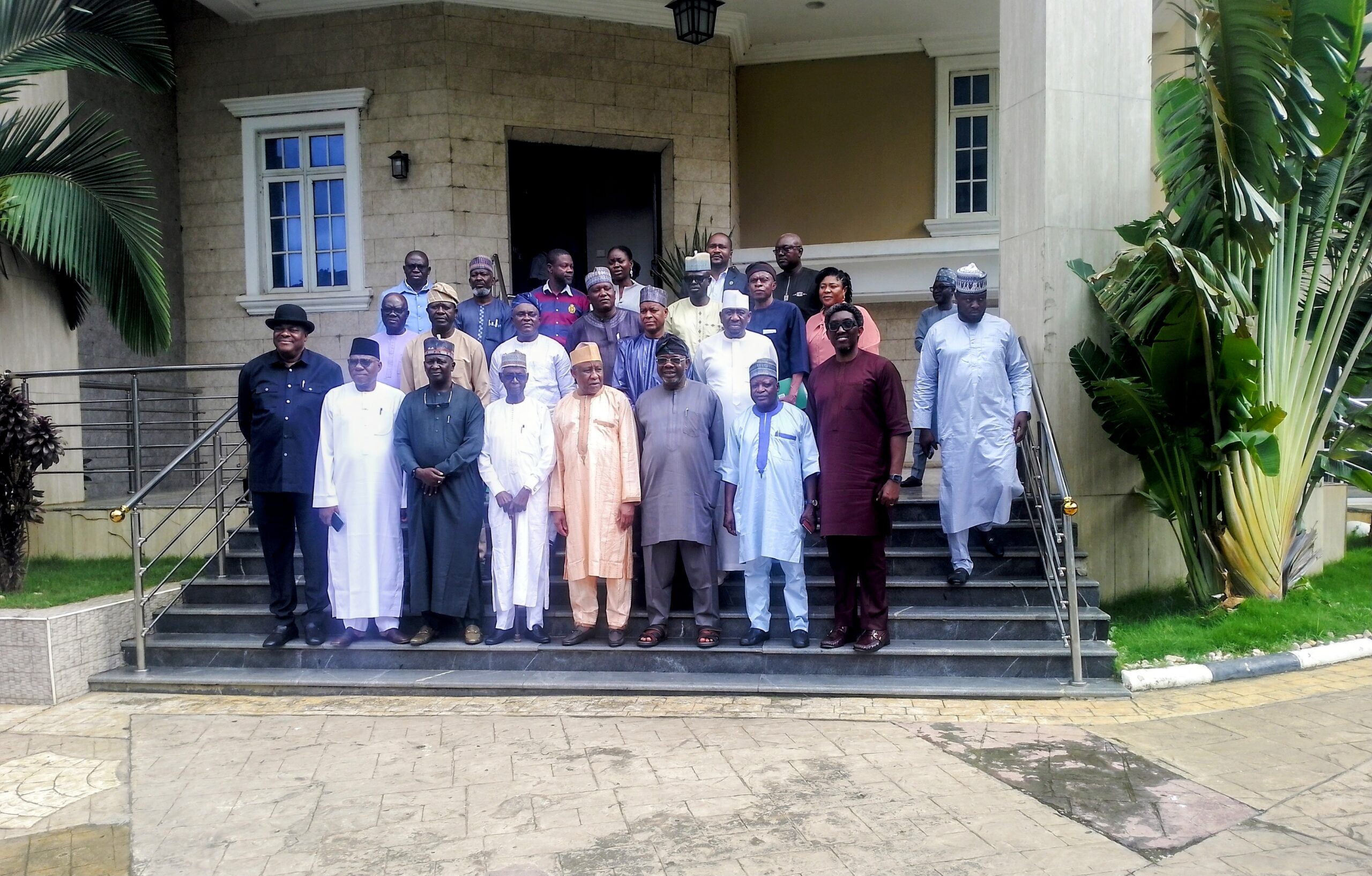
Speaking during a media interaction, the Chairman of the Commission, Major General Paul C. Tarfa (rtd), said the NEDC has, over the past six to seven years, steadily built its reputation as a key driver of recovery and development in the region, stressing that the Commission’s efforts are aligned with the Renewed Hope Agenda of President Bola Ahmed Tinubu.
Tarfa noted that the Commission has remained committed to its mandate of rebuilding communities devastated by insurgency, adding that the visit of media stakeholders would help amplify its achievements and ensure that Nigerians are better informed about government interventions in the North-East.
“We have tried from the beginning to do our best according to what we were established for. Today, NEDC is a household name. Our efforts are not wasted, and we believe this engagement will help the public understand the progress made so far,” he said.
Providing further details, the Managing Director/Chief Executive Officer of NEDC, Mohammed Goni Alkali, explained that the Commission’s interventions are guided by the North-East Stabilisation and Development Master Plan (NESDMP), which is structured into four phases: Stabilisation and Recovery, Renewal, Expansion, and Sustainable Growth.
Alkali revealed that the Commission has achieved over 80 per cent of its targets under the first two phases, which focused on restoring critical infrastructure, supporting displaced populations, rebuilding schools and healthcare facilities, and improving security through strategic interventions.
He noted that despite occasional security challenges, the North-East region has become significantly more stable, even as he pointed out that some parts of the country now face similar threats.
Highlighting the health sector, Alkali described findings from NEDC’s diagnostic studies as alarming, revealing that the entire North-East, with a population of about 28 million people, previously had only one functional MRI machine, which was outdated.
“This informed our decision to engage stakeholders and invest in critical healthcare infrastructure, including the approval of modern diagnostic equipment such as MRI and CT scan machines for teaching hospitals,” he said.
Alkali further disclosed that the Commission has completed over 300 kilometres of roads and more than 50 bridges across the six states of the region, significantly improving connectivity, access to markets, healthcare, and education.
He added that through the “Light Up the North-East Project,” over 100,000 solar-powered streetlights have been installed, boosting security and extending commercial activities in communities.
According to him, the newly approved ₦100 billion investment in a 50-megawatt solar mini-grid system is designed to tackle the region’s severe electricity deficit, where only about 39 per cent of the population currently has access to power.
He explained that the initiative would provide electricity to homes, schools, healthcare facilities, and businesses, while also stimulating economic activities, supporting agro-processing, and creating green jobs.
“The 50MW renewable energy programme is not just an energy project; it is a catalyst for regional transformation. It will lower the cost of doing business, improve productivity, and attract private sector investment,” Alkali stated.
He also disclosed plans to advance major transportation projects, including the proposed North-East railway, additional roads, bridges, and a regional airline, aimed at enhancing mobility, reducing logistics costs, and strengthening trade within and beyond Nigeria.
The NEDC boss emphasised that the Commission is now transitioning into the Expansion and Sustainable Growth phase of its master plan, focusing on industrialisation, enterprise development, energy security, and human capital development.
He added that the Commission’s interventions are guided by 11 strategic pillars, including peaceful society, agriculture, healthcare, infrastructure, entrepreneurship, education, environmental protection, and regional connectivity.
READ ALSO: MURIC Hails NDLEA’s Role in Tackling Insecurity, Urges FG Support
Alkali reaffirmed the Commission’s commitment to transforming the North-East from a region once defined by conflict into one driven by economic growth, investment, and shared prosperity.
“The North-East is no longer defined by its past, but by the promise of its future. We are moving from recovery to prosperity,” he said.
About The Author