The Lagos Water Corporation (LWC) is advancing plans for a major subsea water transmission project expected to improve potable water supply to between 1.5 million and three million residents across Lagos Island, Ikoyi, Victoria Island, Lekki Phase 1 and communities extending to Ajah.
The project, designed to address rising water demand and strengthen water security along the rapidly developing coastal corridor, will involve the installation of two 1.2-metre-diameter subsea transmission pipelines beneath the Lagos Lagoon.
The Managing Director of LWC, Engr. Mukhtaar Temitope Tijani, reaffirmed the corporation’s commitment to working with its transaction partners to deliver sustainable solutions capable of transforming potable water supply across the targeted communities.
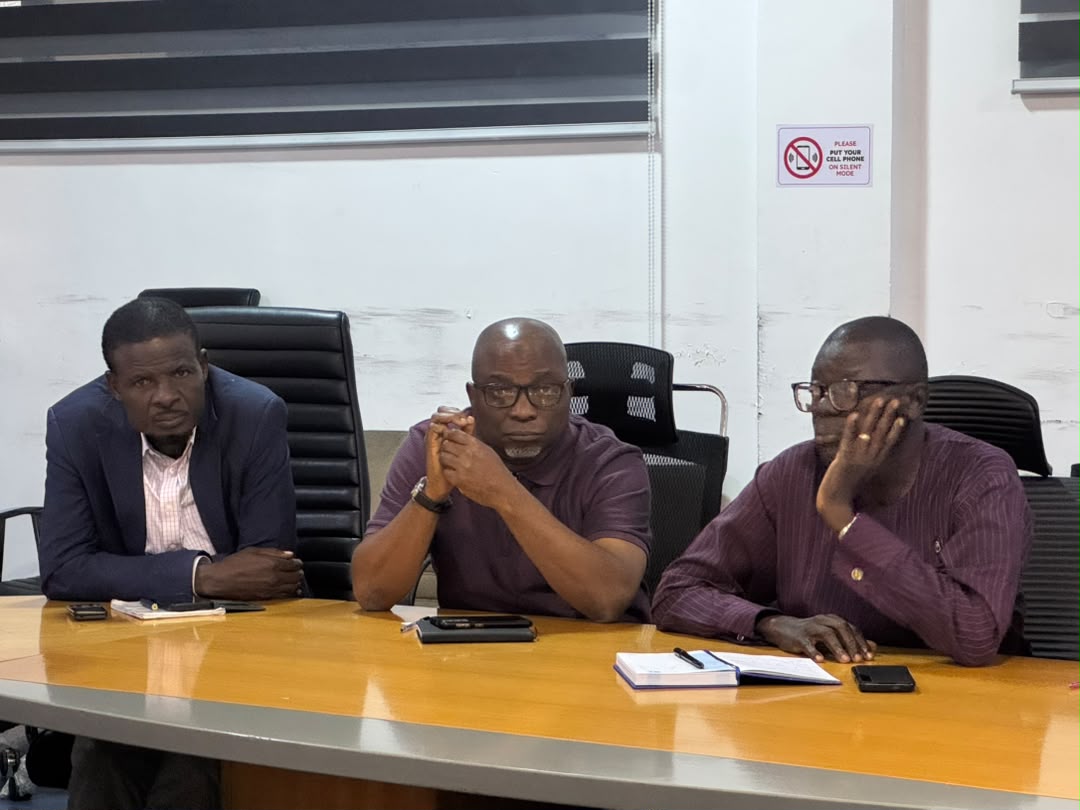
The development was discussed during a high-level strategic work-plan meeting and technical presentation held on Tuesday, Aug. 18, at the LWC Headquarters in Ijora, Lagos.
The meeting, chaired by Tijani, was attended by the Executive Director, Operations, Engr. (Mrs.) Helen Omolanke Taiwo; Director, Distribution, Engr. Bolaji Ogunlewe; Director, Production, Engr. Mustapha Agiri; Director, Compliance and Quality Management, Mr. ‘Tola Fadare; and Director, Legal, Barrister ‘Lanre Fashola, among other senior management staff.
The technical presentation was led by Naston Engineering Limited’s Project Manager, Mr. Jide Ottun, alongside the company’s Managing Director, Mr. Wole Funsho, Finance Director, Mr. Benson Ogbeide, and representatives of China Harbour Engineering Company (CHEC), Mr. Jay Zhong and Mr. KaiLai Wu.
The proposed project, to be developed under a Public-Private Partnership framework, is expected to tackle longstanding challenges associated with ageing water infrastructure, population growth, increasing demand and saline intrusion affecting groundwater sources in the coastal corridor.
According to the technical presentation, the two subsea pipelines will provide operational redundancy while reducing the need for extensive excavation along heavily congested road corridors.
Strategic landfall points for the pipelines are proposed at Ilubirin and Lekki Phase 1.
The project is expected to be implemented in two phases over an estimated 36-month construction period, while the concession tenure will be determined through ongoing financial modelling.
A major component of the initiative is the planned expansion of production capacity at Adiyan Waterworks from 70 million gallons per day to 140 million gallons per day to provide the upstream supply needed to support the coastal transmission network.
The project is conceived as an end-to-end intervention covering water production, bulk transmission and last-mile distribution.
The meeting also identified the need to reduce non-revenue water and rehabilitate ageing infrastructure through improved metering, monitoring and network upgrades.
For the feasibility study to progress, participants emphasised the need for timely provision of commercial demand data, Geographic Information System records, physical planning information and relevant legal clearances from concerned Lagos State agencies.
It was agreed that appropriate correspondence would be routed through the Office of the Governor to facilitate the required inter-agency support.
Both parties agreed to sustain the momentum of engagement, with the feasibility study and preliminary designs targeted for completion by December 2026.
READ ALSO: COAS: Army Expansion Must Be Matched With Stronger Logistics Capacity
NiDCOM Boss to LASU Graduates: Be Useful, Visible Nigerian
The initiative builds on the Memorandum of Understanding signed on July 9, 2026, between the Lagos State Government, China Harbour Engineering Company and Naston Engineering, to provide a framework for technical assessment, planning and development of strategic water infrastructure projects across the state.
The proposed intervention is expected to reduce dependence on groundwater, improve water security and support sustainable urban development and investment across Lagos’ coastal communities.
About The Author