By Fatima Saka
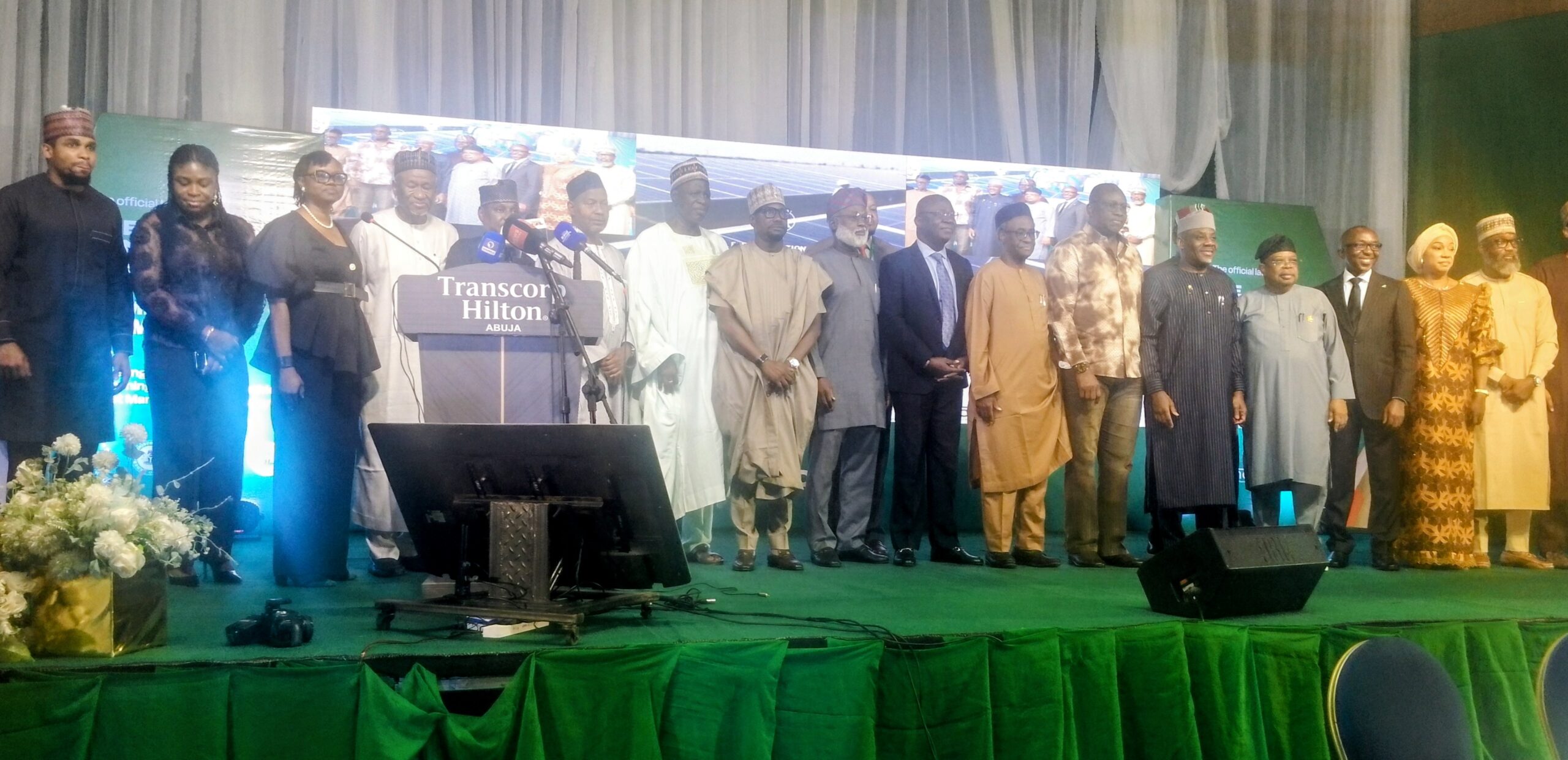
ABUJA — The Federal Government on Wednesday launched the Renewable Asset Management Company (RAMCO) in Nigeria’s capital city, Abuja, to tackle the persistent abandonment and deterioration of publicly funded renewable energy infrastructure and unlock long-term private capital for the power sector.

The launched marks a major shift from the traditional model of building and commissioning public infrastructure to one focused on professional asset management, maintenance, optimisation and long-term value creation. With symbolic signing, joint Agreement signing and unveiling of RAMCO.

RAMCO was established through a partnership involving the Rural Electrification Agency (REA), Ministry of Finance Incorporated (MOFI) and Infrastructure Corporation of Nigeria (InfraCorp), with the support of the Federal Ministry of Power.
The launch followed concerns that renewable energy projects deployed in universities, teaching hospitals and other public institutions could deteriorate after commissioning without proper systems for maintenance and lifecycle management.
Power Minister: Infrastructure must perform, not merely exist
The Minister of Power, Chief Joseph Olasunkanmi, said the creation of RAMCO represented an important change in how Nigeria viewed and managed public infrastructure.

According to him, Nigeria had historically concentrated on acquiring, constructing and commissioning public assets but had not paid sufficient attention to preserving their value.
“For me, RAMCO offers a different model and a new paradigm,” he said. “It represents an important change in how we think about public assets, from a culture of acquisition to one that treats them as national investments whose value must be preserved.”
The minister said RAMCO would be guided by professional stewardship, governance, sustainability and measurable performance.
He stressed that the company should not be assessed by the number of assets under its control but by whether those assets remained operational and continued to deliver reliable services.
The minister said Nigeria faced an uncomfortable paradox of possessing substantial energy resources and infrastructure while many citizens still lacked dependable electricity.
The Federal Government, he said, was pursuing a diversified electricity future combining national grid supply, embedded generation, interconnected and isolated mini-grids, distributed renewable energy, storage and other technologies suited to specific communities and economic clusters.
He said communities without transmission infrastructure would increasingly be served through mini-grids and other decentralised energy solutions.
The minister said RAMCO was also part of broader reforms aimed at strengthening power sector sustainability, improving grid stability and ensuring that electricity assets delivered greater value.
He disclosed that the government was conducting technical audits of major power corridors, including the Lagos axis, Abuja-Kaduna-Kano corridor and the Enugu axis, to identify damaged and ageing equipment.
According to him, the government was assessing the condition of transmission infrastructure, including insulators, conductors and towers, ahead of replacement and rehabilitation works.
“We need to strengthen our grid. Trippings must stop. Grid collapses must stop,” he said.
He said the government was also working to optimize stranded power assets and develop infrastructure in areas with unmet industrial demand.
The minister disclosed that the administration was targeting increased electricity wheeling capacity, with a goal of reaching 6,500 megawatts by the end of 2026 and 8,000 megawatts by the end of 2027.
He added that the government was exploring opportunities for small-scale hydropower development from existing dams and other stranded water infrastructure.
According to him, the broader ambition was to use electricity to build prosperity, improve Nigeria’s manufacturing competitiveness and support the next generation of digital infrastructure.
He noted that the growing demand for artificial intelligence and data centres was creating new opportunities for the power sector.
“People want to site data centres next to power plants because of the energy requirement,” he said.
The minister said the Federal Ministry of Power would support RAMCO because the initiative was aligned with the government’s larger objective of moving Nigeria from inadequate electricity supply to a sustainable and reliable power system.
Alausa: Renewable investments need professional maintenance
The Minister of Education, Dr Tunji Alausa, described the launch as particularly significant for the education sector because many renewable energy assets developed by the Federal Government through the REA are located in tertiary institutions and teaching hospitals.
He said the challenge was no longer simply about deploying renewable energy infrastructure but ensuring that the facilities were professionally maintained and preserved.
“This is where RAMCO becomes very important,” he said.
Alausa said significant investments had been made through the REA’s Energising Education Programme, EEP, to provide renewable, reliable and sustainable electricity to federal tertiary institutions.
According to him, Phase One and Phase Two of the programme cover 15 sites with a combined installed capacity of about 70 megawatts.
The programme comprises about 32 megawatts across seven sites under Phase One and about 40 megawatts across eight sites under Phase Two.
He said beneficiary institutions were experiencing improved electricity supply, with some enjoying 24-hour power.
Alausa said dependable energy was fundamental to effective teaching, research, laboratory operations, digital learning, innovation and improved student experience.
He said reliable power was helping institutions deploy modern technology, strengthen research and create better learning environments.
However, the minister warned that the sustainability of the investments could not be taken for granted.
“Renewable energy infrastructure requires professional asset management, preventive maintenance, technical competence, timely replacement of components, effective monitoring and clear accountability,” he said.
“Without this, even the best infrastructure will deteriorate and ultimately fail to deliver the benefits for which it was established.”
Alausa said RAMCO represented a transition from simply deploying renewable energy assets to managing them sustainably.
He said the company should ensure that faults were addressed promptly, maintenance was planned rather than reactive and public investments delivered their full value.
According to him, the initiative aligned with the Federal Government’s broader objective of building resilient, technology-enabled and globally competitive tertiary institutions.
“As we expand investment in STEM education, digital learning, research, laboratories, medical education, technical and professional education and innovation, the demand for reliable energy across institutions will only increase,” he said.
“We must therefore ensure that existing energy assets are protected while creating a sustainable foundation for future expansion.”
The minister said sustainability must be incorporated into infrastructure projects from the beginning.
“The government should not merely commission infrastructure. We must establish strong systems that guarantee maintenance, performance and longevity,” he said.
He urged RAMCO to build strong partnerships with beneficiary institutions, vice chancellors, chief medical directors and management teams to protect renewable energy installations from misuse and deterioration.
Alausa said the company’s success should be measured by the reliability, availability, longevity and impact of assets under its management.
“We are not simply launching another company,” he said. “We are strengthening the institutional framework required to protect critical national infrastructure and ensure sustainability of Nigeria’s renewable energy investments.”
Finance Ministry representative backs new infrastructure model
A representative of the Minister of Finance and Coordinating Minister of the Economy, Tawio Oyedele said RAMCO demonstrated a new approach to public infrastructure management.
He said the old order had focused on identifying projects, procuring, building, commissioning and abandoning infrastructure.
The new approach, he said, should involve identifying projects, preparing risks, structuring, financing, building, operating, maintaining, optimising, recycling and renewing assets throughout their lifecycle.
He said infrastructure must be treated as a long-term asset rather than a project whose story ends after commissioning.
The representative urged REA, MOFI, InfraCorp and other partners to nurture the RAMCO model and ensure that it succeeded.
He said the initiative could unlock significant national capacity if properly implemented.
Budget Office: Professional asset management will save public funds
Mr. Tanimu Yakubu, Director General of the Budget Office of the Federation said RAMCO marked a welcome advance in Nigeria’s effort to provide reliable energy while preserving the value of public investment.
The DG congratulated the Federal Ministry of Power, REA, MOFI, InfraCorp and other partners for bringing the initiative from concept to launch.
The Budget Office said RAMCO was based on the recognition that renewable energy assets should continue serving the people and institutions for which they were created.
By giving sustained attention to their operation, maintenance, renewal and productive use, the official said RAMCO could extend the working life of renewable energy assets and turn past investments into dependable services for many years.
The official said the fiscal benefits were significant.
Every additional year of reliable service, according to the Budget Office, allows the original investment to work harder, postpones replacement expenditure and reduces the need for emergency interventions.
Professional asset management would also provide government and host institutions with a firmer basis for budget planning, freeing more resources for teaching, research, clinical care and other essential responsibilities.
The official said renewable energy assets already serving federal universities and teaching hospitals provided a strong foundation for RAMCO.
The REA and beneficiary institutions, he said, had reported savings arising from cheaper and more reliable electricity and reduced dependence on diesel.
The benefits, he added, were ultimately human.
Reliable electricity keeps laboratories and libraries operational, supports digital learning and research, and protects critical health services such as diagnostics, surgery, medicine storage and patient care.
It also gives public institutions greater stability in planning and delivering services.
The Budget Office said the partnership behind RAMCO was particularly encouraging.
According to the DG, REA brings sector knowledge, an established asset portfolio and operational experience; MOFI provides the government ownership and public asset stewardship framework; while InfraCorp contributes project development and infrastructure financing capabilities.
The Federal Ministry of Power, he said, provides policy leadership.
The official said RAMCO’s ambition to mobilise close to ₦1 trillion over time would create opportunities for government equity, concessional funding, green finance and patient private capital to work together.
“For the public finances, the opportunity is equally valuable. Scarce budgetary resources can be complemented by long-term capital. Maintenance and renewal can be planned beyond a single financial year, and the reach of public investment can be widened,” he said.
He added that RAMCO offered investors and development partners a portfolio connected to clear public needs and measurable service.
The Budget Office said reliable assets, transparent governance, sound lifecycle planning and credible performance information could deepen investor confidence and strengthen Nigeria’s position as a destination for renewable energy investment.
It pledged support for the fiscal and budgetary coordination required for RAMCO’s progress.
Aliyu: RAMCO will turn renewable assets into sustainable investments
The Managing Director and Chief Executive Officer of the Rural Electrification Agency, Dr Abba Abubakar Aliyu, said RAMCO was designed as Nigeria’s strategic answer to the challenge of long-term renewable energy financing and asset sustainability.

Aliyu said Nigeria needed to move beyond dependence on government budgets, sovereign borrowing and development finance for electricity infrastructure expansion.
He said RAMCO would provide a specialised platform for the professional management, optimisation and long-term sustainability of renewable energy assets.
The REA boss said the initiative would help connect publicly funded renewable energy infrastructure with long-term private capital.
According to him, the model would focus not only on deploying infrastructure but also on ensuring asset productivity, sustainability and capital recycling.
Aliyu said RAMCO could aggregate mature renewable energy assets, establish predictable revenue streams and create opportunities for private capital to participate in their long-term management.
He said capital deployed into mature renewable energy assets could potentially be refinanced or recycled under appropriate commercial and regulatory frameworks, freeing resources for new electricity projects.
He also highlighted the scale of renewable energy assets already deployed through the Energising Education Programme.
REA has deployed solar-hybrid generation across federal universities and teaching hospitals since the programme began, but concerns over the condition of some early projects reinforced the need for a professional asset management structure.
Aliyu said RAMCO was expected to ensure that renewable infrastructure remained productive long after commissioning.
Takang: Nigeria must know what it owns
The Managing Director and Chief Executive Officer of the Ministry of Finance Incorporated, Dr Armstrong Takang, described the launch as a symbolic and significant turning point in Nigeria’s approach to public asset management.

He said Nigeria had spent billions of dollars developing infrastructure but had often focused more on mobilising capital, completing projects and commissioning them than on ensuring that they continued to deliver value.
Takang said the country had a plethora of public assets that were abandoned, underperforming or not generating the impact for which they were established.
He cited major industrial assets such as Ajaokuta Steel and Delta Steel as examples of investments that consumed enormous resources but failed to deliver their expected value.
“Have those assets delivered the value for which they were established? Can we truly say that the investments made in those assets were worth it?” he asked.
Takang said the same challenge existed in the renewable energy sector.
He recalled concerns raised over renewable energy installations in educational institutions and teaching hospitals, noting that a relatively simple fault such as a damaged solar panel or faulty battery could render an expensive multi-megawatt installation ineffective.
He said agencies sometimes returned to government to seek new budget allocations to maintain or even rebuild assets that had already received substantial public funding.
According to him, one of the key reasons for MOFI’s restructuring was to establish what the Federal Government actually owned and determine the value and performance of those assets.
He said Nigeria often had detailed records of what it owed in domestic and foreign debt but could not provide a comprehensive account of what it owned.
“When we started this assignment, what we could authenticate and verify was about ₦1.25 trillion in assets, yet our debts were running into tens of trillions of naira,” he said.
The MOFI boss said the institution was mandated to answer three key questions.
The first, he said, was determining what government owned and how much those assets were worth.
The second was professionalising the management of government-owned and government-linked enterprises through appropriate governance, performance metrics, boards, management teams and technical capabilities.
The third was mobilising capital at scale for investment across critical sectors of the economy.
Takang said RAMCO fitted across all three mandates.
He said the initiative would help the government identify and optimize renewable energy assets, professionalise their management and mobilise new capital for expansion.
The model, he said, would also ensure that revenues generated by productive assets contributed to their maintenance and sustainability.
Angbazo: The real life of infrastructure begins after commissioning
The Managing Director and Chief Executive Officer of InfraCorp, Dr Lazarus Angbazo, said RAMCO was created to answer one critical question: what happens to an infrastructure project after the commissioning ceremony is over?

Angbazo said enormous amounts of time, effort and capital were often spent designing, financing and constructing infrastructure, while celebrations followed their commissioning.
However, he said the real economic life of an asset only began at the point of commissioning.
“The question then is who takes responsibility for ensuring that the infrastructure continues to work, that it is properly maintained, that its performance is monitored, that it is renewed when necessary and that the value of the original investment is preserved over 20 or 30 years?” he asked.
READ ALSO: RAMCO Crucial to Keeping Power Flowing in Nigeria’s Health Facilities – Says Dr. Salako
Nigeria, Thailand Sign Technical Cooperation MoU For Stronger Economic Partnership
He said that was the problem RAMCO was established to address.
“Our normal conversations about infrastructure projects concentrate more on how we build and commission projects. This is only half of the infrastructure question,” he said.
“The other half is how we manage, maintain, finance and preserve those assets throughout their economic lives.”
Angbazo stressed that infrastructure did not create value merely because it had been commissioned.
“Infrastructure creates value because it continues to work,” he said.
He explained that a power plant creates value when it reliably produces electricity, while a solar installation creates value when its panels, batteries, generators and distribution systems continue performing years after commissioning.
Similarly, he said a mini-grid creates value when customers continue receiving reliable electricity and sufficient revenues are generated to operate, maintain and eventually renew the infrastructure.
He said Nigeria must therefore move beyond asking what infrastructure had been built and begin asking how well assets were performing, who was accountable for them, how they were maintained and how their value could be preserved over decades.
Angbazo said the questions were particularly important as Nigeria built a substantial portfolio of renewable energy infrastructure across universities, teaching hospitals, public institutions and communities.
These assets, he said, were powering learning, healthcare, public services and economic activity.
“But for every naira invested in these assets, there is a corresponding obligation to preserve their value,” he said.
Angbazo explained that every infrastructure asset had two lives.
The first was the project or construction phase, during which the asset was conceived, designed, financed, procured, constructed and commissioned.
The second was its operational and economic life, which could last between 20 and 30 years and was where the original investment ultimately generated value.
“For the next 20 to 30 years, somebody must take responsibility for how that asset performs,” he said.
That responsibility, he explained, includes maintaining
About The Author