By Fatima Saka
Nigeria has reaffirmed its commitment to a just and equitable energy transition, urging international partners to support developing countries with investments, technology transfer and practical solutions that will not undermine their energy security and development priorities.
The Minister of State for Foreign Affairs, Ambassador Sola Enikanolaiye, stated this during Nigeria’s participation at the 31st Conference of the Parties (COP31) to the United Nations Framework Convention on Climate Change (UNFCCC), where he represented the country in high-level climate and diplomatic engagements.
This was contained in a statement signed by Richard Elesho, Special Assistant on Media and Strategic Communications to the Minister of State for Foreign Affairs, dated November 13, 2026.
Enikanolaiye, who was part of the Nigerian delegation led by the Minister of Environment, Balarabe Abbas Lawal, reiterated that Nigeria’s energy transition must reflect its national circumstances, economic realities and the need to provide affordable and reliable energy for its citizens.
He disclosed that Nigeria was pursuing a net-zero emissions target by 2060, while recognising natural gas as a transition fuel, adding that reducing methane emissions offered an immediate opportunity to advance decarbonisation without compromising national development objectives.
The minister made the remarks at the announcement of the UK-Nigeria Energy Security and Transition Partnership, where he represented the Minister of Environment and signed a non-binding Memorandum of Understanding (MoU) with the UK Government.
He said Nigeria remained committed to ending routine gas flaring by 2030 and welcomed the establishment of a Joint Decarbonisation Working Group to strengthen cooperation on emissions reduction.
According to him, the UK-Nigeria Methane Partnership should accelerate efforts across the oil and gas, waste and agricultural sectors through improved methane measurement, reporting and verification, leak detection, reduced gas flaring and the deployment of appropriate technologies.
He stressed that the success of climate commitments should be measured by practical results, including improved infrastructure, better air quality and enhanced energy security.
Enikanolaiye also commended the UK Government for sustaining its environmental cooperation with Nigeria, noting that the partnership would strengthen bilateral relations and promote technology transfer.
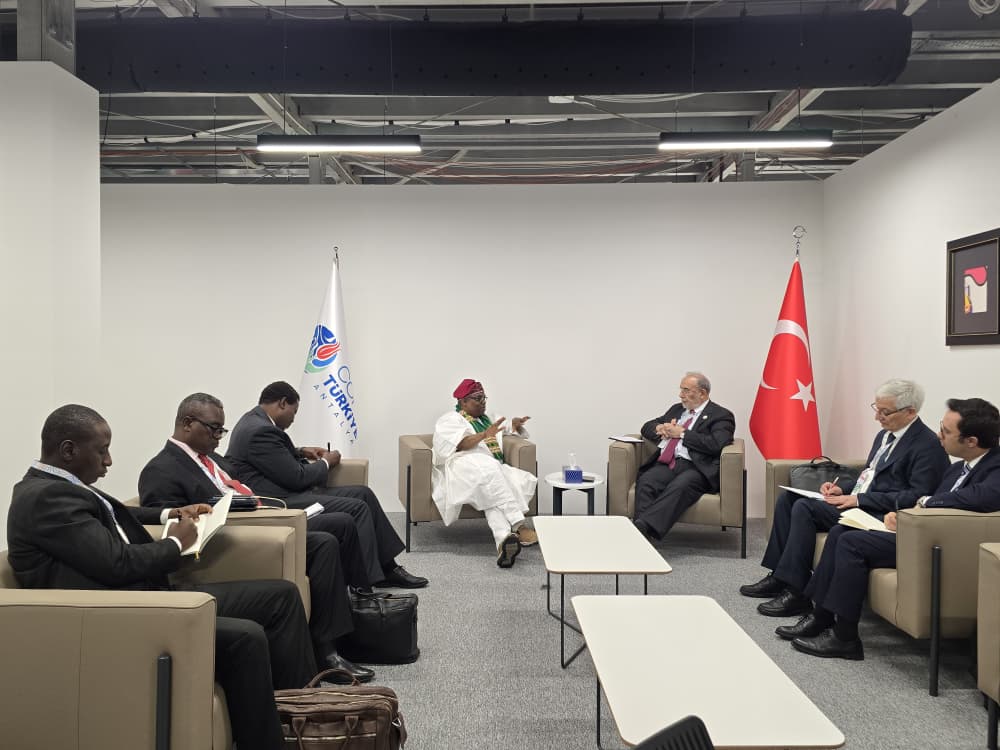
In another major diplomatic engagement on the sidelines of COP31, Nigeria and Türkiye agreed to convene a Joint Economic Commission (JEC) in the first quarter of 2027 to expand trade, investment and economic cooperation.
The agreement followed a bilateral dialogue between Enikanolaiye and Türkiye’s Deputy Minister of Foreign Affairs (Africa), Ambassador Musa Kulaklikaya.
Both countries identified defence, energy, infrastructure and trade as priority areas for expanded cooperation.
Enikanolaiye highlighted Nigeria’s vast natural gas reserves and invited Turkish investors to participate in major infrastructure projects, including the Trans-Saharan Gas Pipeline and Nigeria-Morocco Gas Pipeline.
Nigeria also appreciated Türkiye’s support for security capacity building, particularly the training of Nigerian special forces, while both countries discussed finalising an MoU to strengthen defence industry cooperation.
The discussions further covered regional security and stability in West Africa, including Türkiye’s role in the Sahel and the need for collaborative diplomacy involving the Economic Community of West African States (ECOWAS) and the Alliance of Sahel States (AES).
Both countries also agreed to streamline consular procedures and visa arrangements for holders of diplomatic and official passports.
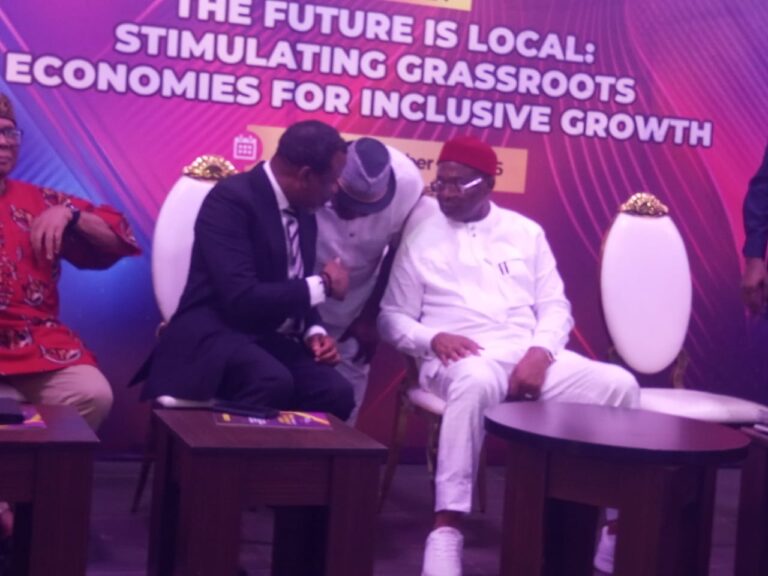
Meanwhile, Nigeria’s indigenous innovation received recognition at an event organised by Innovative Renewable Energy Storage Solution (iRESS), where Enikanolaiye commended a Nigerian entrepreneur for developing a solar-powered backpack.
He described the innovation as an example of the role local ingenuity could play in addressing Nigeria’s energy challenges.
The minister also praised the administration of President Bola Tinubu for undertaking reforms aimed at addressing energy gaps and creating an enabling environment for businesses and innovators.
He said macroeconomic stability remained essential to improving livelihoods and supporting enterprises such as iRESS.
Enikanolaiye subsequently joined the Ministers of Agriculture and Food Security, Senator Abubakar Kyari, and Environment, Balarabe Abbas Lawal, to declare open Nigeria Day at the country’s pavilion, where he commended the organisation of the event.
The opening of the Antalya Leaders’ Summit featured addresses by Turkish President Recep Tayyip Erdoğan and United Nations leaders.
Erdoğan described environmental protection as a shared moral responsibility, warning that worsening climate pressures posed threats to global stability.
He highlighted Türkiye’s newly enacted Climate Law and its Water Efficiency Mobilisation initiative, while calling for predictable climate financing and stronger support for developing and vulnerable countries.
READ ALSO: ECAPI President Urges Nigerians to Report Police Officers Demanding Money for Bail
One Dead, Eight Injured in Multiple-Vehicle Crash in Anambra – FRSC
Nigeria’s delegation also included other government officials.
The engagements underscored Nigeria’s efforts to use climate diplomacy to advance energy security, attract investment, strengthen international partnerships and promote homegrown solutions to development challenges.
About The Author