
By Fatima Saka
The Federal Government has challenged stakeholders in Nigeria’s health sector to move beyond counting healthcare facilities and infrastructure to measuring actual improvements in the health and wellbeing of citizens.
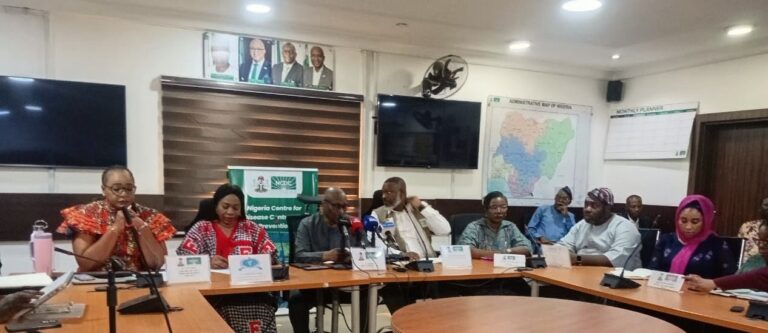
The Coordinating Minister of Health and Social Welfare, Professor Muhammad Ali Pate, gave the charge on Thursday at the Project Impact Dissemination session of the 2026 Health Sector Joint Annual Review (JAR) in Abuja.
Pate said the success of the Immunisation Plus and Malaria Progress by Accelerating Coverage and Transforming Services (IMPACT) project demonstrated the importance of shifting healthcare investments from infrastructure provision to measurable results.
He noted that although Nigeria had made significant progress in healthcare reforms over the years, sustaining the achievements and ensuring that investments translate into better health outcomes remained a major challenge.
Commending the IMPACT implementation team, the minister said the project’s results had been evaluated, tested and independently scrutinised, with the team recording an impressive performance.
He also applauded the contributions of government agencies, primary healthcare officials, malaria programme personnel, state commissioners and development partners towards the successful delivery of the programme.
Tracing Nigeria’s healthcare reform journey, Pate recalled that the foundation of the current reform process dated back to 2004, when former Minister of Health, Professor Eyitayo Lambo, initiated reforms that strengthened the primary healthcare system and clarified responsibilities across levels of government.
He explained that the process eventually culminated in the National Health Act, signed into law in 2014, which established the Basic Health Care Provision Fund (BHCPF) to strengthen healthcare financing and service delivery.
According to him, Nigeria’s partnership with the World Bank also evolved from financing infrastructure, buildings, equipment and procurement to a results-based financing model that prioritises measurable improvements in healthcare delivery.
He identified the Nigeria State Health Investment Project (NSHIP), introduced around 2009, as an important turning point in the transition towards rewarding performance and health outcomes rather than inputs.
Pate said the Saving One Million Lives Programme, introduced around 2014 and 2015, further strengthened the approach by focusing on improvements in maternal health, immunisation and other critical health indicators.
He disclosed that the IMPACT project, approved in early 2020 with $650 million financing, represented another phase of Nigeria’s health sector transformation.
The minister described the programme as a bridge between traditional investment financing and a more sustainable healthcare system anchored on the BHCPF and improved performance.
He further explained that the HOPE programme, introduced in 2023, represented the next phase of the reform journey, with emphasis on strengthening national systems, primary healthcare delivery and encouraging states to deploy domestic resources to achieve measurable results.
Pate observed that the distribution of primary healthcare centres across Nigeria had not always translated into corresponding improvements in immunisation coverage and maternal health outcomes.
He said the experience demonstrated that building healthcare facilities and providing equipment alone could not guarantee healthier communities.
According to him, Nigeria’s health sector is now moving towards a more systematic reform framework supported by stronger institutions, sustainable financing, accountability and the Sector-Wide Approach (SWAp).
He, however, warned that sustaining the gains would require continuous adaptation, collaboration and commitment from all levels of government.
READ ALSO: NCDC Confirms Recovery of Ebola Patient Evacuated to Switzerland, Hails Tinubu’s Swift Intervention
Agunbiade hails wife’s academic feat, pledges lifelong support
Pate said the IMPACT project had demonstrated within three years what was possible when the Federal Government, state governments, local governments and development partners worked together towards clearly defined health outcomes.
He urged stakeholders to consolidate the achievements and ensure that the lessons from the programme inform subsequent health sector interventions.
About The Author