
……….Questions INEC’s impartiality, warns exclusion of PDP candidate could erode public confidence in 2027 elections, alleges religious discrimination

By Fatima Saka
The Muslim Rights Concern (MURIC) has accused the Independent National Electoral Commission (INEC) of unfairly excluding Professor Isa Ali Pantami from the list of governorship candidates in Gombe State, warning that the controversy could undermine public confidence in the electoral process ahead of the 2027 general elections.
The organisation demanded Pantami’s immediate reinstatement as the Peoples Democratic Party (PDP) governorship candidate and called on President Bola Tinubu to replace INEC Chairman, Professor Joash Amupitan, over allegations of religious bias and concerns about his impartiality.
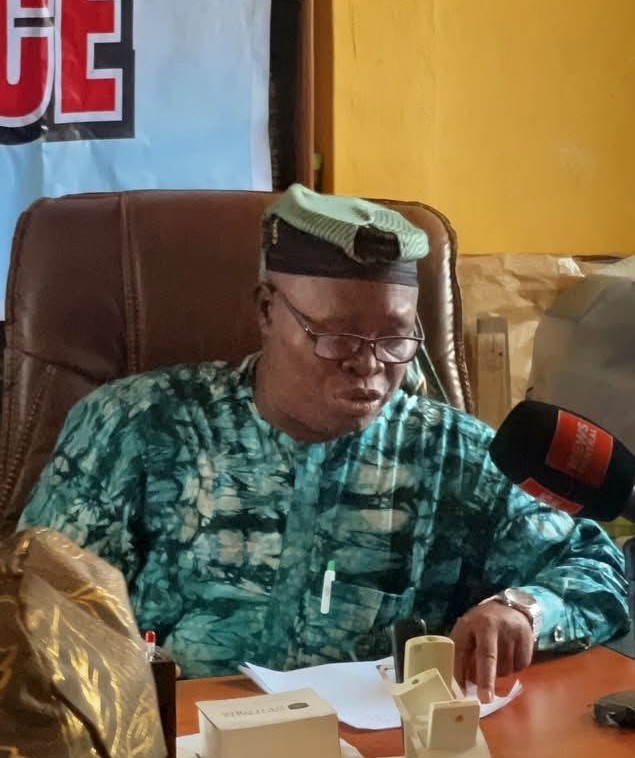
MURIC Founder and Executive Director, Professor Ishaq Akintola, made the demands at a press conference at the organisation’s headquarters in Lagos on Tuesday.
Akintola said Pantami emerged as the PDP governorship candidate after a fresh primary election conducted on September 29, 2026, following the nullification of an earlier primary by a Federal High Court.
According to him, Pantami won the fresh primary with 2,054 votes, defeating Khamisu Mailantarki, who scored 389 votes, and Aliyu Garry, who polled 112 votes.
He added that INEC monitored the primary election through a team led by Mr Gambo Umar Arabi, who signed and submitted an official report on the exercise.
MURIC questioned why the commission subsequently omitted Pantami’s name from the list of governorship candidates despite its participation in the primary election.
The organisation argued that Pantami and the PDP had complied with the required process, insisting that the outcome of the fresh primary should be recognised.
Akintola described the omission as deliberate and premeditated, alleging that it amounted to disregard for the court order that led to the conduct of the fresh primary.
He maintained that the exclusion was unlawful and unconstitutional, demanding that INEC explain the circumstances surrounding its decision.
MURIC Raises Religious Bias Concerns
The organisation attributed the controversy to what it described as a broader pattern of religious stereotyping and discrimination against Muslims in Nigeria.
Akintola alleged that Amupitan had a bias against Muslim candidates, linking his concerns to controversies surrounding an 80-page legal brief reportedly sent to the United States concerning alleged religious persecution in Nigeria.
He claimed that the document contributed to the US position on religious freedom in Nigeria, arguing that the controversy surrounding the report raised questions about the INEC chairman’s impartiality.
MURIC also maintained that Muslims had suffered killings, kidnappings and other attacks by insurgents, faulting what it described as narratives that failed to acknowledge the experiences of Muslim victims.
The organisation recalled that it had opposed Amupitan’s appointment as INEC chairman, claiming that its concerns about possible religious bias had been reinforced by the exclusion of Pantami’s name.
It also cited the Supreme Council for Shariah in Nigeria as another Islamic organisation that had expressed reservations about his appointment.
Akintola said the commission’s handling of Pantami’s candidacy had heightened concerns about whether Muslim candidates could enjoy equal treatment under the current INEC leadership.
The group further alleged that the INEC chairman was pursuing an agenda to exclude Islamic scholars from contesting for political offices, particularly governorship positions.
It did not, however, present independent evidence establishing that religious considerations influenced the commission’s decision.
Akintola Questions Religious Stereotyping
Akintola also criticised what he described as the persistent stereotyping of Muslims and Islam in public discourse, questioning why religious identity continued to influence how individuals and groups were perceived in Nigeria.
He argued that the rights of every Nigerian, irrespective of religious affiliation, should be protected and that citizens should be free to participate in public life without discrimination.
The MURIC director expressed concern about what he described as inconsistent responses from sections of the media and civil society when allegations of discrimination involved different religious groups.
According to him, media organisations and civil society groups have a responsibility to challenge injustice regardless of the identity of the affected group.
He questioned why the stereotyping of Muslims had persisted despite the role of journalists and civil society organisations in promoting fairness and accountability.
Akintola also recalled a controversy involving an editorial published by The Nation newspaper, which criticised journalists over their professional conduct.
He said his former boss had challenged the editorial’s position, arguing that the newspaper itself, rather than journalists generally, should be held responsible for the publication.
He cited the episode to illustrate what he considered the importance of distinguishing between individual responsibility and generalised accusations against an entire group.
Questions Ethnic Narratives in Nigeria
Akintola also challenged narratives that attribute Nigeria’s security and political challenges to particular ethnic groups, specifically questioning the tendency to blame Fulani people collectively for the country’s problems.
Describing himself as a Yoruba prince, he said he had previously written about the historical development of Nigeria to encourage a more evidence-based discussion of the country’s ethnic and political challenges.
He argued that Nigeria’s political history, including the transition from a federal system to a more centralised structure under military rule, should be examined when discussing the country’s present difficulties.
According to him, blaming an entire ethnic group for national problems without examining the historical and political circumstances would not provide a comprehensive understanding of Nigeria’s challenges.
He urged journalists and civil society organisations to ask critical questions about the country’s political development and ensure that public discussions do not promote prejudice against particular communities.
Akintola maintained that religious and ethnic identities should not determine whether citizens can seek political office or demand accountability from public institutions.
Calls for Confidence in 2027 Elections
The MURIC director warned that the controversy surrounding Pantami’s candidacy could affect public confidence in the 2027 general elections if concerns about fairness and equal treatment were not addressed.
He argued that elections remained a critical means through which citizens could express their political choices and develop confidence in the country’s democratic institutions.
Akintola questioned how Nigerians could be expected to trust the electoral process if candidates believed they were being excluded on religious grounds.
He called on President Tinubu to appoint a replacement for Amupitan, insisting that the leadership of INEC should demonstrate impartiality and fairness to all candidates and political parties.
MURIC maintained that it was a non-partisan organisation whose intervention was based on its stated commitment to protecting the rights of Muslim candidates and voters, irrespective of their political affiliations.
The organisation demanded the immediate restoration of Pantami’s name to the list of PDP governorship candidates in Gombe State and called for his candidacy to be revalidated.
About The Author

1 thought on “Gombe PDP Governorship Candidacy: MURIC Accuses INEC of Religious Bias, Demands Pantami’s Reinstatement”