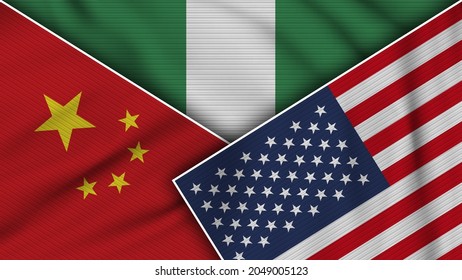
WASHINGTON, D.C. — The United States House of Representatives has passed a controversial spending bill seeking to cut all foreign assistance to Nigeria over concerns about alleged violence against Christian communities and other vulnerable groups.
The legislation, titled the National Security, Department of State and Related Programs Appropriations Act for the 2027 fiscal year, was approved on Wednesday in a narrow 217–209 vote.
A key provision in the bill mandates the complete withholding of U.S. assistance to Nigeria until Washington certifies that the Nigerian government is taking “effective and measurable actions” to protect Christians from violence.
Lawmakers backing the measure said it is aimed at holding foreign governments accountable for violations of religious freedom, particularly in regions affected by insecurity.
The provision was championed by Republican lawmakers, including Riley Moore and Jeff Steube, who argued that U.S. taxpayer funds should not support governments perceived as failing to protect religious minorities.
Mr. Steube, who proposed an amendment to increase the aid restriction from 50 per cent to 100 per cent, said partial cuts would amount to rewarding inaction. The House subsequently adopted the amendment, enforcing a total freeze.
Speaking on the bill, proponents alleged that violence in parts of Nigeria, particularly in the Middle Belt, disproportionately affects Christian populations. However, these claims have been repeatedly disputed by Nigerian authorities and several international organisations, which maintain that insecurity in the country affects people of all faiths.
Despite recent tensions, the United States and Nigeria have maintained security cooperation, particularly in counter-terrorism efforts. Earlier in the year, Washington approved over $400 million in funding for security operations across Africa, including Nigeria, and supplied critical military equipment to support ongoing operations.
Joint missions between both countries have also recorded successes against extremist groups, including operations targeting fighters linked to the Islamic State West Africa Province (ISWAP).
The proposed aid restriction comes amid broader diplomatic scrutiny following Nigeria’s designation as a Country of Particular Concern (CPC) over religious freedom issues — a label the Nigerian government has rejected.
READ ALSO: NCAA Advocates for Strong Regulation to Curb Monopoly, Protect Air Travellers
Diversify Revenue or Risk Irrelevance – Airport Manager Warns Nigerian Operators
The bill, however, is yet to become law. It must still be considered and passed by the U.S. Senate and signed by President Donald Trump before it can take effect.
Observers say the development could have significant implications for U.S.-Nigeria relations, particularly in areas of security cooperation, humanitarian support, and development assistance.
About The Author