
By Fatima Saka
Nigeria has taken a major step toward strengthening innovation and clean energy development with the launch of the Tinubu Light Initiative, alongside a $500 million solar power investment pledge aimed at transforming electricity supply in universities across the country.

The initiative, unveiled by the National Board for Technology Incubation (NBTI), coincided with a significant commitment from renewable energy firm Gigawatt Global to finance large-scale solar projects in tertiary institutions.
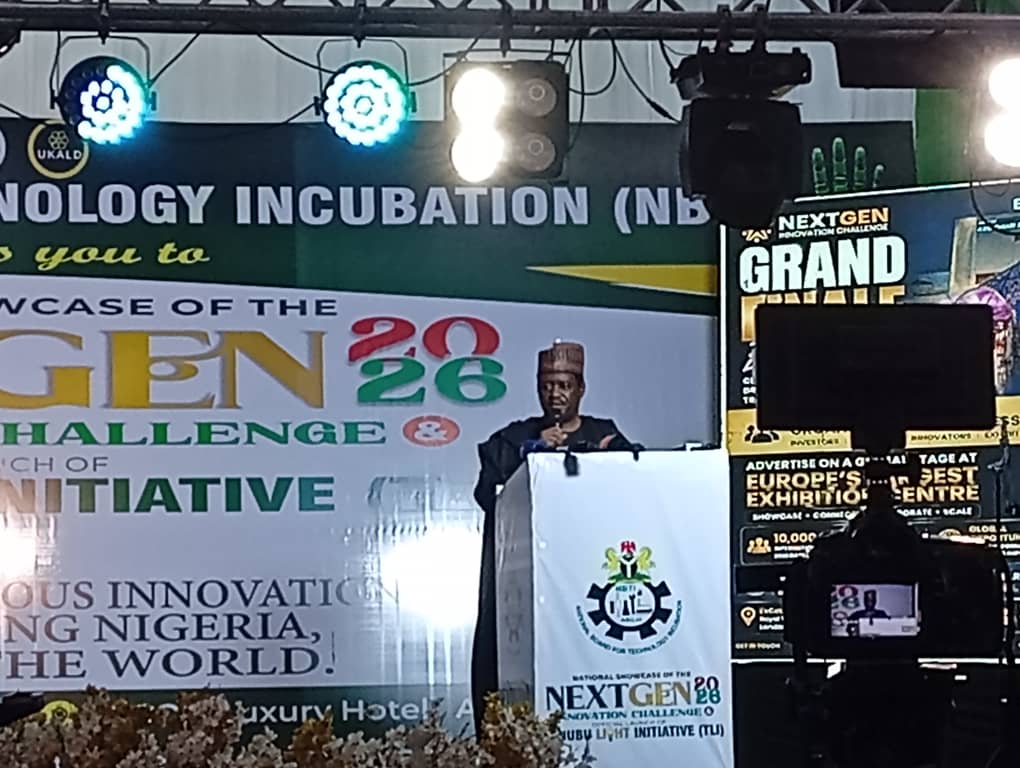
The announcements were made during the NextGen Innovation Challenge 2026 National Showcase in Abuja, where policymakers, innovators, and private sector leaders gathered to promote indigenous technology as a catalyst for economic growth.
Speaking at the event, the Permanent Secretary of the Federal Ministry of Innovation, Science and Technology, Muktar Muhammad, reaffirmed the government’s commitment to advancing innovation-driven policies. He noted that collaboration among public institutions and private investors would play a key role in accelerating national development.
Director-General of NBTI, Kazeem Kolawole Raji, described the Tinubu Light Initiative as a strategic effort to position Nigeria as a global hub for creativity and entrepreneurship. He said the programme would support local manufacturing, nurture emerging talents, and link innovators with funding opportunities.
Also speaking, Director-General of the National Space Research and Development Agency, Olusola Odusanya, highlighted the initiative’s potential to drive economic growth through science and technology, urging stakeholders to leverage it effectively.
A major highlight of the event was the announcement by Gigawatt Global’s Chief Executive Officer, Yoseph Abramowitz, who disclosed plans to provide up to $500 million in project financing for solar installations in Nigerian universities.
Abramowitz explained that the funding would cover up to 90 per cent of project costs, subject to viable power purchase agreements and project milestones. He expressed concern over the current state of electricity supply in many universities, noting that reliance on diesel generators limits academic productivity.
Each solar facility, he said, is expected to generate between 10 and 20 megawatts of electricity—enough to meet institutional demand while supplying excess power to surrounding rural communities through prepaid metering systems.
He added that the initiative would prioritise local content by sourcing materials and services within Nigeria, thereby creating jobs and strengthening the domestic renewable energy industry.
READ ALSO: Youth Hold Key to Nigeria’s Democratic Future – National Assembly Clerk Tells PLAC Interns
Nigeria Moves to Scale Up New Malaria Prevention Strategy for Infants
According to him, improved power supply would enable universities to redirect resources toward research, teaching, and innovation, while also expanding access to clean energy in nearby communities.
The Tinubu Light Initiative, alongside the NextGen Innovation Challenge, is expected to open new opportunities for young innovators, enhance Nigeria’s technological capacity, and accelerate the country’s transition to a knowledge-based and sustainable economy.
About The Author