By Fatima Saka
Abuja/London — Nigeria has called for a new global agreement to regulate the migration of health professionals, warning that the continued exodus of trained workers from developing countries is worsening already fragile health systems.
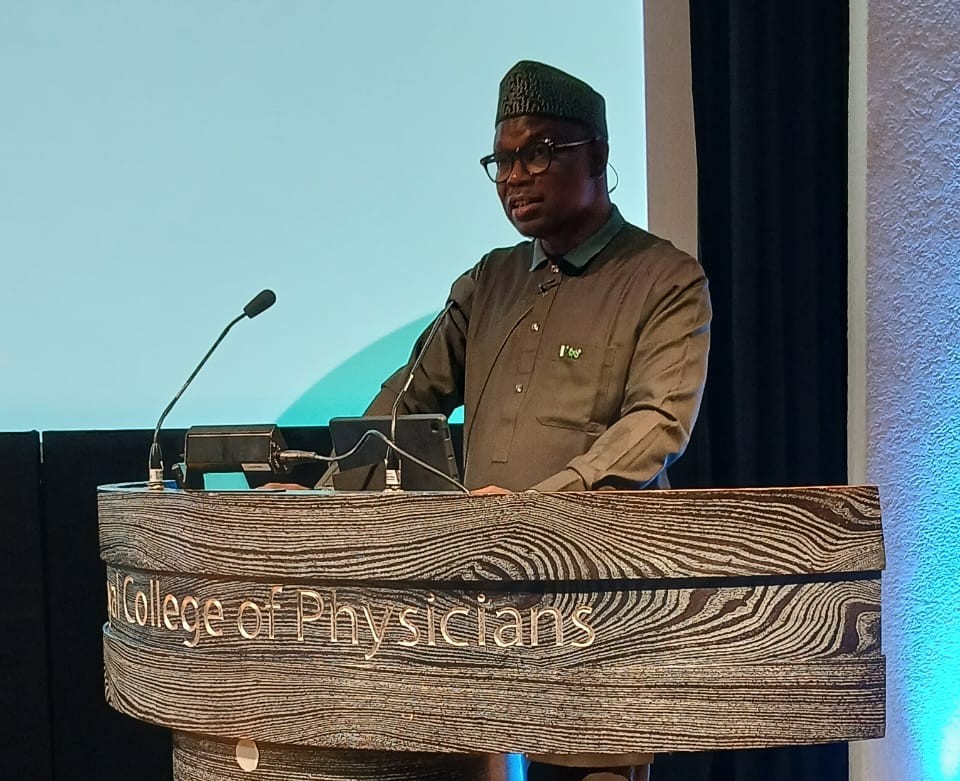
The Honourable Minister of State for Health and Social Welfare, Iziaq Adekunle Salako, made the call on Monday while delivering a keynote address at the 2026 United Kingdom Global Health Summit held at the Royal College of Physicians.
Speaking on the theme “Shaping Tomorrow’s Health, Together,” Salako said Nigeria and many low- and middle-income countries are grappling with a severe health workforce crisis, worsened by the migration of skilled professionals to wealthier nations.
According to him, Nigeria currently has about four physicians per 10,000 people, far below the minimum recommendation of 10 physicians per 10,000 population by the World Health Organization.
He noted that Africa carries more than a quarter of the global disease burden but has less than three per cent of the world’s health workforce and less than one per cent of global health expenditure.
“The global health workforce crisis is not a future threat but a present emergency,” Salako said.
He cited data showing that more than 13,600 Nigerian health workers migrated to the United Kingdom between 2021 and 2022, describing the trend as a significant loss of public investment in health education.
“Every doctor, nurse, midwife or health worker who leaves Nigeria represents a substantial flight of public resources invested in training, often exceeding $200,000 per physician,” he said.
The minister stressed that while Nigeria respects the right of citizens to pursue opportunities abroad, the current pattern of migration raises serious questions about global equity and sustainability.
To address the challenge, Salako said the administration of Bola Ahmed Tinubu is implementing reforms under the Nigeria Health Sector Renewal Investment Initiative aimed at strengthening the country’s health workforce and improving health system resilience.
He revealed that Nigeria has expanded medical training capacity, with about a 160 per cent increase in medical school admissions between 2023 and 2025. Similar expansions, he said, are ongoing in the training of nurses, midwives, pharmacists and laboratory scientists.
The minister also highlighted efforts to strengthen task-shifting models that allow community health workers and other mid-level professionals to support healthcare delivery, particularly in underserved areas.
Salako further emphasised the importance of engaging Nigerian health professionals in the diaspora as partners in national health development.
According to him, the Federal Government, through the Ministry of Health and Social Welfare and the Nigerians in Diaspora Commission, is developing structured programmes to channel diaspora expertise back to Nigeria.
He announced that between April and July 2026, seven Nigerian healthcare diaspora associations across the United Kingdom, the United States, Canada, Germany, Australia and South Africa will undertake a coordinated national medical mission in Nigeria focused on skills transfer and institutional strengthening.
Describing the initiative as “From Japa to Japada with benefits,” Salako said diaspora engagement could transform the country’s brain drain into a source of capacity gain.
The minister also urged destination countries to fully implement the WHO Global Code of Practice on the International Recruitment of Health Personnel to ensure ethical recruitment of healthcare workers.
He called for compensation mechanisms, joint training programmes, technology transfer and managed migration pathways that would allow health professionals to gain experience abroad and return home with enhanced skills.
Beyond workforce issues, Salako warned that global health systems are facing multiple pressures, including economic instability, climate change and declining development assistance.
He noted that developing countries are struggling with rising debt burdens, limited fiscal space and growing disease burdens, all of which constrain investment in health infrastructure.
To address these challenges, he called for increased domestic health financing, innovative funding mechanisms and stronger international cooperation.
READ ALSO: Heatwave, epileptic power supply worsen hardship in Lagos
CSOs Urge DSS, Police to Probe, Prosecute Authors of Fake News Against Deputy Speaker Kalu
“The next pandemic, antimicrobial resistance crisis or climate-driven health emergency will not respect borders,” he said. “Investing in Nigeria’s health system and Africa’s health systems is not altruism; it is enlightened self-interest.”
Salako concluded by urging global leaders, international organisations and development partners to embrace stronger collaboration to build resilient and equitable health systems worldwide.
About The Author