
Special Report
By Fatima Saka
Nigeria’s broadcasting industry is facing a new test of credibility ahead of the 2027 general elections, with media stakeholders warning that artificial intelligence (AI), if left unchecked, could deepen misinformation, manipulate electoral narratives and undermine public trust in the democratic process.
From cloned voices and fabricated videos to manipulated election results and coordinated disinformation campaigns, the growing use of AI has introduced new challenges for broadcasters already grappling with the responsibility of delivering accurate and balanced information.
Concerned by these emerging threats, the Centre for Media and Society (CEMESO) has begun pushing for an AI transparency and algorithmic fairness framework to guide broadcasting practice, with plans to submit the proposed document to the National Broadcasting Commission (NBC) for consideration in the review of the Nigeria Broadcasting Code.

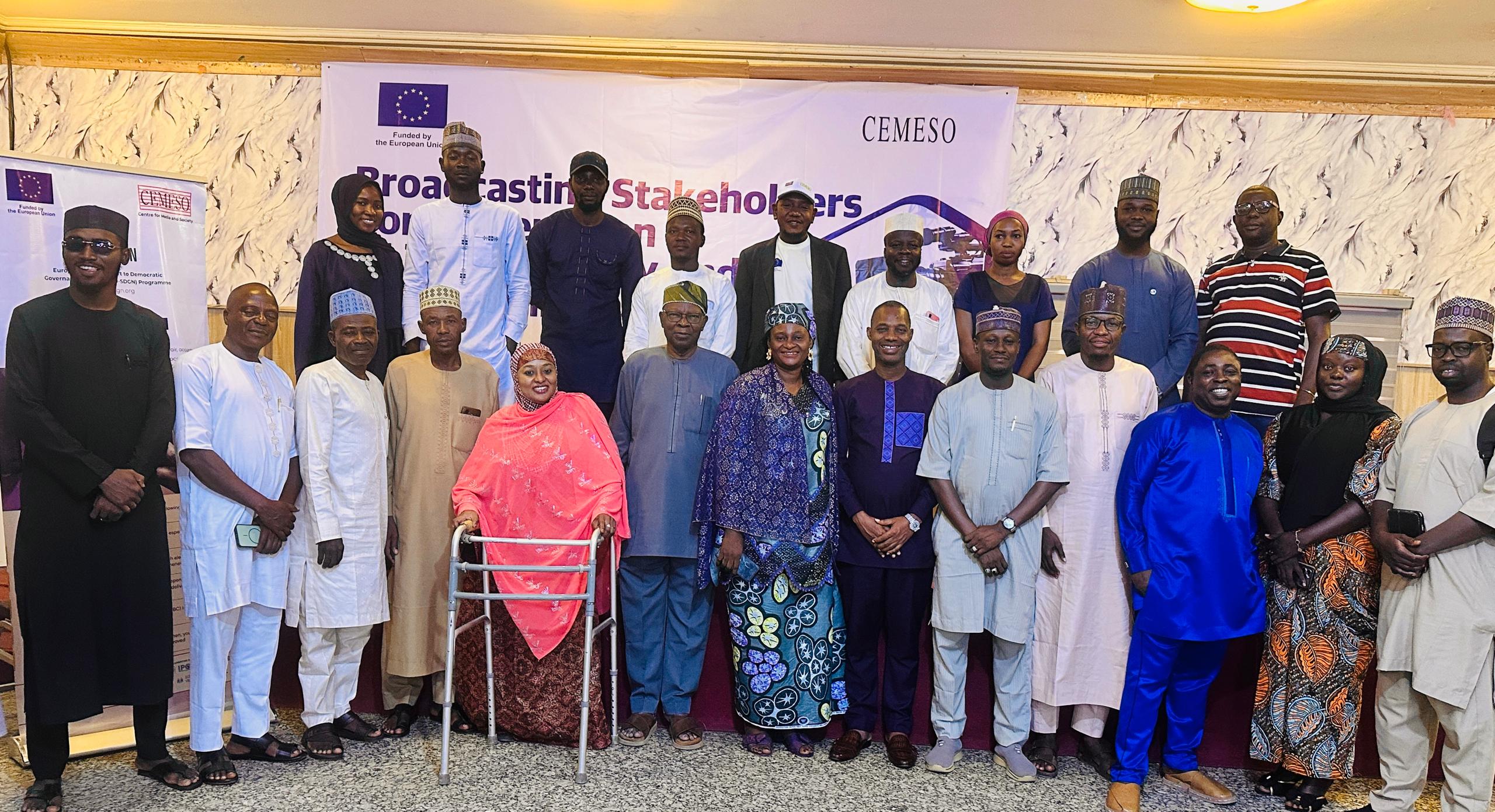
The proposed framework emerged from a two-day stakeholders’ convergence on *Broadcasting Stakeholders Convergence for AI Transparency and Algorithmic Fairness*, held in Kano on Thursday, November 12, and Friday, November 13, 2026.

The meeting was organised under Component 4 of the European Union Support to Democratic Governance in Nigeria (EU-SDGN II), bringing together regulators, broadcasters, journalists, academics and other stakeholders to examine how emerging technologies could affect the integrity of Nigeria’s electoral process.
AI-Generated Content and the Threat to Electoral Integrity
At the close of the convergence, CEMESO Executive Director, Dr Akin Akingbulu, said the organisation would submit the proposed framework to the NBC to support the development of regulatory responses to AI-generated content and algorithmic manipulation.
He explained that the framework was designed to help broadcasters identify and responsibly handle synthetic media, misinformation and other forms of digital manipulation, particularly during the 2027 election period.
According to him, the proposed document would also contribute to the review of the Nigeria Broadcasting Code, 7th edition, while CEMESO would subsequently engage legislators on possible amendments to the NBC Act.
Akingbulu noted that the work would continue beyond the Kano meeting, stressing that the convergence was part of a wider process involving consultations in Abuja, Enugu and Kano.
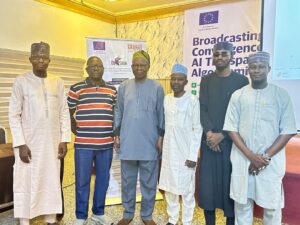
He said the proposed framework was not intended to prohibit the use of artificial intelligence but to promote transparency, accountability and fairness in its application within the broadcasting industry.
The document is expected to address the disclosure and labelling of AI-generated content, responsibilities of editors, producers, broadcasting stations and regulators, as well as monitoring and complaint-handling mechanisms.
It also seeks to promote fair representation of women, young people, persons with disabilities and minority groups in AI-driven information systems.
AI Deepfakes and the Threat to Election Information
The concerns raised at the convergence reflect the growing ability of AI tools to produce convincing but false information that can easily mislead audiences.
With relatively accessible technology, individuals or organised groups can create fabricated videos, imitate the voices of political leaders, manipulate images and circulate false election-related announcements.
Such materials could be used to create confusion around voting procedures, spread false information about candidates, announce unofficial results or incite tension among supporters.
In a multilingual country such as Nigeria, misinformation can also be tailored to specific communities and circulated through radio, social media and messaging platforms.
CEMESO Programme Manager, Timothy Bamidele, who delivered the organisation’s welcome remarks, warned that the increasing sophistication of AI-generated content required broadcasters to strengthen their verification procedures.
He noted that the misuse of AI could threaten the credibility of elections if broadcasters failed to distinguish authentic information from manipulated content.
Bamidele stressed the need for responsible reporting, transparency and professional restraint, particularly during sensitive electoral periods.
He also highlighted the importance of Kano and its wider radio audience in discussions about the influence of broadcasting on public understanding and political participation.
Idachaba Warns Broadcasters Against Irresponsible Reporting
Former Director of the National Broadcasting Commission, Prof Armstrong Idachaba, warned that politically motivated misinformation and the transmission of unverified reports could threaten national security and public order ahead of the 2027 elections.
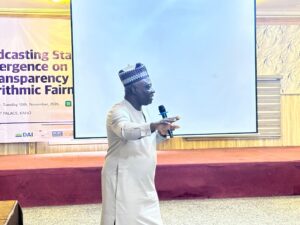
He explained that AI technology could combine, reconstruct and duplicate existing materials to make fabricated stories appear authentic, making it increasingly difficult for audiences to distinguish genuine information from manipulated content.
Idachaba recalled previous election-related incidents in which misleading reports and manipulated footage contributed to tension, noting that corrections and retractions could not always reverse the damage caused by irresponsible broadcasting.
He also recounted an incident involving a politically connected radio station that allegedly began announcing unofficial election results while voting was still ongoing, creating tension and prompting regulatory and security intervention.
According to him, broadcasters must understand that the freedom to operate comes with professional and regulatory responsibilities.
He identified authenticity, accuracy, fairness and objectivity as essential principles that must guide broadcasting, particularly when dealing with user-generated content and AI-assisted materials.
He urged media professionals to acquire the knowledge required to understand emerging technologies and ensure that they are not used to advance selfish political interests.
Public Participation Key to Fair AI Governance
A facilitator at the convergence, Prof Olunifesi Suraj of the University of Lagos, called for broader public participation in the development of policies governing artificial intelligence and digital communication.
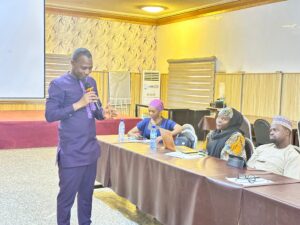
He argued that policies would be more effective when citizens and relevant stakeholders were given opportunities to contribute to their formulation rather than leaving decisions to a limited number of government officials.
Suraj said public engagement, dialogue and constructive criticism were essential to building policies that reflect the needs and concerns of society.
He noted that technology had expanded access to public expression, allowing individuals and groups previously excluded from traditional broadcasting platforms to participate in public conversations through social media and other digital channels.
However, he warned that the same platforms could amplify misinformation and information disorder, particularly with AI tools capable of presenting false information in convincing formats.
He advocated explainable and accountable AI systems, insisting that the public should have access to information about how such systems work, their capabilities and limitations.
He also called for clear labelling and attribution of AI-generated materials to help audiences distinguish between human-produced content, synthetic media, satire and parody.
According to him, transparency and accountability should guide the deployment of AI without restricting access to technology or legitimate public expression.
NUJ President Calls for Ethical Journalism Ahead of 2027
The National President of the Nigeria Union of Journalists (NUJ), Comrade Alhassan Yahya Abdullahi, urged journalists to uphold professional ethics and verify information before publication as the country approaches the 2027 general elections.
He said responsible journalism remained critical to peaceful and credible elections, warning that the circulation of unauthenticated information could heighten political tension and undermine public confidence in the electoral process.
Abdullahi called on journalists to work with relevant stakeholders to strengthen democracy rather than contribute to confusion through unverified reports.
He emphasised strict adherence to the NUJ Code of Ethics, particularly the responsibility to authenticate information before dissemination.
His position reinforced the broader concern at the convergence that the credibility of the media would be tested by how effectively journalists and broadcasters respond to AI-generated misinformation.
NBC Reaffirms Partnership With CEMESO
The Kaduna Zonal Director of the NBC, Aisamu Salisu, reaffirmed the commission’s readiness to partner with CEMESO in strengthening broadcasting standards and building the capacity of media professionals.
He described artificial intelligence as a rapidly evolving technology that was transforming how people live, work and communicate, noting that broadcasters must understand its implications and prepare for changes within the industry.
Salisu commended CEMESO for organising the convergence, describing the engagement as timely given the growing influence of AI on broadcasting and public communication.
He also acknowledged Prof Armstrong Idachaba as his mentor and teacher, recalling that Idachaba was his first point of contact at the NBC about 23 years ago.
The NBC’s position highlights the importance of collaboration between regulators and media organisations in developing practical responses to the challenges posed by emerging technologies.
EU-SDGN II Initiative Targets Inclusive Democratic Governance
CEMESO Programme Manager, Bukola Obaujo, explained that the EU-funded initiative was developed in response to recommendations of the European Union Election Observation Mission and priorities of the Nigerian government, recently reinforced through the EU-Nigeria Joint Ministerial Roadmap.
She said the broader objective was to support a functioning, pluralistic, inclusive, participatory and representative democracy in Nigeria.
According to her, the programme seeks to improve electoral administration, strengthen legislative and judicial reforms in line with democratic principles, and promote pluralism, internal democracy and equal opportunities within political parties.
It also aims to empower the media, including new media platforms, to provide fair and ethical electoral coverage and combat hate speech and disinformation.
Other areas include improving the participation of women, young people and marginalised groups, while strengthening the capacity of civil society organisations and relevant agencies to demand transparency and accountability.
The programme places the media at the centre of democratic governance, recognising its influence in shaping public opinion and providing citizens with information needed to participate meaningfully in elections.
Transparency, Not Censorship
A major issue emerging from the discussions was the need to ensure that efforts to regulate AI-generated misinformation do not become a justification for censorship or the suppression of legitimate journalism and dissent.
Stakeholders stressed that transparency and disclosure should remain central to any regulatory response, rather than a blanket prohibition on AI tools.
They urged broadcasters to verify videos, voice notes, images and other digital materials before transmission, disclose when content has been manipulated or generated by AI, and establish clear newsroom policies on the use of emerging technologies.

They also called for continuous training of journalists and broadcast professionals to improve their ability to identify synthetic media and understand how algorithms influence the distribution of information.
Another concern was the need for broadcasters to respect the constitutional and institutional responsibilities of the Independent National Electoral Commission (INEC), particularly by avoiding the announcement of election results that only the commission is authorised to declare.
The Road Ahead for Nigeria’s Broadcasting Industry
The Kano convergence has drawn attention to a challenge that goes beyond the adoption of new technology. It raises questions about the future of public trust, professional responsibility, regulatory capacity and the protection of democratic institutions in an increasingly digital information environment.

For CEMESO, the next step is to translate the discussions into a practical framework that can inform broadcasting regulations and legislative engagement.
For the NBC, broadcasters and professional bodies, the challenge will be to ensure that existing ethical standards and regulatory safeguards remain effective in an environment where fabricated information can be produced and circulated at unprecedented speed.
As Nigeria approaches the 2027 general elections, the ability of broadcasters to verify information, identify manipulated content and maintain editorial independence will be critical.
READ ALSO: NEMA Mobilises Multi-Agency Response to Gas Seepage in Rivers, Delta Communities
MURIC Backs Dogarawa to Strengthen Shariah Council Secretariat
Ultimately, artificial intelligence may expand the possibilities of broadcasting, but its value to democracy will depend on whether it is deployed with transparency, fairness and accountability.

The central message from the Kano convergence was clear: technology must strengthen public access to credible information, not become a tool for manipulating voters, undermining trust or destabilising the democratic process.
About The Author