By Fatima Saka
The Minister of Interior, Dr Olubunmi Tunji-Ojo, has called for stronger collaboration among universities, security agencies, regional institutions and development partners to improve border security, migration management and regional integration across Africa.
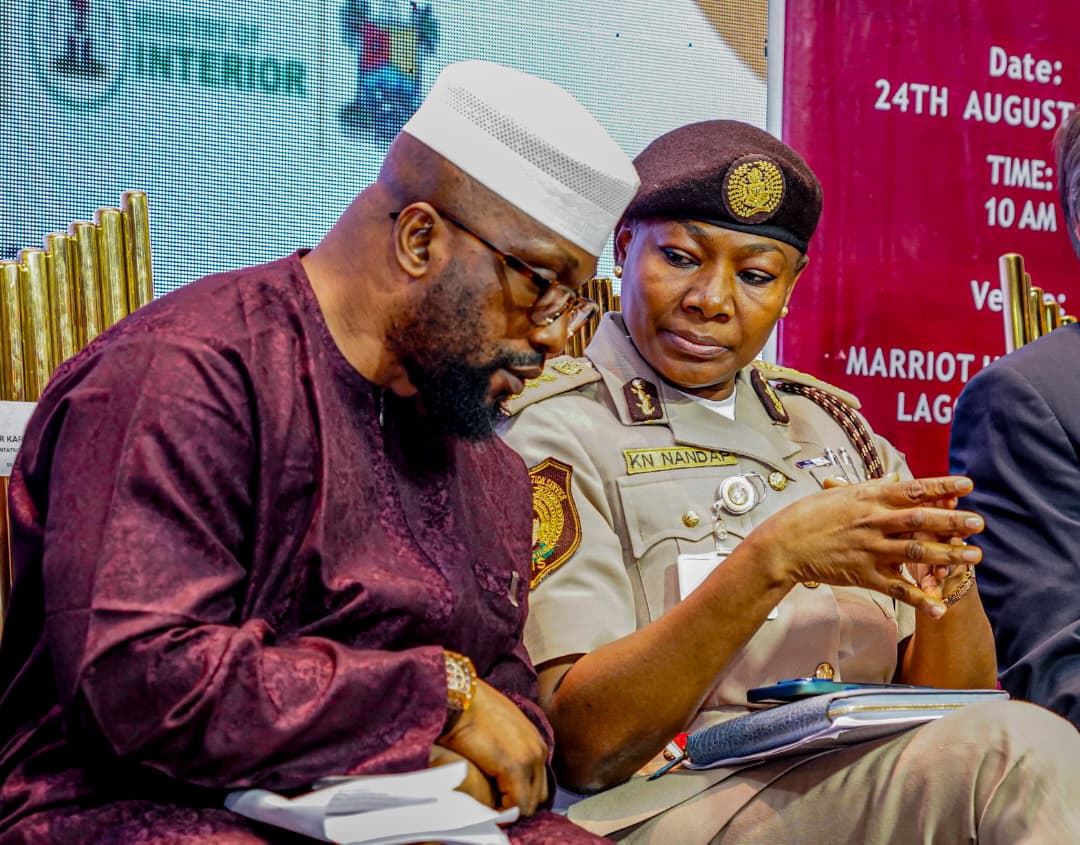
Tunji-Ojo made the call at the opening of the 2026 conference of the African Borderlands Research Network (ABORNE) on Monday in Lagos.
The four-day conference, themed “Connected Borderlands, Socio-Cultural Integration, and the Centrality of Policy, Research, and Security,” brought together scholars, policymakers, practitioners and development partners to examine issues surrounding Africa’s security, integration and development.
The minister, who was represented by his Senior Special Assistant on Policy, Dr Kareem Olajoku, said Nigeria must increasingly adopt evidence-based approaches to border management while ensuring that research remains responsive to practical realities.
According to him, stronger partnerships are particularly important as Nigeria modernises its migration and border management systems through improvements in biometric identity systems, passport administration, automated border control and technology-enabled security.
He said the reforms reflected the Federal Government’s determination to build a border management system capable of protecting national security while facilitating legitimate travel and regional mobility.
Tunji-Ojo commended Lagos State University (LASU) and ABORNE for co-hosting the conference, describing the collaboration as an example of how academic research and practical experience could be combined to address contemporary security challenges.
He also stressed the strategic importance of Lagos as the host of the conference, describing the state as a major gateway for the movement of people and goods through its land connections, seaports and international airports.
According to him, Lagos provides an appropriate setting for discussions on the relationship between security, mobility, trade, community interaction and regional integration.
The minister called for greater attention to border communities, noting that they are often the first to experience the effects of insecurity and irregular migration.
He said such communities should not be viewed merely as populations requiring protection but as important partners capable of contributing to early warning, conflict prevention and effective border management.
“Building a resilient borderline therefore requires us to see border communities not merely as populations to be secured but as partners in security, peace and development,” he said.
Tunji-Ojo further stressed that research should help governments anticipate emerging challenges rather than merely explain past developments.
He described ABORNE 2026 as more than an academic conference, saying it offered an opportunity to strengthen the relationship between knowledge and action, communities and institutions, as well as national security and regional cooperation.
According to him, the conference provides Nigeria with an important platform to contribute to the development of secure, integrated and resilient borders across West Africa and the wider African continent.
The minister urged participants to move beyond identifying challenges and focus on developing practical, collaborative and sustainable solutions.
He also expressed hope that partnerships established during the conference would continue beyond the event and that knowledge generated through the gathering would contribute to policymaking and practice across Africa.
On her part, the Vice-Chancellor of LASU, Prof. Ibiyemi Olatunji-Bello, said the gathering was more than the hosting of an international academic conference.
She said it affirmed the university’s commitment to producing knowledge that responds to Nigeria’s realities and Africa’s development challenges.
READ ALSO: MURIC Demands Probe of Church Donation to Immigration Service
Olatunji-Bello noted that Africa needed a new generation of scholars and professionals who understand that borders are not merely geographical boundaries but spaces of people, livelihoods, identity, security, development and human mobility.
“The university must therefore do more than observe these realities. It must help to understand them, interrogate them and contribute to shaping the policies and practices that govern them,” she said.
About The Author