By Fatima Saka
Nigeria is strengthening its border management architecture through the deployment of digital technology, biometric identity systems, intelligence sharing and closer collaboration with border communities, the Nigeria Immigration Service (NIS) has said.
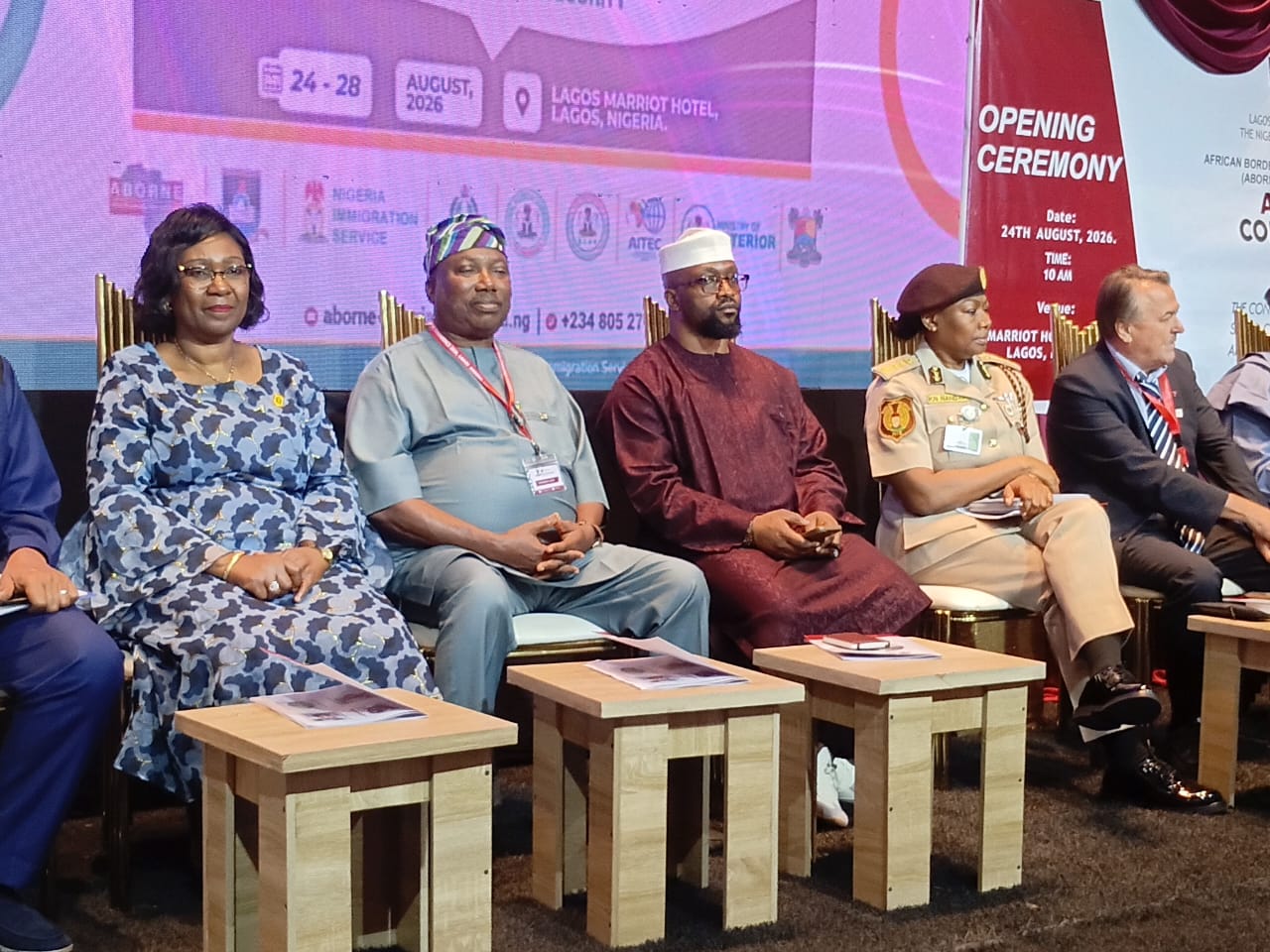
The Comptroller-General of the NIS, Mrs Kemi Nandap, disclosed this on Monday at the 2026 conference of the African Borderlands Research Network (ABORNE) in Lagos.
Nandap said the transformation had become necessary as changing migration patterns, regional integration, cross-border economic activities and emerging security threats continue to reshape Africa’s borderlands.
The conference, themed “The Connected Borderlands: Socio-Cultural Integration and the Centrality of Policy, Research, and Security,” brought together scholars, policymakers, practitioners and development partners to examine the changing nature of border management across Africa.
According to the Comptroller-General, borders should no longer be viewed merely as geographical lines separating sovereign states, but as dynamic spaces where families, communities and cultures interact, while legitimate trade and movement take place.
She said governments must strike a balance between securing border spaces, facilitating lawful mobility, strengthening regional cooperation and preserving the socio-cultural and economic relationships that sustain border communities.
Nandap noted that border security threats had evolved, with human trafficking, migrant smuggling, identity fraud, organised crime, terrorism and cyber-enabled crimes increasingly operating across national boundaries.
“Addressing them requires us to work differently and, importantly, to work together,” she said.
She said the NIS was combining the experience and professional judgment of its officers with technology, intelligence and stronger institutional cooperation to respond to emerging threats.
Highlighting Nigeria’s progress in modern border management, Nandap recalled that the country became the first African nation to introduce the electronic passport in 2007.
She said Nigeria subsequently introduced an enhanced e-Passport with stronger security and biometric features, while automating passport applications, payment systems, processing and identity verification.
According to her, the centralisation of passport personalisation has also improved the integrity and efficiency of passport production.
She added that Nigeria’s participation in the International Civil Aviation Organisation’s Public Key Directory was strengthening international confidence in the authentication of Nigerian electronic passports.
Nandap also said contactless biometric passport services were making passport processes more accessible to Nigerians living abroad while maintaining required security standards.
The Comptroller-General further highlighted the deployment of automated border control systems, including e-gates, at Nigeria’s international airports.
She said the systems were transforming passenger processing by combining biometric identity verification with faster, more efficient and secure border procedures.
Nandap added that the measures were being complemented by investments in surveillance systems, command and control capabilities, communications infrastructure, as well as integrated border and data platforms covering Nigeria’s air, land and maritime borders.
She stressed, however, that the investments were not about technology for its own sake.
“Their fundamental purpose is to enhance the capacity of our officers to make timely and well-informed decisions, identify emerging risks at an earlier stage and improve operational coordination, and facilitate the seamless movement of legitimate travellers while safeguarding national security,” she said.
The NIS boss also emphasised the continued importance of the human element in border management, saying technology could not replace professionalism, experience, judgment and integrity.
She called for greater involvement of border communities, describing them as strategic partners whose local knowledge could contribute significantly to effective border management.
Meanwhile, the Chairman of ABORNE, Prof. Paul Nugent, said emerging health threats such as Ebola and COVID-19, alongside regional insurgencies, routinely placed borders at the centre of political and security interventions.
He noted that such developments often resulted in prolonged border closures.
Nugent said ABORNE sought to bridge the gap between academia and policy by moving beyond isolated academic debates to actively engage border enforcement agencies, policymakers and field practitioners.
READ ALSO: Tunji-Ojo Calls for Stronger Partnerships to Secure Nigeria’s Borders
MURIC Demands Probe of Church Donation to Immigration Service
He added that rather than viewing African borderlands purely through the lens of instability or poor reputation, ABORNE scholars emphasised them as vibrant hubs of trade, urban innovation and cultural creativity.
Also speaking, Prof. Anthony Asiwaju, a former Director of the Centre for African Regional Integration and Border Studies, commended the ABORNE conference and its focus on advancing research and policy engagement on African borderlands.
About The Author