By Fatima Saka
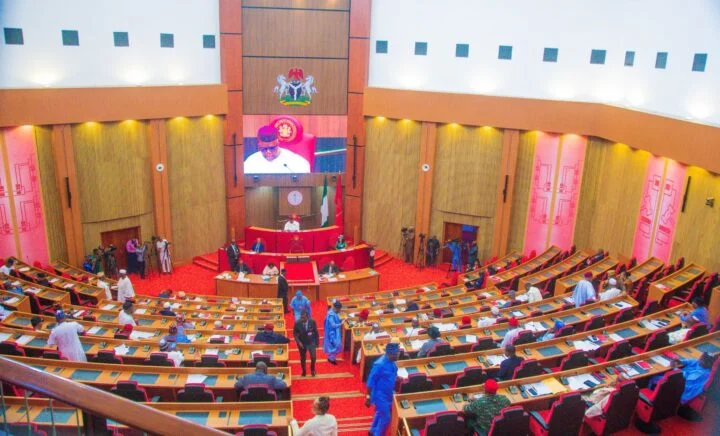
The Nigerian Senate has ordered compulsory Ebola screening for all international travellers entering the country, regardless of their countries of origin, following concerns over gaps in border surveillance and the confirmation of an Ebola case in the Federal Capital Territory.
The Senate also called for the immediate release of emergency funds for Ebola containment and the replacement of the 100-year-old Quarantine Act of 1926 with a modern public health law to strengthen Nigeria’s capacity to prevent and respond to disease outbreaks.
The resolutions followed an urgent motion sponsored by Senator Francis Faduyile, a professor of medicine and specialist pathologist, during Wednesday’s plenary, where lawmakers expressed concern over the country’s preparedness to contain the virus.
Senate President Godswill Akpabio disclosed that the traveller linked to the Abuja case reportedly entered Nigeria from Kenya without undergoing temperature checks or other health screening procedures at the airport.
Akpabio said the lapse was particularly troubling given the potential for the virus to spread through undetected contacts, warning that the situation required urgent action to prevent a wider outbreak.
He recalled Nigeria’s experience during the 2014 Ebola outbreak, when the country successfully contained the virus following the arrival of an infected Liberian traveller, but a doctor who treated the patient later died.
The Senate President said about 44 contacts had already been identified for quarantine and observation in connection with the current case, raising concerns about possible further transmission if preventive measures were not strengthened.
He consequently directed the Senate Committee on Judiciary to engage relevant health authorities and the executive arm of government to begin work on amending the Quarantine Act without waiting for an executive bill.
In his presentation, Faduyile warned that Nigeria faced a high risk of importing additional cases amid the ongoing Ebola outbreak in the Democratic Republic of Congo and its reported spread to other African countries.
He said screening measures introduced at Nigeria’s entry points on September 22 were restricted to travellers from selected countries of concern, leaving gaps in surveillance when the list did not include Kenya.
The lawmaker also highlighted inadequate staffing and equipment at several airports, seaports and land borders, including shortages of Port Health officers, thermal scanners and isolation facilities.
He warned that an Ebola outbreak could further strain the country’s health system, which is already responding to diseases such as Lassa fever, cholera and diphtheria.
Contributing to the debate, Senator Ali Ndume called for mandatory screening of every international traveller, arguing that restricting surveillance to selected countries could leave Nigeria exposed to imported infections.
Ndume stressed that travellers’ countries of departure alone could not reliably establish where they might have been exposed to the virus.
Similarly, Senator Mohammed Tahir Monguno said the Quarantine Act of 1926 no longer reflected current public health realities and urged the National Assembly to enact legislation that would equip health authorities with the legal powers needed to respond effectively to emerging threats.
Senator Adamu Aliero also described the motion as timely, noting the reported high fatality rate associated with the Ebola strain and the absence of an approved vaccine or specific treatment for it.
Following the debate, the Senate unanimously resolved that all arriving international passengers should undergo health declaration procedures, temperature checks and symptom screening at international airports, seaports and designated land borders.
It further directed that travellers who had visited or transited affected areas within the preceding 21 days should undergo enhanced screening.
The lawmakers urged the Federal Ministry of Health and Social Welfare, the Federal Airports Authority of Nigeria and the Nigeria Immigration Service to ensure that all entry points were adequately staffed and equipped with trained health personnel, personal protective equipment, thermal scanners and isolation rooms.
They also called for the readiness of isolation and treatment centres across the 36 states and the FCT.
On funding, the Senate considered a proposal for adequate provision in the 2027 budget, but Ndume argued that emergency funds should be released immediately, claiming that President Bola Tinubu had already approved ₦10 billion for Ebola control.
He called for the release and accountability of the funds to support urgent containment measures.
READ ALSO: FG Moves to Integrate Self-Care into Primary Healthcare System
Ebola: NEMA Urges Nigerians to Cooperate With Contact Tracing Teams
Senator Ireti Kingibe, who represents the FCT, also emphasised the need to direct resources towards vaccine procurement and other interventions to prevent further transmission in Abuja, where the case was detected.
The Senate urged the National Assembly to work with the Federal Ministry of Health and other stakeholders to replace the existing quarantine law with a modern public health framework aligned with the International Health Regulations of 2005.
About The Author