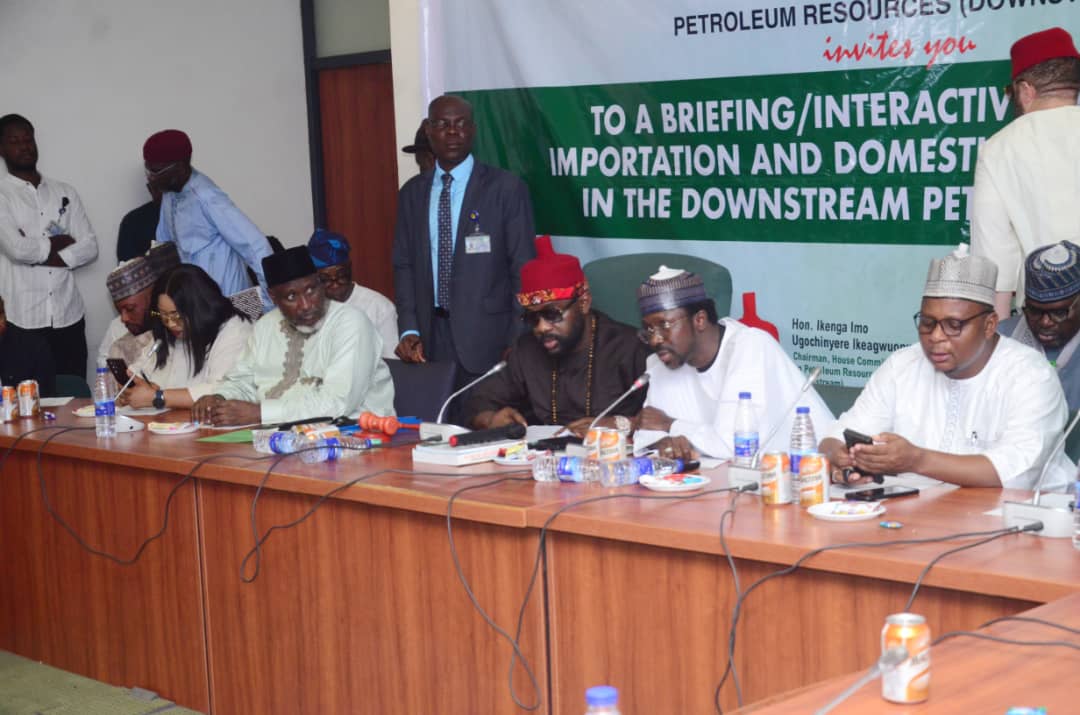
Abuja, Thursday — The House of Representatives Committee on Petroleum Resources (Downstream) has initiated moves to overhaul Nigeria’s downstream petroleum sector, with industry stakeholders calling for urgent reforms to reduce costs, strengthen infrastructure, and boost domestic refining capacity.
Leading the demands, the Independent Petroleum Marketers Association of Nigeria (IPMAN) urged the Federal Government to introduce affordable financing mechanisms, reduce regulatory charges, and improve access to locally refined petroleum products. IPMAN President, Alhaji Abubakar Megandi Shettima, emphasized that independent marketers remain critical to nationwide fuel distribution and should be recognized as strategic partners in implementing reforms under the Petroleum Industry Act (PIA).
Shettima also advocated the establishment of strategic petroleum reserves, modernization of transportation and storage systems, and sustained stakeholder engagement to ensure policies reflect operational realities within the sector.
The Committee Chairman, Hon. Ikenga Ugochinyere, stated that the engagement was designed to promote dialogue rather than confrontation, noting that sustainable reforms can only be achieved through collaboration among lawmakers, regulators, and industry players.
He reaffirmed the Committee’s commitment to legislative interventions that will address persistent challenges, including high financing costs, multiple taxation, logistics constraints, pipeline vandalism, foreign exchange volatility, and inadequate storage infrastructure.
Also contributing, the Major Energy Marketers Association of Nigeria (MEMAN) called for the prioritization of rail transport for petroleum distribution to reduce logistics costs and ease pressure on road networks. MEMAN’s Executive Secretary, Mr. Clement Isong, further urged the government to complete dredging of key waterways and review the Cabotage policy to boost indigenous participation in coastal petroleum transportation.
The association highlighted the urgent need to rehabilitate Nigeria’s pipeline network, describing it as the most efficient and cost-effective distribution channel. It also recommended repositioning NNPC depots as strategic reserves to enhance national supply security during disruptions.
Similarly, the Depot and Petroleum Products Marketers Association of Nigeria (DAPPMAN), through its Executive Secretary, Mr. Olufemi Adewale, stressed the importance of improving depot operations and strengthening infrastructure to enhance efficiency across the storage and distribution value chain.
Responding, Hon. Ugochinyere acknowledged the concerns raised, describing pipeline infrastructure as a critical national asset that must be urgently restored. He reiterated the legislature’s support for increased domestic refining, noting that it would reduce dependence on imports and stabilize the downstream market.
However, he maintained that the Federal Government must retain the authority to regulate petroleum imports when necessary to safeguard energy security. He cited the recent rise in Liquefied Petroleum Gas (LPG) imports, which improved availability and reduced cooking gas prices, as evidence of the benefits of strategic intervention.
READ ALSO: Decarbonization Offers Competitive Edge for Shipping Industry — Peterside
The lawmaker assured stakeholders that all recommendations would be carefully reviewed as the Committee works on strengthening existing laws and developing new legislative proposals.
He emphasized that the ultimate goal is to build a transparent, efficient, and competitive downstream petroleum industry capable of ensuring reliable energy supply, attracting investment, and supporting Nigeria’s economic growth.
About The Author