
……..Seeks N125m fine, 20-year jail term for fake drug offenders, demands balanced professional representation on PCN Governing Council

By Fatima Saka
The Pharmaceutical Society of Nigeria (PSN) has urged the National Assembly to reconsider proposed changes to the composition of the Governing Council of the Pharmacy Council of Nigeria (PCN), warning that reducing professional representation without adequate safeguards could weaken medicine regulation, compromise enforcement and expose Nigerians to greater public health risks.
The society also called for tougher penalties against manufacturers, distributors and sellers of counterfeit drugs and unwholesome processed foods, proposing fines of up to N125 million, lengthy prison terms and the forfeiture of assets linked to offenders.
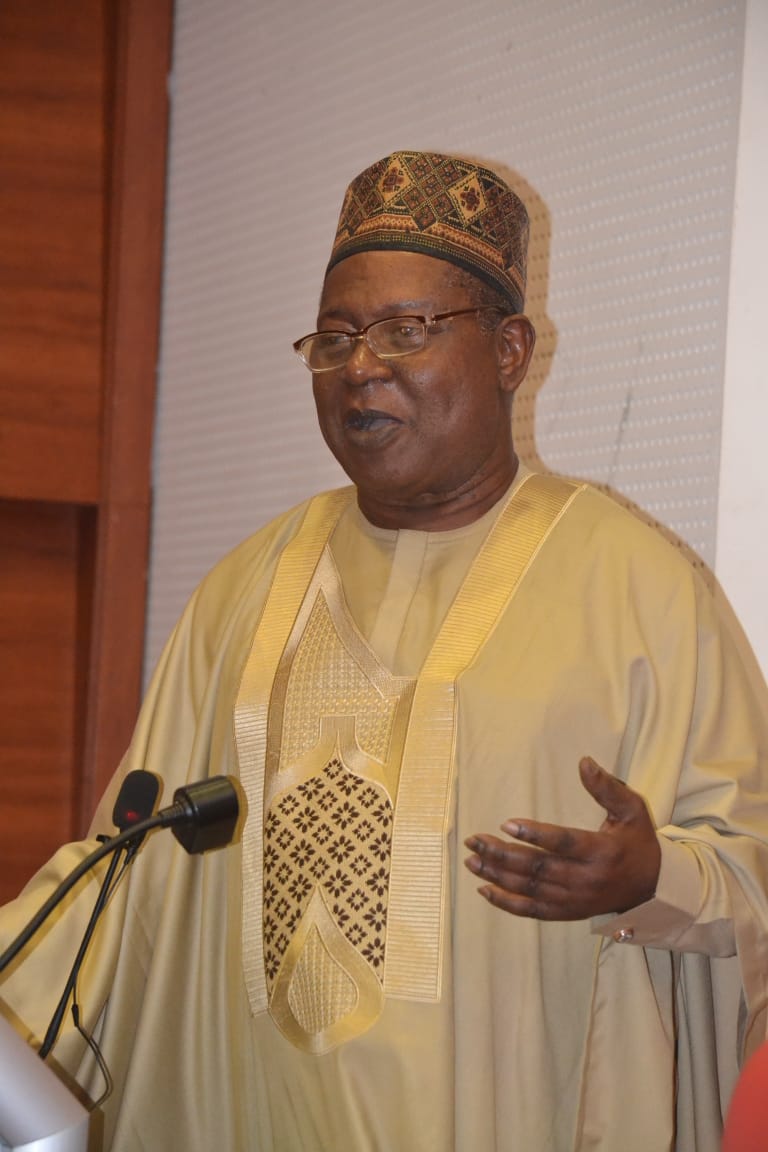
The National President of the PSN, Pharm. Ayuba Ibrahim Tanko, recently made the recommendations in the society’s submissions on two legislative proposals: SB-1000, seeking to reduce the number of members of the PCN Governing Council, and SB-951, seeking to amend the Counterfeit and Fake Drugs and Unwholesome Processed Foods (Miscellaneous Provisions) Act.

The submissions place two related public health concerns before lawmakers: how to maintain effective professional oversight of Nigeria’s pharmaceutical sector while improving regulatory efficiency, and how to strengthen deterrence against the circulation of dangerous medicines and substandard food products.
Proposed Council Reduction Raises Representation Concerns
At the centre of the PSN’s objection to SB-1000 is the need to ensure that any reduction in the size of the PCN Governing Council does not undermine the professional expertise required to regulate pharmacy practice, education and disciplinary matters.
The society argued that the PCN’s responsibilities extend beyond routine administration to include the accreditation of pharmacy training institutions, inspection of pharmaceutical premises, regulation of pharmacy practice and businesses, enforcement of professional standards and discipline of practitioners.
According to the PSN, these functions require a governing structure that reflects the different segments of the pharmaceutical profession, including community and hospital pharmacy, pharmaceutical industries, academia, state-level pharmaceutical administration and pharmacy technicians.
The society maintained that a smaller council could still function effectively if its composition preserved the necessary technical knowledge, regulatory experience and representation of critical stakeholders.
However, it warned that a reduction that disproportionately excludes professional groups could weaken the council’s capacity to perform its statutory responsibilities.
The PSN’s position raises an important legislative question: whether the proposed reduction is designed solely to cut administrative costs or whether it adequately accounts for the technical demands of regulating a sector directly connected to patient safety.
While a smaller governing council may offer opportunities for streamlined decision-making, its effectiveness would depend on whether members collectively possess the expertise required for inspection, enforcement, accreditation and professional discipline.
The society therefore urged lawmakers to prioritise the quality and balance of representation rather than focus exclusively on the number of council members.
PSN Seeks Stronger Professional and Academic Representation
The PSN recommended additional representation for the Pharmaceutical Society of Nigeria, which it said has more than 50,000 pharmacist members, including a dedicated seat for its national president.
It also proposed that Directors of Pharmaceutical Services from the six geopolitical zones should be represented on a rotational basis.
For the academic sector, the society called for representatives of accredited Faculties and Colleges of Pharmacy from the six geopolitical zones, nominated through the relevant academic body, the Committee of Deans of Pharmacy in Nigerian Universities (CODAPNU).
Other proposed members include representatives of pharmacy technicians, the Federal Ministry of Health and Social Welfare, the National Institute for Pharmaceutical Research and Development (NIPRD), the National Agency for Food and Drug Administration and Control (NAFDAC), and the Nigeria Natural Medicine Development Agency (NNMDA).
The PSN argued that these institutions and professional groups contribute different forms of expertise to pharmaceutical regulation.
While NAFDAC plays a central role in regulating medicines and related products, the PCN oversees pharmacy education and professional practice. NIPRD and NNMDA contribute to pharmaceutical research and the development of natural medicines, including herbal products.
The society said a balanced governing council would help align professional regulation with developments in pharmaceutical research, education, medicine distribution and traditional medicine.
Its recommendations also seek to preserve the participation of state pharmaceutical authorities, whose responsibilities include pharmaceutical inspection and oversight of medicine-related businesses within their jurisdictions.
Nevertheless, the proposed inclusion of representatives from all six geopolitical zones, alongside additional institutional and professional members, would need to be reconciled with the legislative objective of reducing council membership.
This presents lawmakers with a central policy consideration: how to accommodate necessary expertise without creating an unwieldy governing structure.
Six Public Representatives: A Point of Concern
The PSN also expressed reservations about the proposal for six public representatives on the council, arguing that such an arrangement could dilute professional expertise if the selection criteria and balance of membership are not carefully designed.
The society did not reject public representation outright. Rather, it called for minimum competence requirements, suggesting that public representatives should have relevant knowledge of public health, law, finance or consumer protection.
It also urged lawmakers to preserve the federal character of the council’s composition while ensuring that technical regulatory functions remain guided by professional expertise.
The issue touches on a broader question in the governance of professional bodies: how to combine public accountability with the specialist knowledge needed to regulate complex industries.
Public participation can provide an important consumer-protection perspective and help ensure that regulatory institutions respond to the wider public interest.
However, the PSN’s argument is that representation alone cannot guarantee effective oversight unless members understand the responsibilities and technical requirements of the institution they govern.
The challenge before lawmakers is therefore to establish a composition that accommodates public-interest considerations without weakening the council’s ability to make informed regulatory decisions.
Cost Reduction Versus Public Health Protection
Although the PSN acknowledged the Federal Ministry of Health and Social Welfare’s objective of rationalising administrative costs, it cautioned against treating professional regulation merely as an overhead expenditure.
The society argued that inadequate regulatory capacity could have consequences for medicine quality assurance, the integrity of the pharmaceutical supply chain and the enforcement of standards across the sector.
Weak inspection and enforcement systems could make it more difficult to identify illegal pharmaceutical premises, monitor non-compliant operators and prevent unsafe products from reaching patients.
Such failures could also increase the burden on the healthcare system when patients suffer harm from poor-quality or falsified medicines.
The PSN therefore maintained that reforms should improve efficiency without compromising the council’s ability to protect public health.
However, determining whether a smaller council would weaken regulatory performance requires more than an assessment of membership numbers. It also requires consideration of the council’s workload, administrative structure, decision-making processes, funding and enforcement resources.
For the National Assembly, these issues present an opportunity to examine whether the proposed changes are supported by an assessment of the PCN’s operational needs and the likely consequences for regulatory performance.
Fake Drug Bill
PSN Proposes N125m Fine and Asset Forfeiture
Beyond the proposed restructuring of the PCN, the PSN called for stronger sanctions under SB-951, which seeks to amend the Counterfeit and Fake Drugs and Unwholesome Processed Foods (Miscellaneous Provisions) Act.
The society proposed that offenders covered by Section 1 of the Act should face a fine of not less than N125 million, imprisonment for a minimum of five years and a maximum of 20 years, or both.
It also recommended the forfeiture of assets traceable to persons convicted of offences under the provision.
For offences covered by Section 2(1), the PSN proposed a fine of at least N25 million, imprisonment for a minimum of 15 years, or both, alongside the forfeiture of assets linked to convicted offenders.
The proposals reflect the society’s position that financial penalties and imprisonment should be sufficiently severe to deter illegal activities involving counterfeit medicines and unwholesome processed foods.
The proposed asset-forfeiture provisions would also seek to prevent convicted offenders from retaining assets connected to their offences.
However, the practical impact of the proposed penalties would depend on how the offences are defined, the evidence required for conviction, the consistency of enforcement and the courts’ application of the law.
The National Assembly would also need to consider the proportionality of the proposed sanctions and ensure that the provisions clearly distinguish the offences to which each penalty applies.
If adopted with appropriate safeguards, stronger penalties could form part of a wider enforcement framework. But punishment alone would not eliminate counterfeit medicines without effective surveillance, reliable supply chains, public awareness and sustained cooperation among regulatory and law enforcement agencies.
NAFDAC, PCN at Centre of Proposed Enforcement Structure
The PSN also recommended changes to the composition of the Federal and State Task Forces responsible for implementing the amended law.
For the Federal Task Force, the society proposed that the Director-General of NAFDAC should serve as chairman, while the head of the PCN’s enforcement department should serve as vice-chairman.
The proposed membership would also include two senior Nigeria Police Force officers, two pharmaceutical inspection officers not below the rank of Chief Pharmacist, two NAFDAC food and drug inspectors not below the rank of Chief Regulatory Officer, and a representative of the PSN who is a pharmaceutical inspection officer designated under the PCN Act 2022.
For the State Task Force, the PSN proposed a registered pharmacist not below the rank of director as chairman, appointed by the minister on the recommendation of the relevant state government.
It also recommended that the head of the PCN’s enforcement department serve as vice-chairman, alongside two Nigeria Police Force officers not below the rank of Chief Superintendent of Police.
The society justified its proposed structure by identifying the PCN and NAFDAC as the principal regulatory agencies involved in pharmaceutical practice and medicine distribution.
Its recommendations seek to combine pharmaceutical inspection expertise, food and drug regulation and police enforcement within a coordinated framework.
Such collaboration could help address the different stages of the counterfeit medicine trade, from unlawful production and distribution to the sale of dangerous products.
However, effective implementation would require clear operational responsibilities, adequate funding, coordination between federal and state authorities and mechanisms to prevent overlapping mandates.
The proposed composition would also need to be examined against the existing legal responsibilities of the relevant agencies to ensure that the amended provisions are consistent with their statutory powers.
Need for Harmonisation Across Health Regulatory Laws
The PSN further urged lawmakers to harmonise amendments affecting different health regulatory bodies, arguing that changes to individual laws should not create conflicting professional standards or unclear jurisdictional boundaries.
The society called for cross-professional review mechanisms, consistent governance standards and clear definitions of professional responsibilities.
This recommendation is particularly relevant where several health-sector laws are being amended within the same legislative period.
Differences in council composition, accreditation responsibilities and enforcement powers could create difficulties if related provisions are drafted without sufficient coordination.
The PSN said it remained open to collaboration with other professional bodies to promote consistency across the regulatory framework.
Such harmonisation could help clarify the responsibilities of regulatory institutions while preserving the distinct professional standards required in different areas of healthcare.
What Is at Stake?
Taken together, the PSN’s submissions present a wider argument about the relationship between regulatory governance and public health protection.
The first proposal concerns the structure of the institution responsible for regulating pharmacy education and practice. The second concerns the penalties and enforcement arrangements intended to combat counterfeit medicines and unwholesome processed foods.
Although the proposals address different aspects of regulation, they share a common concern: whether the institutions responsible for safeguarding medicine quality will have the authority, expertise and operational capacity required to fulfil their responsibilities.
A reduction in council membership does not automatically translate into weaker regulation. Equally, a larger council does not necessarily guarantee effective oversight.
The critical considerations are whether the council has the right professional representation, whether decisions can be made efficiently, and whether the institution is adequately equipped to enforce standards.
Similarly, increasing penalties for counterfeit drug offences may strengthen deterrence, but the outcome will depend on the likelihood of detection, successful prosecution and consistent enforcement.
These distinctions are important as lawmakers consider the competing objectives of administrative efficiency, professional accountability and public health protection.
Conclusion: National Assembly Faces a Regulatory Balancing Act
The PSN has urged the National Assembly to preserve balanced professional representation, protect the technical independence of pharmacy regulation and incorporate academic and pharmacy technician representation into the PCN Governing Council.
It has also called for stronger penalties against counterfeit drug offenders and a more coordinated enforcement structure involving NAFDAC, the PCN, the police and pharmaceutical inspection personnel.
For the legislature, the task is to determine how these objectives can be achieved through clear, enforceable and financially sustainable laws.
READ ALSO: Oyebanji: Beyond BAO2BAO!
Troops Arrest Terrorist Collaborator in Kaduna, Destroy Three Bombs in Zamfara
The debate goes beyond the number of members appointed to a governing council or the size of a fine imposed on an offender. It concerns the capacity of Nigeria’s regulatory institutions to protect patients, maintain medicine quality and respond to changing challenges across the pharmaceutical supply chain.
As the proposed amendments are considered, the central public-interest question remains whether the resulting framework will combine efficient governance with the professional expertise, enforcement capacity and accountability necessary to safeguard the health of Nigerians.
About The Author




1 thought on “PSN Warns Against Weakening Pharmacy Regulation, Seeks Tougher Penalties for Fake Drug Offenders in Nigeria”