……… Presents ODF certificates to 185 LGAs
By Fatima Saka
The Federal Government has unveiled a revised Presidential Executive Order on Open Defecation-Free (ODF) Nigeria, intensifying efforts to end open defecation across the country by 2030.
The unveiling took place on Thursday in Abuja during the commemoration of the 7th anniversary of the Clean Nigeria: Use the Toilet Campaign and the 2026 World Toilet Day, with the government calling on state governments, local councils and other stakeholders to strengthen investment and accountability in sanitation.
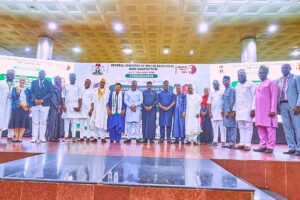
Nigeria has so far recorded 185 ODF local government areas out of the country’s 774 LGAs, while Jigawa and Katsina States have attained statewide ODF status.
The revised Presidential Executive Order on ODF Nigeria by 2030 and Other Related Matters, 2025, signed by President Bola Ahmed Tinubu, is expected to strengthen national coordination, institutional accountability and sanitation delivery.
Vice-President Kashim Shettima, who chairs the National Technical Committee on the Clean Nigeria Campaign, delivered the keynote address through the Senior Special Assistant to the President on Projects Delivery and Coordination, Office of the Vice-President, Engr. Akubo Adegbe, who represented him at the event.
Shettima described sanitation as more than a public health concern, saying it was also a matter of human dignity and gender equality.
He noted that women and girls were disproportionately affected by the absence of safe and accessible toilets, exposing them to health and safety risks while undermining their privacy, education and participation in economic and social activities.
The Vice-President called for sanitation policies and programmes that address the needs of women, girls, persons with disabilities and other vulnerable groups.
He also urged traditional rulers, civil society organisations, development partners, the private sector and communities to work together to sustain the campaign and prevent a return to open defecation.
In his welcome address, the Minister of Water Resources and Sanitation, Engr. Prof. Joseph Terlumun Utsev, said Nigeria had made progress since the launch of the Clean Nigeria Campaign in 2019 but stressed the need to accelerate implementation to meet the 2030 target.
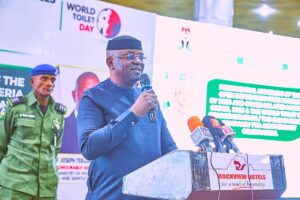
Utsev highlighted the Revised Clean Nigeria Strategy 2025–2030 and the Clean Nigeria Real-Time Monitoring and Information System as key instruments for improving coordination, tracking progress and strengthening accountability.
He said the strategy was built around six pillars: enabling environment; partnerships and coordination; public finance; service delivery; advocacy and communication; and monitoring, evaluation, learning and accountability.
The minister stressed that achieving ODF status required adequate financing, community ownership, behavioural change and reliable data to guide interventions.
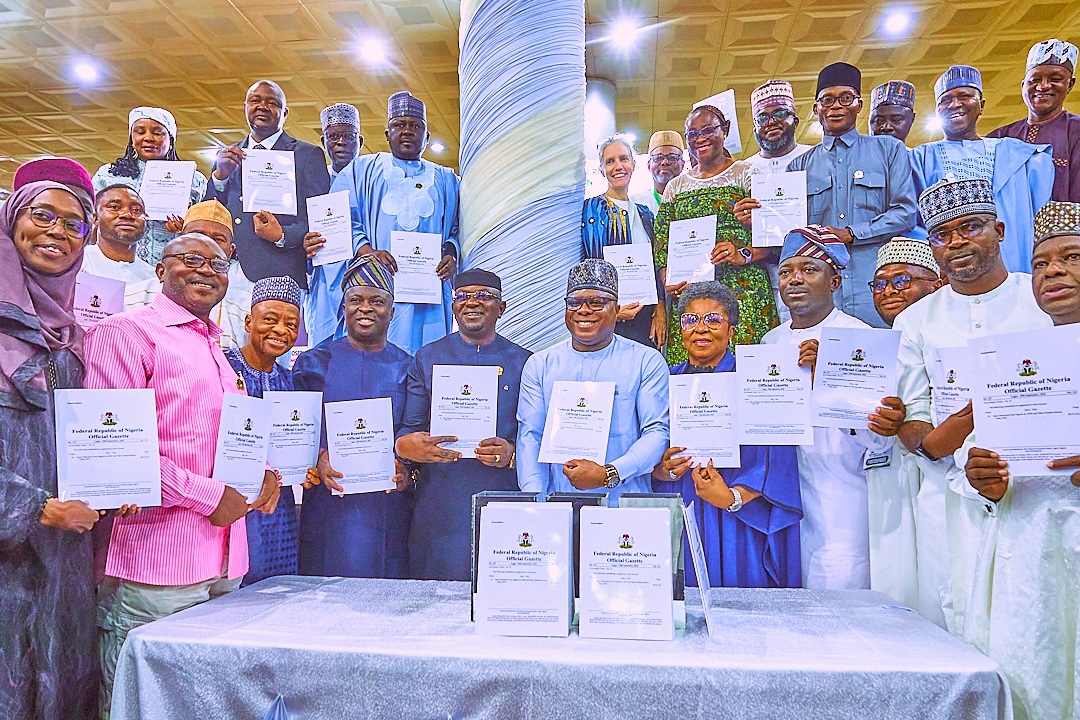
He subsequently presented ODF certificates to representatives of the 185 local government areas that had attained the status.
Representing the Minister of Youth Development, Mr Emmanuel Essen reaffirmed the ministry’s commitment to mobilising young people for improved sanitation and the implementation of the Presidential Executive Order.
Essen said the ministry was supporting the implementation of Executive Order 009 in line with Sustainable Development Goal 6, which seeks to ensure access to water and sanitation for all.
He disclosed that the ministry had organised a two-day sanitation workshop under the Clean Nigeria Youth Toilet Campaign to strengthen young people’s capacity for behavioural change, community participation and implementation of the national sanitation strategy.
According to him, the initiative is being piloted across the six geopolitical zones, with more than 1,000 youth volunteers mobilised and trained as community advocates, mobilisers and agents of change.
He said the campaign also promotes gender-responsive sanitation, menstrual hygiene education and access to safe and private toilets, particularly for women and girls.
The youth representative described young people as strategic partners in building a clean, safe and healthy Nigeria, while commending the Federal Ministry of Water Resources and Sanitation and other stakeholders for supporting the initiative.
In her goodwill message, the immediate past Head of the Civil Service of the Federation and WASH Ambassador, Mrs. Didi Esther Walson-Jack, mni, CON, called for safe, inclusive and gender-responsive sanitation facilities, particularly for women and girls.
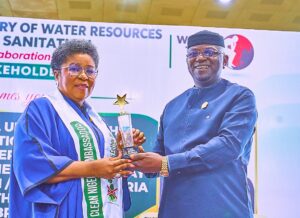
She described access to proper sanitation as essential to public health, human dignity, gender equality and personal safety, urging Nigerians to embrace responsible sanitation practices.
Walson-Jack was also formally recognised and decorated as a WASH Ambassador at the event.
Speaking on behalf of civil society organisations, Benson Ata commended President Tinubu for sustaining the Presidential Executive Order on sanitation, which was first introduced under the administration of former President Muhammadu Buhari.
However, he expressed concern over the slow pace of implementation at the state level, urging the Vice-President to engage the National Economic Council and state governors to strengthen commitment to the campaign.
Ata said state governments did not necessarily have to bear the entire cost of building public toilets, but should create an enabling environment for partnerships and other arrangements that would expand access to sanitation facilities.
He challenged the country to increase the number of ODF local government areas to at least 300 before the next anniversary of the campaign.
He also called on state commissioners, local government chairmen and traditional institutions to intensify community mobilisation and ensure that sanitation commitments translate into measurable results.
In his vote of thanks, the Acting Permanent Secretary of the Federal Ministry of Water Resources and Sanitation, Engr. Ali Ibrahim Dallah, FNSE, appreciated the Vice-President, the minister and other stakeholders for their contributions to the campaign.
READ ALSO: COP31: Nigeria Moves to Adopt Sustainable Procurement Framework for Climate Action in Türkiye
67th NCH: FG Targets Measurable Healthcare Gains, Prioritises Primary Healthcare
He urged sustained collaboration among federal and state governments, development partners, civil society organisations and communities to achieve the 2030 ODF target.
The event was attended by government officials, commissioners of state ministries of water resources, heads of State Rural Water Supply and Sanitation Agencies, development partners, youth organisations, civil society groups and members of the media.
About The Author