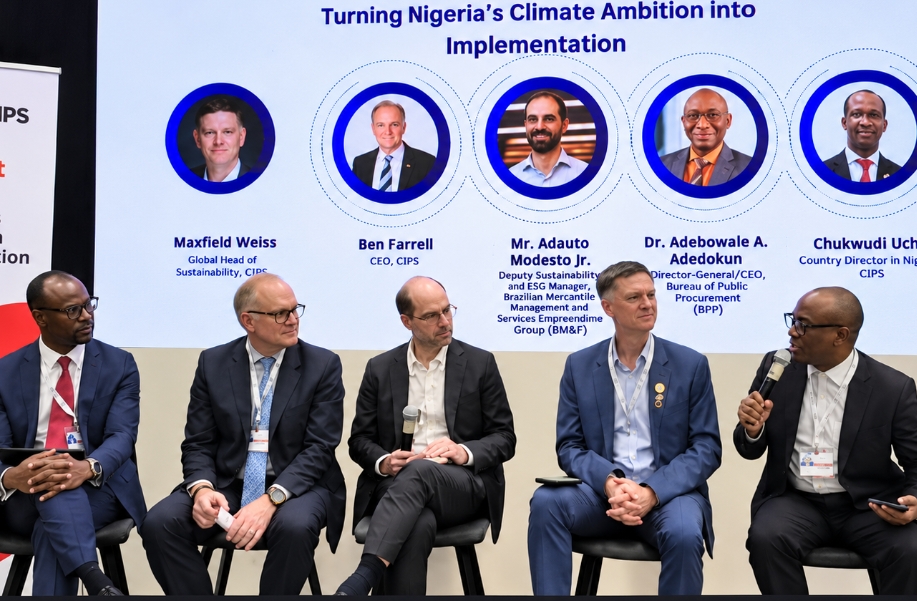
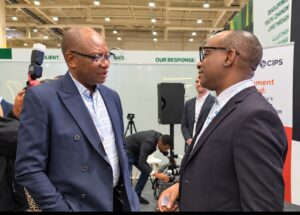
Right: Dr. Adebowale A. Adedokun, FCIPS, Director-General/CEO, Bureau of Public Procurement (BPP) Nigeria as one of the panelists; Mr. Maxfield Weiss; Mr. Adauto Modesto Jnr, Deputy Vice- Minister, Ministry of Management and Innovation (MGI), Brazil, Dr. Ben Farrell, CEO, CIPS, UK and the Country Director, CIPS, Nigeria, Dr. Chukwudi Uche during the Panelist session in Antalya, Turkey
By Fatima Saka
Nigeria has announced plans to join the Belém Declaration on Sustainable Public Procurement, signalling a shift towards using government spending to drive climate action, strengthen local industries and promote economic development.
The Director-General of the Bureau of Public Procurement (BPP), Dr. Adebowale A. Adedokun, disclosed this on Wednesday during a high-level dialogue organised in partnership with the Chartered Institute of Procurement and Supply (CIPS) at the Nigeria Pavilion of the 31st United Nations Climate Change Conference (COP31) in Antalya, Türkiye.
The dialogue, themed “Procurement Must Lead: Turning Nigeria’s Climate Ambition into Implementation,” focused on how government procurement policies could translate climate commitments into measurable economic and environmental benefits.
Adedokun said Nigeria’s climate ambitions, particularly under its Nationally Determined Contributions (NDC 3.0), required public procurement to move beyond routine administrative processes and become a strategic tool for national transformation.
He explained that government purchasing decisions could influence markets, encourage sustainable production, strengthen domestic industries and create employment opportunities when deliberately aligned with national development priorities.
The BPP chief also stressed the need to align sustainable procurement with President Bola Tinubu’s Nigeria First Policy, noting that government spending should prioritise local content, indigenous suppliers, technology transfer and the competitiveness of locally manufactured products.
According to him, procurement decisions should be assessed not only by their immediate financial costs but also by their long-term economic, social and environmental value.
He said public procurement accounts for an estimated 13 to 20 per cent of Gross Domestic Product in many economies, making it a powerful instrument for influencing investment, industrial growth and sustainable development.
“Through this strategic partnership with CIPS, the Bureau is positioning Nigeria to play a more active role in shaping global conversations on sustainable public procurement while ensuring that international commitments translate into tangible benefits for the Nigerian economy and its citizens,” he said.
Responding to Nigeria’s decision to join the Belém Declaration, Brazil’s Deputy Vice-Minister, Ministry of Management and Innovation, Mr. Adauto Modesto Jr., welcomed the development and expressed readiness to strengthen cooperation between both countries.
Modesto highlighted opportunities for knowledge exchange and institutional partnerships, drawing attention to Brazil’s leadership in promoting the declaration, which was launched at COP30.
He also outlined the policy and institutional arrangements needed to integrate climate considerations into government purchasing decisions.
Similarly, the Chief Executive Officer of CIPS, Mr. Ben Farrell MBE, emphasised the importance of professional procurement practitioners in achieving sustainability goals.
He called for stronger professional standards, leadership, technical expertise and institutional capacity to ensure that sustainable procurement policies deliver measurable results.
The CIPS Country Director for Nigeria, Mr. Chukwudi Uche, FCIPS, said climate commitments must be translated into clear procurement priorities, measurable targets and market incentives that encourage environmentally responsible business practices.
The engagement, organised under the CIPS Great Conversation initiative, brought together government representatives and international procurement experts to examine the role of public purchasing in accelerating climate action, industrial development and resilient supply chains.
Participants noted that strategic government spending could stimulate private investment, influence market behaviour, promote sustainable production and consumption, and support the transition to climate-resilient economies.
READ ALSO: 67th NCH: FG Targets Measurable Healthcare Gains, Prioritises Primary Healthcare
State Police: Senate Pass on Bill to Tinubu for Assent
Adedokun reaffirmed the Bureau’s commitment to working with government institutions, professional bodies, development partners and private-sector organisations to make public procurement a major driver of Nigeria’s climate ambitions and sustainable national development.
The discussion was moderated by Mr. Maxfield Weiss, Global Head of Sustainability at CIPS.
About The Author