By Fatima Saka
Port Harcourt, Nigeria — Members of the International Working Group on Petroleum Pollution and Just Energy Transition have expressed optimism over possible collaboration with the Hydrocarbon Pollution Remediation Project (HYPREP) to expand environmental remediation efforts across other polluted parts of the Niger Delta, following an assessment visit to project sites in Ogoni.
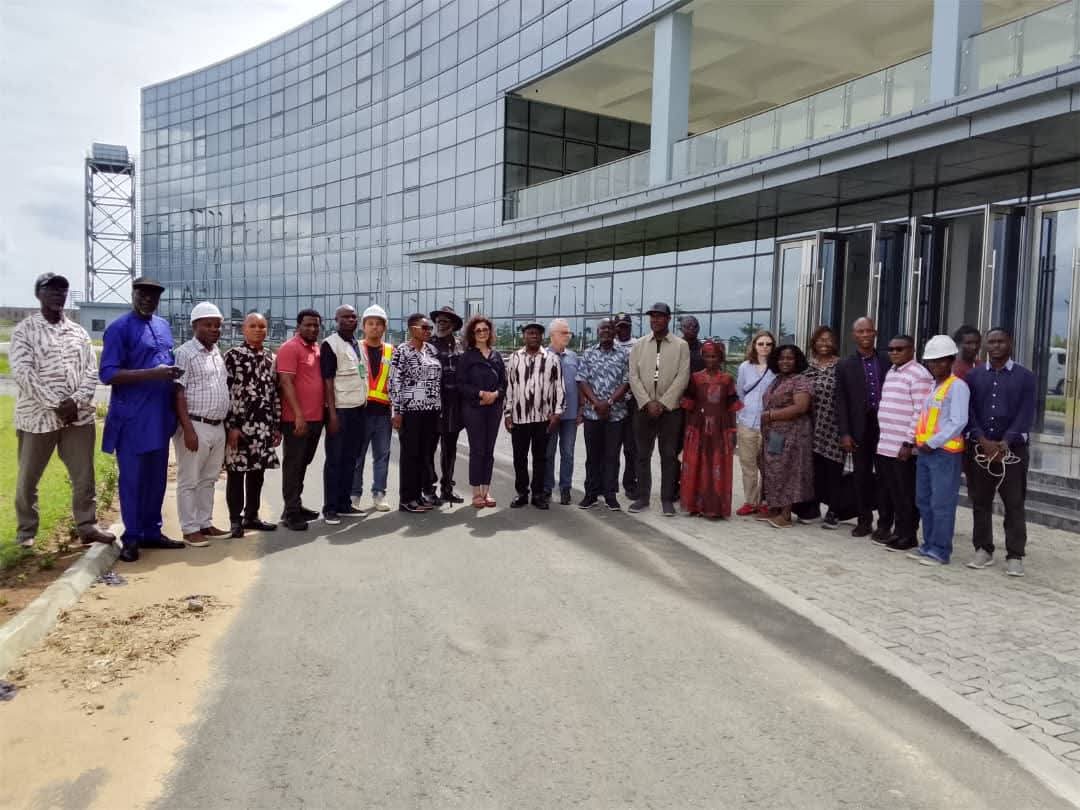
The delegation made the remarks on Friday during a debriefing session held at the HYPREP headquarters in Port Harcourt after touring several ongoing and completed intervention projects in Ogoni communities.
Leading the team, Dr. Isaac Osuoka said the group was “captivated” by the level of work achieved on the ground, commending HYPREP and its Project Coordinator, Prof. Nenibarini Zabbey, for what he described as strong progress in implementing the recommendations of the United Nations Environment Programme (UNEP) report on Ogoni environmental degradation.
“We are really impressed with what you’ve done, and believe there could be possibilities for collaboration, seeing what is on ground,” Osuoka said.
He highlighted key achievements including the Centre of Excellence for Environmental Restoration, the Ogoni Specialist Hospital, mangrove restoration projects, potable water provision, and land remediation efforts, describing them as strategic interventions that should be sustained and replicated across the Niger Delta.
In response, Prof. Zabbey expressed appreciation for the visit, noting that HYPREP is fully implementing UNEP report recommendations through structured interventions across multiple sectors.
He disclosed that 49 communities have so far benefited from completed potable water projects, while most other projects are between 90 and 96 percent completion, with steady progress recorded across all thematic areas.
Zabbey stressed that HYPREP was not established solely for Ogoni but as a model for broader environmental remediation across impacted areas in Nigeria and beyond.
“HYPREP is not just for Ogoni; it is designed to develop a template for remediation work in other impacted regions,” he said.
He explained that mangrove restoration under HYPREP is community-centred and science-driven, noting that the project has developed a practical manual for mangrove restoration with global relevance.
He clarified that the programme focuses on full ecosystem restoration rather than simple tree planting, emphasizing the use of baseline assessments before intervention.
Zabbey also highlighted the introduction of innovative tools such as Growcoon for mangrove nurseries as part of efforts to eliminate plastic use in restoration activities, adding that HYPREP is collaborating with universities on research exploring the use of Nypa palm in producing sustainable nursery materials.
On sustainable livelihoods, he revealed that over 7,000 community members have been engaged in various programmes, with about 3,000 receiving IMO training and certification, while thousands others have graduated in high-demand vocational skills.
He also announced that Ogoni wetlands have been officially recognised as a Ramsar site of international importance.
Members of the international delegation included experts from the University of California, York University (Canada), Aberystwyth University (UK), as well as civil society and environmental advocacy organisations.
On the Nigerian side, HYPREP officials present included the Director of Technical Services, Prof. Damian-Paul Aguiyi, and the Head of Environmental Remediation, Raphael Friday Saue, among others.
READ ALSO: Menstrual Hygiene: Soludo’s Daughter Urges Girls to Prioritise Health, Education
Tinubu Launches NEMSAS, Unveils 151 Ambulances to Boost Emergency, Maternal Healthcare Nationwide
Earlier, the delegation visited several HYPREP facilities and project sites in Ogoni, including potable water facilities in Kporghor, mangrove restoration sites in Bomu, the Centre of Excellence for Environmental Restoration and Ogoni Power Project in Wiiyaakara, the Ogoni Specialist Hospital in Kpite, and land and groundwater remediation sites in Eleme.
The group, while commending HYPREP for its progress, described the Ogoni environmental intervention as a “drop in the ocean” compared to the wider scale of pollution across the Niger Delta, and called for expansion of cleanup efforts to other impacted areas.
About The Author