By Fatima Saka
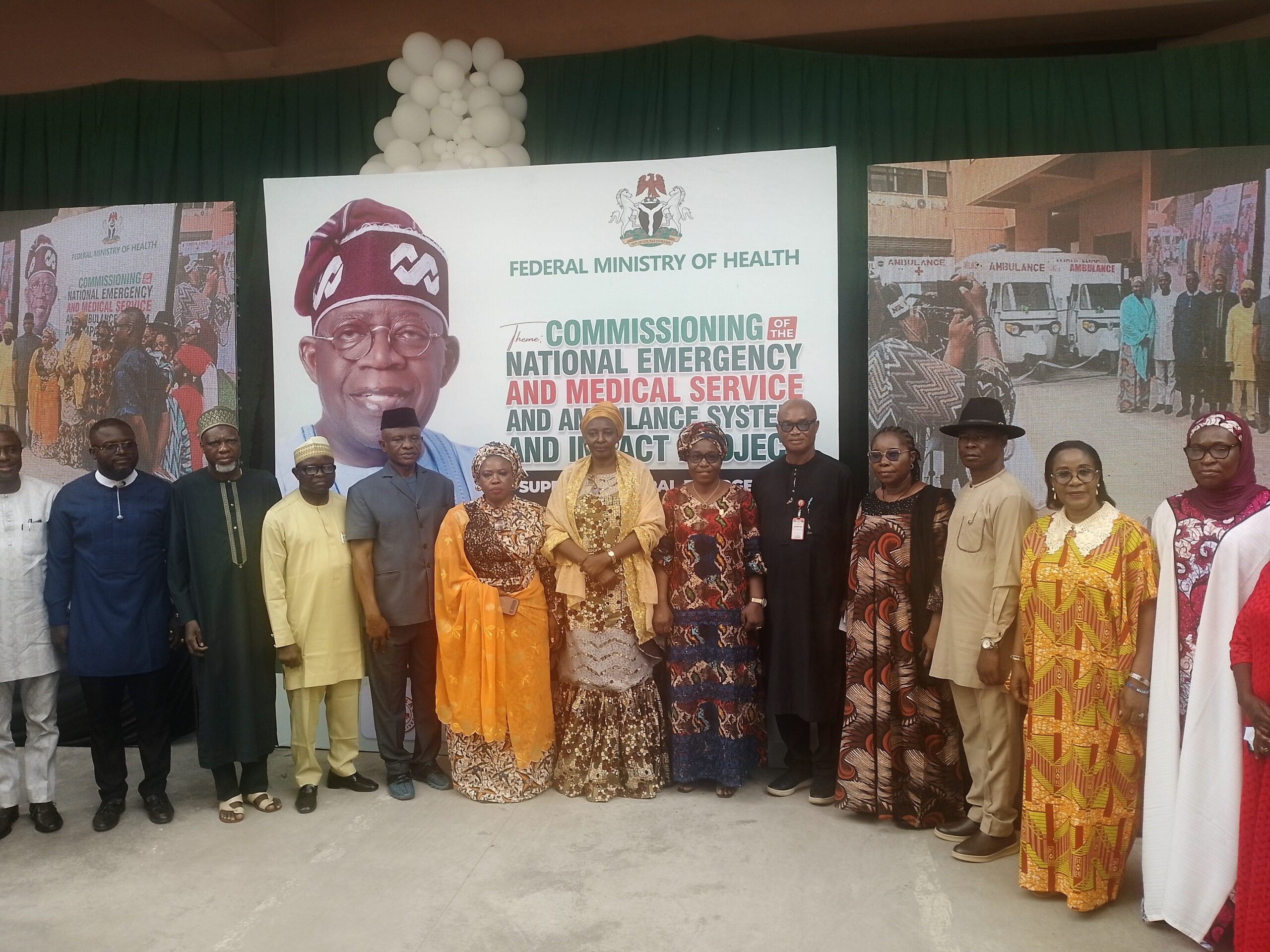
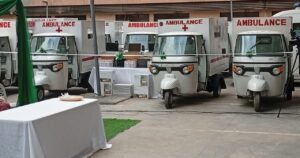
Abuja, Nigeria – President Bola Ahmed Tinubu on Friday launched the National Emergency Medical Service and Ambulance System (NEMSAS), unveiling 151 ambulance assets, comprising 145 tricycle ambulances and six boat ambulances, to strengthen emergency healthcare delivery and reduce preventable deaths across Nigeria.
The President was represented at the ceremony by the Coordinating Minister of Health and Social Welfare, Professor Muhammad Ali Pate. The Permanent Secretary of the Federal Ministry of Health and Social Welfare, Daju Kachollom, performed the official unveiling and commissioning of the ambulances on behalf of the President.
Also present were the Minister of State for Health, Dr. Iziaq Adekunle Salako, alongside directors, development partners, and key stakeholders.

Dr. Salako also joined virtually and was acknowledged during the event.

In his welcome remarks, Salako described the initiative as a historic milestone under the Renewed Hope Agenda, noting that it reflects the Federal Government’s commitment to ensuring healthcare as a fundamental right for all Nigerians.
He said the NEMSAS rollout, including the 151 ambulance assets and integrated emergency communication systems is designed to strengthen pre-hospital care nationwide, particularly in rural and underserved communities.
“This investment reflects a bold national vision where no Nigerian should lose their life simply because timely medical help could not reach them,” Salako said.
He further disclosed that over 100 health sector projects have been lined up across the six geopolitical zones to mark the administration’s third anniversary, covering emergency preparedness, maternal and child health, trauma care, mental health, and diagnostics.
Speaking shortly after, the Permanent Secretary, Daju Kachollom, described the commissioning as a major milestone for the health sector, especially for both rural and urban communities.
Kachollom, who formally unveiled and commissioned the ambulances on behalf of President Tinubu, said the initiative had been in development for about five years and would significantly improve health outcomes and national health indices.
“It gives me great pleasure, on behalf of Mr. President and the Ministers of Health, to commission these ambulances for use in our primary healthcare centres, especially for maternal and child care,” she said.
She emphasised that access to timely emergency care remains a major challenge for many Nigerians, noting that the new ambulance system would help bridge that gap.
“We all know what people go through when they are ill and cannot get the needed medical attention. This initiative will change that narrative,” Kachollom added.
The Permanent Secretary also commended development partners, particularly the World Bank, for their support, describing the intervention as a “laudable initiative” that would enhance service delivery nationwide.
She assured that under the Renewed Hope Agenda, the health sector has witnessed significant improvements over the past three years and expressed confidence that better health outcomes would be achieved before the end of 2027.
Delivering a goodwill message on behalf of Dr. Muyi Aina, Executive Director/CEO of the National Primary Health Care Development Agency (NPHCDA), who was represented by Dr. Nana Abubakar said the initiative aligns with national efforts to reduce maternal and neonatal mortality.
He stressed that strengthening emergency transport systems and referral linkages at the community level is critical to saving lives, particularly among mothers and newborns.
Also speaking, the National Coordinator of the National Malaria Elimination Programme (NMEP), Dr. Nnenna Chizaram Ogbulafor, said the improved emergency system would support efforts to further reduce the malaria burden in Nigeria.
She disclosed that malaria prevalence declined from 21 percent in 2021 to 15 percent in 2025, representing a 32 percent reduction, and expressed optimism that the NEMSAS initiative would help achieve the 2030 malaria reduction targets.
From the development partners, the World Bank IMPACT Project Task Team Leader, Dr. Onoride Ezewe, described the ambulances as “lifelines,” noting that they are equipped with communication gadgets and emergency response capabilities.
She explained that the project, which took about five years to realise, was designed to address transportation barriers that often make emergencies fatal in rural communities.
“The success of this investment depends on proper maintenance, community ownership, and the commitment of frontline health workers,” she said.
Providing operational insights, the National Programme Manager of NEMSAS, Dr. Doubra Emuren, said the ambulances would be deployed across 15 states under the World Bank-supported IMPACT project.
He revealed that more than 58,000 women and over 2,000 newborns have already benefited from emergency transport services, citing a case where a woman was transported over 280 kilometres and safely delivered triplets.
According to him, Nigeria records about 75,000 maternal deaths and 280,000 newborn deaths annually due to delays in seeking, reaching, and receiving care.
READ ALSO: Headfort Foundation’s Human Rights Summit exposes students to diverse careers
Mrs. Soludo 25,000 Sanitary Pads Distributed to Anambra Schoolgirls
“With these assets, we are addressing the delay in reaching care and ensuring a continuum of emergency medical services nationwide,” Emuren said.
The Federal Government reaffirmed its commitment to building a resilient, inclusive, and people-centred healthcare system, expressing confidence that the NEMSAS initiative will significantly improve health outcomes, particularly in maternal and child healthcare, before 2027.
About The Author