Lagos, Nigeria — Former Interior Minister and maritime veteran, Emmanuel Iheanacho, has underscored the critical role of the media in driving growth and reforms in Nigeria’s maritime sector, warning that inaccurate reporting could undermine investor confidence and slow industry progress.
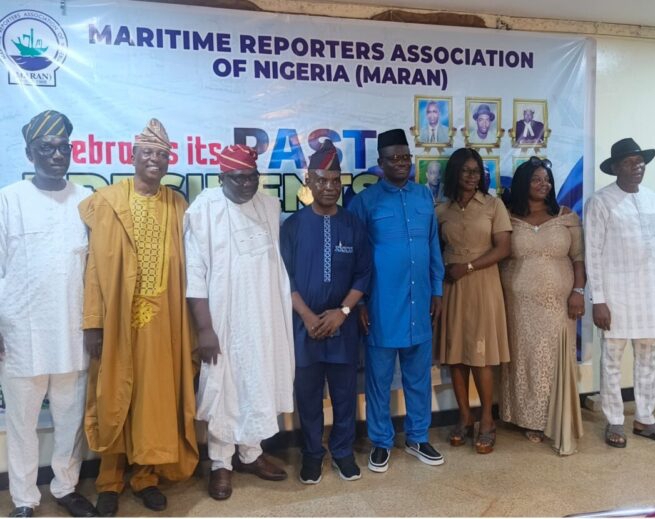
Iheanacho, who was represented by Emeka Akabogu, made the remarks at a reception organised by the Maritime Reporters Association of Nigeria in honour of its past presidents in Lagos.
He emphasised that responsible and informed journalism remains essential to shaping policies, attracting investment, and sustaining reforms within the maritime industry.
Drawing from nearly five decades of experience, Iheanacho identified agenda-setting, accountability, public education, and stakeholder mobilisation as the four key ways the media can influence maritime development.
According to him, consistent and focused reporting is necessary to bring critical industry challenges—such as port congestion, high transaction costs, infrastructure deficits, and policy inconsistencies—into national attention.
“Many genuine industry problems do not move into policy consciousness until the media shines a consistent light on them. Sustained and informed reporting is necessary to ensure reforms are not only initiated but also followed through to completion,” he said.
While acknowledging the watchdog role of journalists, Iheanacho cautioned against reports based on incomplete facts or weak technical understanding.
“A misleading report may damage confidence, unsettle investors, and distort policy debates. Accountability journalism must therefore be rigorous, fair, and evidence-based,” he added.
He also stressed the importance of public education, noting that the maritime sector remains highly technical and poorly understood despite its impact on trade, pricing, and employment. He called for more data-driven reporting and simplified explanations of policies to enhance public understanding and support for Nigeria’s blue economy ambitions.
Providing historical context, MARAN’s pioneer president, Alban Opara, recalled that the association was founded in 1988 during a period of severe port congestion and economic reforms under the Structural Adjustment Programme.
He noted that early maritime journalists operated under challenging conditions without formal accreditation but played a pivotal role in exposing inefficiencies such as artificial congestion and excessive demurrage, contributing to policy developments including the National Shipping Policy and Cabotage regime.
In a goodwill message, former Comptroller of Customs, Usman Bello Kankara, commended MARAN’s professionalism, highlighting its role in promoting transparency and public engagement within the Nigeria Customs Service.
Similarly, the Secretary-General of the Abuja MoU, Sunday Umoren, represented by Richard Owolabi, described MARAN as a vital partner in advancing maritime safety and transparency across West and Central Africa.
The organisation also recognised Bolaji Akinola for his contributions to regional maritime development.
In his welcome address, MARAN Caretaker Committee Chairman, Tunde Ayodele, described the event as a milestone aimed at reconnecting with the association’s roots and honouring its founding leaders.
READ ALSO: Lekki Residents Embrace Monthly Sanitation, Clean Canal to Boost Public Health, Tourism
Ugboaja Urges Grassroots Mobilisation, Says Nigeria on Path to Greatness Under Tinubu
He paid tribute to past presidents and deceased members, noting that their contributions laid the foundation for MARAN’s growth and continued relevance in Nigeria’s maritime sector.
Ayodele urged former leaders to remain actively involved, stressing that their experience and guidance would be crucial in sustaining the association’s legacy and strengthening its role in national development.
About The Author